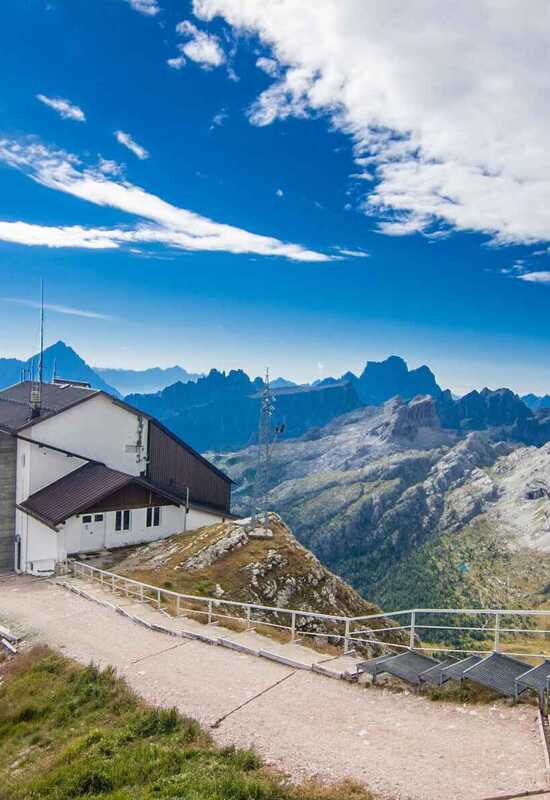
Join our Tour of the Jungfrau Guided Trek this summer and explore the Swiss Alps on a rewarding journey through the Bernese Oberland. This spectacular long-distance route winds its way beneath iconic glaciated peaks, across high alpine meadows and along dramatic ridge lines, offering ever-changing panoramas and authentic mountain hospitality each evening in traditional Swiss mountain huts and charming valley hotels.
With long summer days, wildflower-filled trails, and golden light illuminating the rugged landscape, late June and early July is one of the best times to trek the Jungfrau region. Led by our expert guides, you'll enjoy carefully planned stages, comfortable accommodation, and the camaraderie of a small group adventure — the perfect blend of challenge, culture and awe-inspiring scenery.
Tour of the Jungfrau - Full Guided Trek
Dates & Availability
26 June - 5 July
4 places available
£2995
Per person
FAQs
General Questions
What is the Tour of the Jungfrau?
The Tour of the Jungfrau is a classic long-distance trekking route through Switzerland's iconic Bernese Oberland, covering approximately 116 km (72 miles) in a circular loop starting and finishing in the beautiful alpine town of Interlaken. Dominated by the legendary trio of the Eiger, Mönch, and Jungfrau, the route accumulates around 6,000 metres (19,700 ft) of cumulative ascent and descent across stunning Swiss alpine terrain. It offers a superb all-round introduction to trekking in the region, winding through high mountain passes, sweeping alpine meadows, and charming mountain villages. The trek is completed staying in high mountain accommodations and traditional alpine huts along the way.
How difficult is the Tour of the Jungfrau?
The Tour of the Jungfrau is a challenging trek with significant daily ascents and descents. It requires good fitness and stamina.
TMB TREK GRADING - GRADE 3: DIFFICULT
Treks are graded 1-4 (low to high) with 1 being relatively easy and 4 being the toughest. The Tour of the Jungfrau is a grade 3 trek. Described as difficult, the Tour of the Jungfrau is hard and physically demanding. You will be travelling over rugged and mountainous terrain with a sustained amount of ascent and descent on a daily basis.
How long does it take to complete the Tour of the Jungfrau?
The Tour of the Jungfrau Guided Trek takes 9 days to complete.
When is the best time to hike the Tour of the Jungfrau?
The trek is best done from mid-June to mid-September, when the mountain passes are snow-free and accommodations are open. Early-season treks (June) may have some lingering snow, while late-season treks (September) offer quieter trails and cooler weather.
What if I can’t complete the trek?
If you feel, for whatever reason, you are unable to fully complete the trek, it will be necessary for you to return to your start or finish hotel, using public transport. If you inform the Mont Blanc Treks office, we will try and help with your arrangements. This will incur extra charges for any extra accommodation that may be necessary and unfortunately will result in you forfeiting any already booked accommodation on the trek which you may not have used.
What size are the guided groups?
We run our guided treks with between 2 and 10 people. We don't oversubscribe our groups to ensure that each client enjoys their time with the guide and the group and that the group remains safe.
What are the hardest parts of the Tour of the Jungfrau?
BERGHAUS TSCINGELHORN TO MURREN VIA THE ROTSTOCKHÜTTE: This is one of the most demanding days on the Tour of the Jungfrau due to the combination of a long, steep descent followed by a sustained climb. The trail drops sharply in the middle of the day, requiring careful footing and placing significant strain on the knees. After this descent, the route climbs steadily again toward the Rotstockhütte, making for a physically demanding afternoon. Although the terrain is generally good, the amount of elevation loss and gain makes this a long and challenging day that requires good fitness and stamina.
Guided Trek Questions
What are the benefits of a guided trek?
A guided trek provides expert navigation, local knowledge, group camaraderie, and added safety. Our guided treks are led by a qualified UIMLA mountain professionals. They ensure your safety at all times as well as offering you a wealth of information on all aspects of the trek including the flora, fauna and history of the area along the Tour du Mont Blanc.
What size are the guided groups?
We run our guided treks with between 2 and 10 people. We don't oversubscribe our groups to ensure that each client enjoys their time with the guide and the group and that the group remains safe.
How can I find out who else has booked the trek?
If you would like to check who else is booked on a guided trek, please just contact us. We can tell you the make-up of your group, the ratio of males to females and give you an idea of the group’s age profile.
What qualifications do the guides have?
Our guides are very experienced, fully qualified Mountain Leaders who live and work in the Alps all year round.
UIMLA Qualification
The Union of International Mountain Leader Associations (UIMLA) (UIMLA) was founded in November 2004 and is an internationally recognised qualification that sets standards for mountain leaders all over the world.
Mountain Leader Associations
Mont Blanc Treks are affiliated to SNAM & BAIML the French & English Mountain Leader Association who are full members of the Union of International Mountain Leader Associations (UIMLA). They look after the professional interests of International Mountain Leaders in Europe & around the world.
UIMLA: Union of International Mountain Leader Associations
BAIML: British Association of International Mountain Leaders
SNAM: Accompagnateur en Montagne European
Do I need to carry my own luggage on a guided trek?
You don't have to carry all the gear you need for your guided trek as we offer, for an extra charge, a bag transfer service. You will need a suitable rucksack to accommodate your daily clothing/equipment, food and drink and any other items you wish to have with you during the day. On ALL our treks some nights are spent in mountain refuge accommodation that have no vehicular access and so cannot be accessed by the baggage transfer team. On those days it is necessary to carry an overnight bag. See our Bag Transfer page for further information.
Booking & Logistics
How do I book a trek?
Once you have decided on your trek all you have to do is fill out our booking form, make the payment and get ready for an experience of a lifetime!
It is essential that you fill in all the relevant sections, so we have all the necessary information at the time of booking.
Once we have received the booking form and a deposit payment, we will confirm your booking and send you further information about the trek. To make the booking a simple process, we have explained all the methods of payment we accept. If you have any queries while booking your trek, do not hesitate to get in touch with us in Chamonix.
What is the cancellation policy?
We recommend you take out cancellation insurance at the time of booking your trek. Should you need to cancel you will need to inform Mont Blanc Treks Ltd by email. If you cancel your trek the following conditions apply:
More than 16 weeks before trek start date - loss of deposit.
8 – 16 weeks before trek start date - loss of 50% of the trek fee.
Less than 8 weeks before trek start date loss of 100% of the trek fee.
Do I need travel insurance?
Yes, travel insurance covering trekking activities, medical emergencies, and trip cancellations is required.
Medical
Your own insurance is crucial. If you are on a guided tour, your guide will do their utmost to ensure your safety, but accidents can happen and even trivial accidents can result in a hefty bill if evacuation off the mountain or transport is involved. If you are unsure of your insurance cover, please ask us before the trek, rather than at the time when you may require assistance.
Possessions
Equipment can easily be lost or left behind on a trek and Mont Blanc Treks cannot be held responsible for your private possessions. During transfers, bags are left for collection and again after delivery, in some relatively public places within the hotels we use. Please make sure possessions, bags and equipment are adequately insured and kept safe. Suggestions for trekking insurance companies that have been used by previous clients are:
For residents worldwide: World Nomads, TravelEx 'Adventure Plus Pak', True Traveller
For residents in the UK: British Mountaineering Council, World first
For UK and EU residents: Globelink
For residents in the USA: TravelEx 'Adventure Plus Pak'
For residents in Australia:Insure4less
Do you block accommodation and resell it?
No. We reserve only what we need to offer high-quality itineraries for the season. Accommodation providers prefer partnering with trusted companies because it simplifies their workload and ensures reliable bookings. This supports the small, remote refuges along the route.
Does pre-booking mean I’m paying more for the same rooms?
The price includes far more than accommodation. Our service provides daily route cards, maps, guidebooks, transport information, pre-trek briefings in Chamonix, and local support during the trek. You’re paying for a complete, safe, expertly planned experience—not just a room.
Can we choose any accommodation we want?
Yes, if you booking early enough, we advise booking 10 months in advance. Saying this we tend to use tried and tested accommodation that we know give our clients the best service.
Accommodation & Food
What type of accommodation is used on the Tour of the Jungfrau?
On the Tour of the Jungfrau trek we use 3* hotels, auberge or mountain refuge accommodation depending on location. Rooms are on a twin/double basis unless requested otherwise. Single rooms are available most nights at a supplement. Private twin rooms are available in the refuges at a supplement and are subject to availability. You can request your room preference at the time of booking.
See our Where to Stay page for more information.
What meals are included?
Bed, breakfast and 3 course evening meals will be included with the exception of Chamonix and Courmayeur, which will be breakfast only. Please let us know any dietary requirements at the time of booking.
Breakfast:
This varies depending on accommodation. You can expect at least cereal, milk, break and jam and hot drinks. Our hotels on the treks offer a more substantial breakfast including yogurt, cheeses, cold meats, eggs and pastries.
Picnic lunch:
This is not included and you will need to purchase a picnic to carry with you each day. This is easily bought from local bakeries or supermarkets and when staying in more remote locations it can be ordered from the refuge on the night of arrival. Allow approx. 10 euros each day for your picnic. Make sure you take plenty with you and don’t rely on stopping for lunch en-route. Although on some days this will be possible it’s always good to have your own provisions in case the refuge or café is closed or busy.
Evening meal:
When on the trek, this is always provided and will consist of 3 courses, typically you will have soup or a salad for the starter, a meat or vegetarian option for the main course and a home-made dessert or cheese.
Can I get clothes washed en-route?
Some of the hotels offer a laundry service. We recommend that you take clothing that can be washed by hand and dries quickly.
Packing & Gear
What should I pack for the trek?
Essentials include:
Hiking boots with ankle support
Waterproof jacket and trousers
Warm layers (fleece, down jacket)
Trekking poles
Daypack (25-30L)
Hydration system (water bottles or hydration pack)
Head torch, sunscreen, sunglasses
View our What to Bring page for more detailed information.
Do I need trekking poles?
Yes, trekking poles are highly recommended for stability and reducing strain on descents.
Do I need a first aid kit?
We advise you to carry the basics, including plasters for blisters and pain killers for aches and muscle strains. (Don’t forget any of your usual medication). You will be able to replenish supplies along the routes in certain locations.
Travel
How do I get to the starting point of the trek?
The nearest airports to Interlaken are Geneva or Zurich, train travel will be the best option, see the Swiss train website: https://www.sbb.ch/en .
Local rail & bus transport is often free or reduced if you are staying in the area and have a Guest Card that can be obtained from your hotel.
For mountain railways and cable cars, timetables and tickets, see the Jungfrau Top Of Europe website: https://www.jungfrau.ch/en-gb/
Tour of the Jungfrau Guided Trek Itinerary
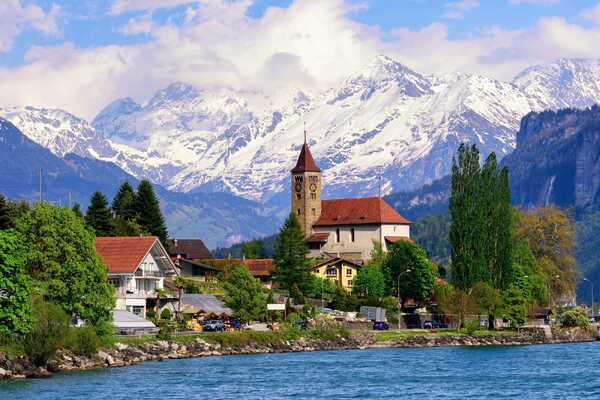
DAY 1: ARRIVAL IN INTERLAKEN
Arrival in Interlaken
Accommodation:
3* Hotel, private rooms, breakfast
DAY 2: INTERLARKEN, WILDERSWILL AND SCHYNIGE PLATTE TO BERGHOTEL FIRST
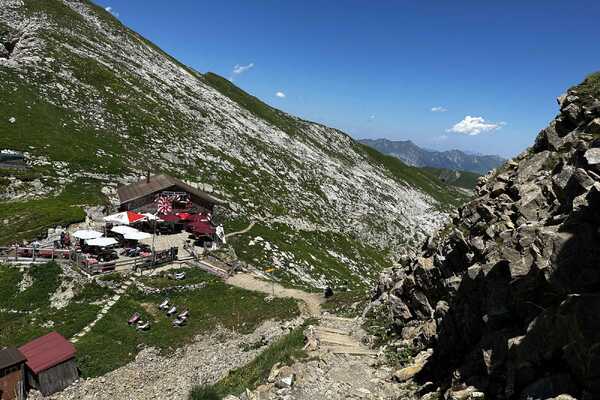
The day begins with a short train ride to Wilderswil, followed by a change to the cogwheel railway that takes you to Schynige Platte (1980m). The trail commences here, offering a high-level traverse with breathtaking views of the Jungfrau massif. This undulating path contours Laucherhorn and then meanders high above Säistalsee lake, switching back and ascending to Berghütte Männdlenen, a perfect spot for a refreshment break. The trail continues to ascend all the way to Fulhorn, providing fabulous views high above the Grindelwald valley, with the iconic Eiger, Mönch, and Jungfrau mountains in the background. Descend from Fulhorn, passing the picturesque Bachsee lake, and continue to Berghotel First (2167m).
Daily stats:
Distance: 15km | Height gain: +715m | Descent: -520m
Accommodation:
Refuge, dormitory, evening meal and breakfast (possible upgrade to private rooms depending on availability)
DAY 3: BERGHOTEL FIRST TO GRINDELWALD
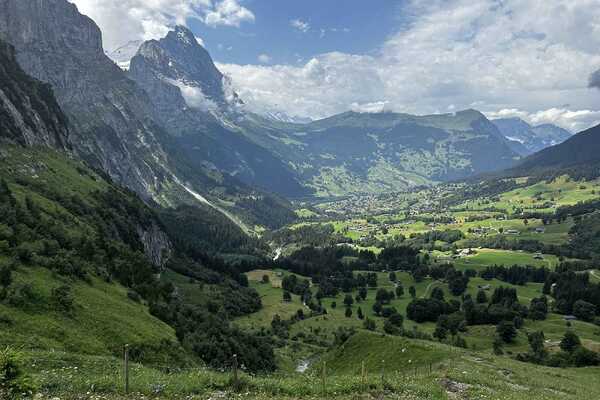
The day begins with an easy traverse high above the valley, leading to Grosse Scheidegg (1962m). This is an ideal spot for a mid-morning coffee break. From here, the trail descends, revealing the picturesque Grindelwald valley once more, with the majestic Eiger, Mönch, and Jungfrau peaks providing a breathtaking backdrop. The trail takes you directly to the head of the valley and down into the charming town of Grindelwald.
Daily stats:
Distance: 9km | Height gain: +105m | Descent: -940m
Accommodation:
Hotel, private rooms, evening meal and breakfast
DAY 4: GRINDELWALD TO ALPIGLEN
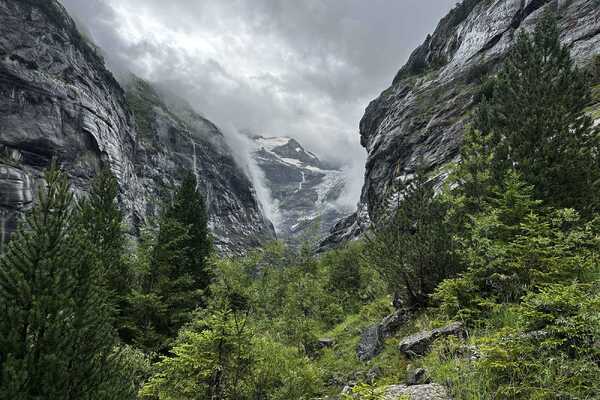
Take an early local free bus up to the head of the valley and the Hotel Wetterhorn. Access the trail from there as it winds through the forest and gradually ascends to Pfingstegg, offering fabulous views of Grindelwald. You'll find refreshments available here. Just beyond this point, the trail descends on a steep wooded path, leading to a footbridge across the Grindelwaldgletscher gorge. The path then ascends once more through dense woodland, eventually opening up to more expansive terrain with stunning views back toward the Wetterhorn and Grosse Scheidegg. As you continue on easier traversing trails and a short descent, you'll arrive at your overnight accommodation at Berghaus Alpiglen (1620m).
Daily stats:
Distance: 11km | Height gain: +840m | Descent: -445m
Accommodation:
Refuge, dormitory, evening meal and breakfast (option for upgrade to private rooms if available)
DAY 5: ALPIGLEN TO WENGEN
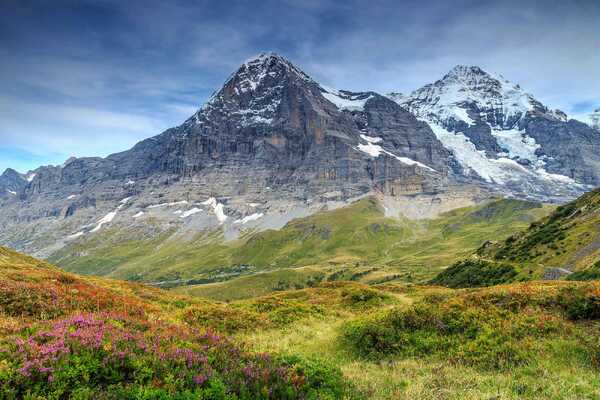
The day begins with a brief backtrack along the path you followed the previous day, returning to the starting point of the Eiger trail. This impressive trail meanders below the formidable North Face, leading to the cable car and mountain railway station at Eigergletscher (2320m). If you have the time, there's an option to take the Jungfraujoch cog railway to the 'Top of the World' before returning to Kleine Scheidegg. From Eigergletscher, the trail descends to Kleine Scheidegg and continues along a beautiful, wide ridge to Männlichen (2343m). You then take the cable car to Wengen. A truly magnificent vantage point!
Daily stats:
Distance: 13km Height gain: +900m Descent: -260m
Accommodation:
Hotel, private rooms and breakfast
DAY 6: FREE DAY IN WENGEN
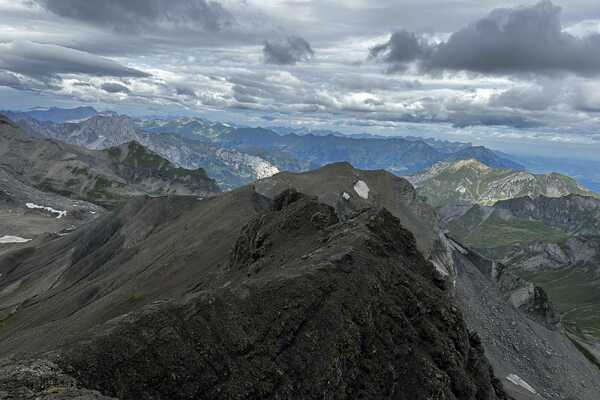
A free day to explore this beautiful village perched high above the Lauterbrunnen valley.
Accommodation:
Hotel, private rooms and breakfast
DAY 7: WENGEN TO LAUTERBRUNNEN VIA TRUMMELBACH FALLS
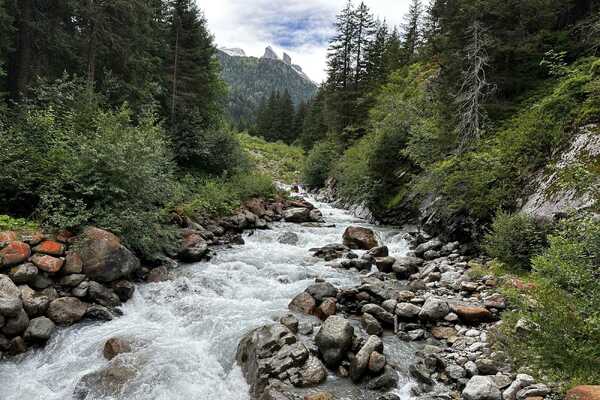
This route takes you on a high traverse and then across open terrain to Stalden (1664m). Just beyond this point, the path begins its long and steep descent into the Lauterbrunnen Valley, passing the impressive Trummelbach Falls. Once you reach the valley, you'll take a short bus ride to Lauterbrunnen. Be sure to have your walking poles handy for this descent!
Daily stats:
9km Height gain: +470m Descent: -925m
Accommodation:
Hotel, private rooms, evening meal and breakfast
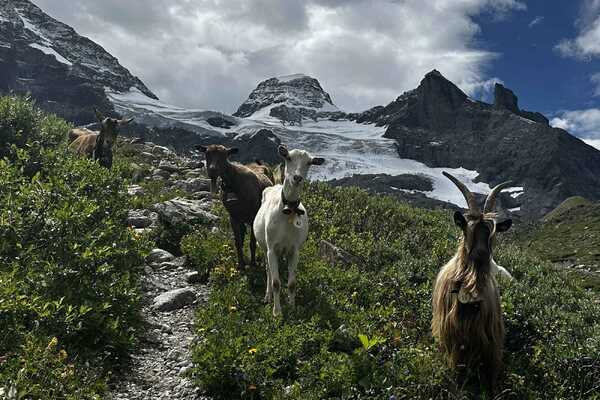
DAY 8: LAUTERBRUNNEN TO BERGHOTEL TSCINGELHORN
The day starts with a short bus ride to Stechelberg. This section of the TJR (Trail of the Jungfrau Region) is notably more tranquil, and the day promises to be truly exceptional; you won't be disappointed! The day commences with a steep ascent into the upper regions of the Lauterbrunnen valley. Here, you'll find a pristine environment with glaciers, waterfalls, and ancient moraines—a remarkably serene and remote setting. Once you reach the high elevation, the trail winds around beneath the Schmadri refuge and leads to Oberhornsee lake. From there, the path traverses the opposite side of the high valley, taking you beyond Obersteinberg to Berghotel Tschingelhorn. It's a truly wonderful place to spend the night.
Daily stats:
Distance: 11km Height gain: +1215m Descent: -100m
Accommodation:
Berghotel, private rooms, evening meal and breakfast
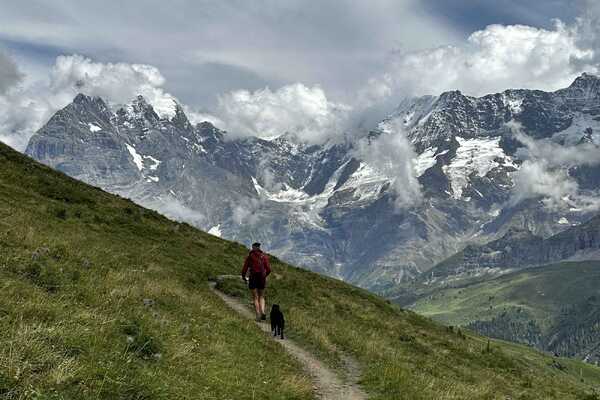
DAY 9: BERGHOTEL TSCHINGELHORN TO MÜRREN
The day begins with an easy start as you make your way back to Obersteinberg. From there, the trail ascends to your first high point below Tansbödeli, which is followed by a descent into the Sefinental valley. You'll find several trail options leading to Mürren; the most spectacular choice is to take the longer route via the Rockstock Hut, which involves a second steep ascent for the day. You can enjoy refreshments at the refuge before embarking on a beautiful high traverse with stunning views of the Jungfrau, culminating in a final descent via Spielbodenalp into the village of Mürren.
Daily stats:
Distance: 12km Height gain: +1100m Descent: -835m
Accommodation:
Hotel, private rooms, evening meal and breakfast
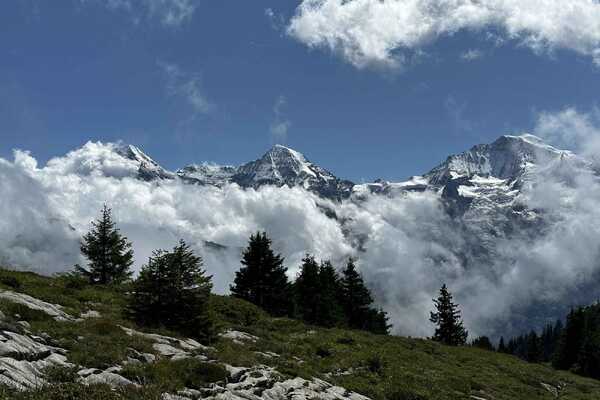
DAY 10: MÜRREN TO ZWEILUTSCHINEN AND INTERLAKEN
On the final day of the TJR, you'll be treated to magnificent views of Wengen, the Wetterhorn, Eiger, Mönch, and Jungfrau on a high traverse from Murren. This quiet and peaceful trail winds through the high Soustal valley, where you'll encounter high pasturelands dotted with dairy farms, the sound of cowbells, and meandering mountain rivers with splendid views of Schynige Platte. From this point, it's a downhill journey. The trail meanders its way down to the farm buildings of Isenfluh (1162m). Our final descent takes us through dense forest, reaching the valley bottom at Zweilutschinen. Finally, you'll return to Interlaken via a short train ride.
Daily stats:
Distance: 14km Height gain: +400m Descent: -1400m
Accommodation:
Hotel, private rooms, breakfast
DAY 11: DEPART INTERLAKEN
Breakfast is included however on the departure day you are free to leave at any time you wish.
Tour of the Jungfrau - Full Guided Trek
Dates & Availability
26 June - 5 July
4 places available
£2995
Per person