19/11/2026
Having spent a rather wet and chilly week exploring Norway's Jotunheimen National Park the previous summer, I was under no illusions about what the Norwegian mountains could throw at us. During that reconnaissance trip, the weather had been very unkind, with rain, cold winds, swollen rivers and plenty of boggy ground underfoot.
So, in the weeks leading up to our August 2026 guided trek, I made sure everyone was suitably prepared. Waterproofs, warm layers, gaiters — I couldn't emphasise enough the importance of coming equipped for whatever the Norwegian weather might have in store.
As it turned out, we could hardly have been more fortunate. Norway decided to treat us to the most glorious summer weather imaginable!
A Norwegian Summer Surprise
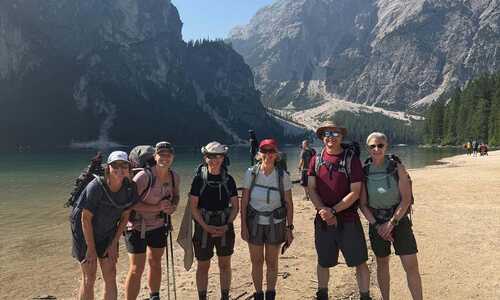
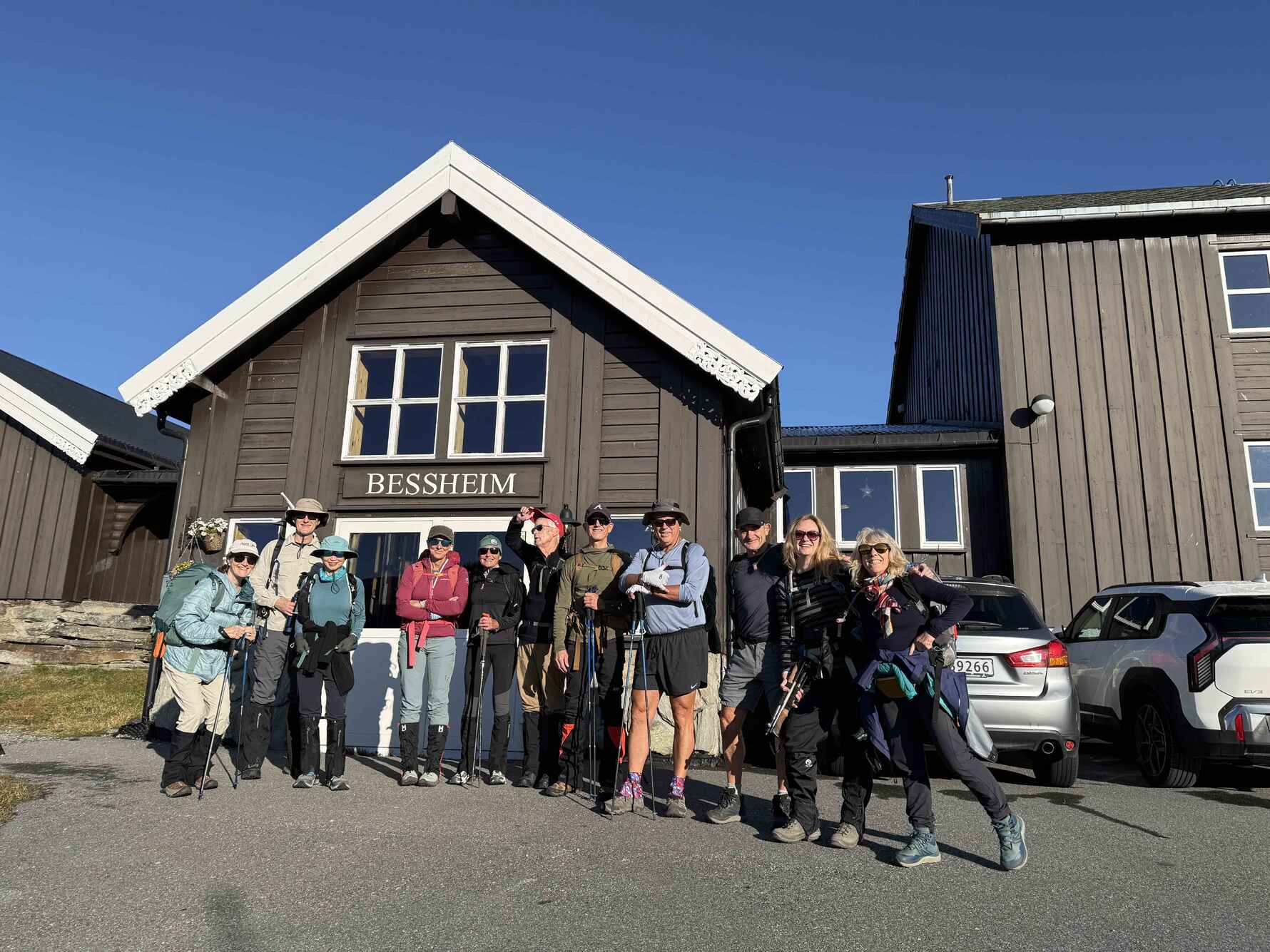
Our group gathered at Bessheim Fjellstue, a beautifully situated mountain lodge on the edge of Jotunheimen National Park. We had a lovely mix of familiar faces, including several clients who had joined us on numerous MBT treks over the years, alongside a couple of newcomers. Some had travelled all the way from the USA, Australia and the UK.
Alex, one of our MBT guides, also joined us for the week to familiarise herself with the route ahead of guiding it in 2027.
With introductions made and the usual pre-trek briefing completed, we were ready to head into the mountains.
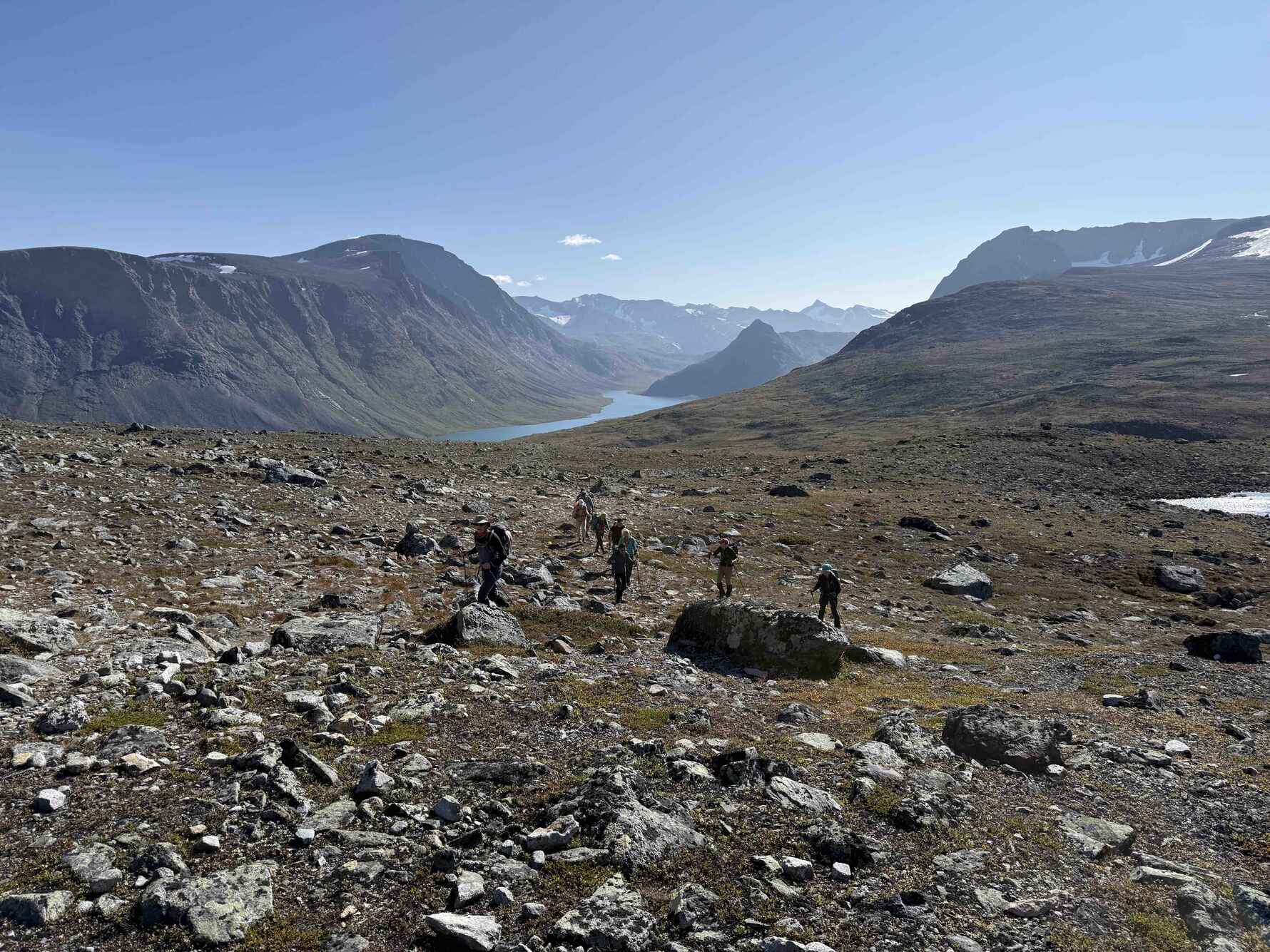
Our first walking day took us from Bessheim towards Glitterheim, climbing onto the open plateau of Besstrondfjellet before descending towards the beautiful Russvatnet lake. With blue skies, warm sunshine and expansive views across the surrounding mountains, it was a wonderful introduction to Jotunheimen.
And what a contrast to the previous summer! We were walking in shorts and T-shirts, the rivers were running much lower, and the notoriously boggy sections were surprisingly dry. The gaiters stayed firmly tucked away in our rucksacks.
I hadn't realised Norwegian summers could be quite so idyllic!
The Challenge Beneath Our Feet
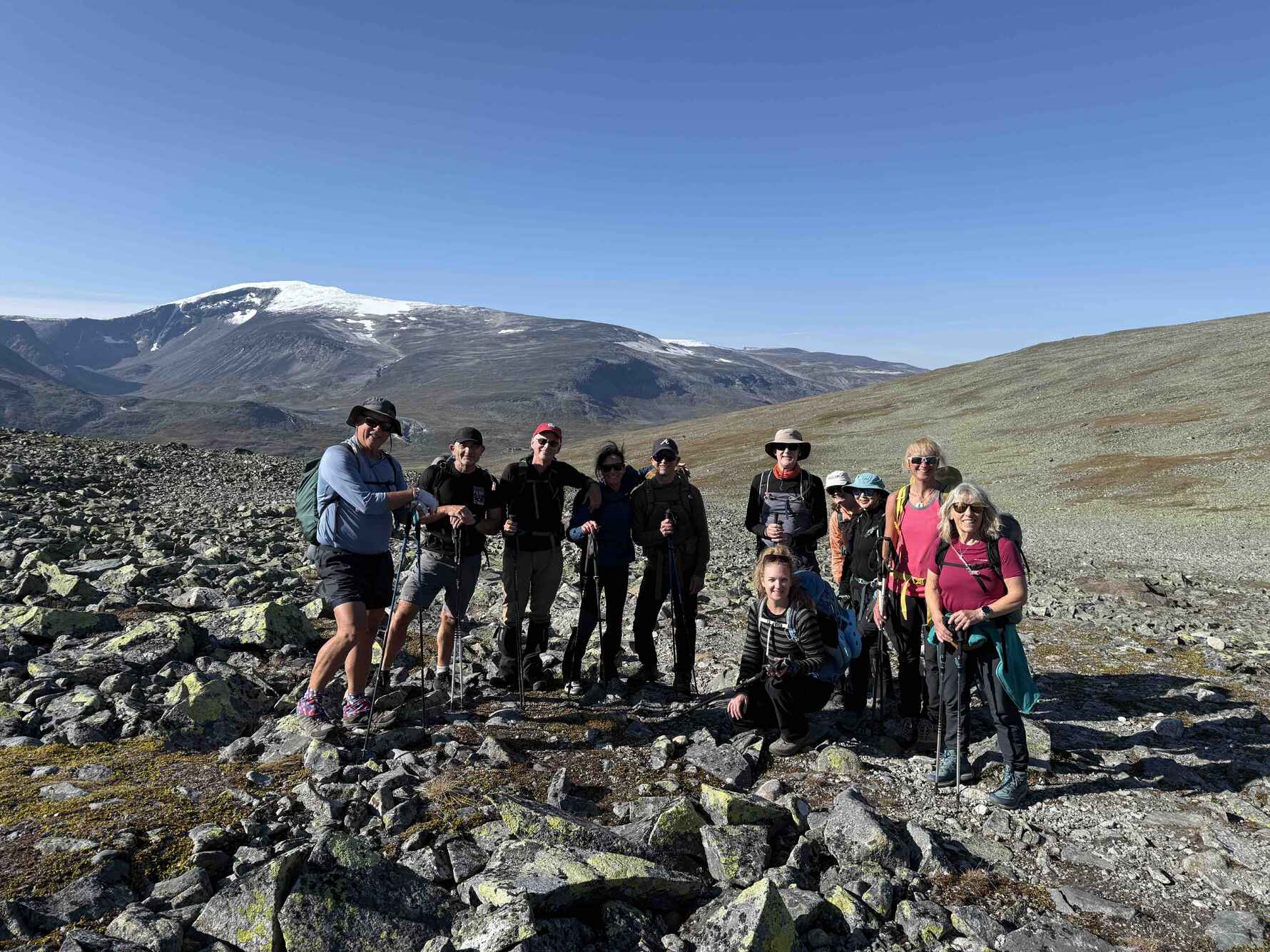
One thing that hadn't changed, however, was the terrain. Jotunheimen is a spectacular wilderness of high mountains, glacial valleys, enormous lakes and vast rocky plateaux. Compared with the Alps, the landscape feels much more open and expansive. There are fewer of the dramatic changes between forest, pasture and high mountain terrain that we're so familiar with on Alpine treks. Instead, you can spend hours crossing vast, open mountain landscapes, with seemingly endless views towards distant peaks.
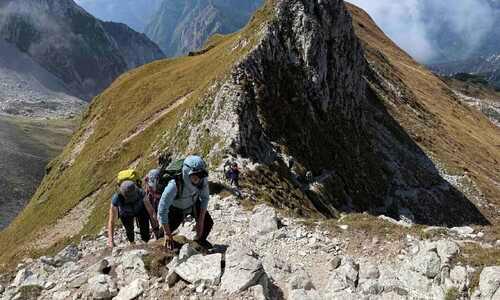
But don't be fooled by the daily walking statistics. On paper, the distances and height gains might not appear particularly demanding compared with some of our Alpine treks. In reality, the challenge lies in the terrain itself. Boulders. Lots and lots of boulders!
Some sections seemed to go on forever, with huge expanses of rock requiring constant concentration, careful foot placement and plenty of patience. Progress can be surprisingly slow, and even relatively straightforward days become tiring when you're negotiating uneven ground for hours on end.
Our second walking day, from Glitterheim to Spiterstulen, took us across the wild Skautflye plateau beneath the imposing bulk of Glittertind, Norway's second-highest mountain. It was a magnificent landscape, but the rocky terrain demanded our full attention.
One member of the group took a couple of tumbles, the second requiring some medical attention and a few stitches once we reached Spiterstulen. I advised him to visit the medical centre in Lom the following day, and fortunately, as we were staying two nights at Spiterstulen, he was able to rejoin us for the remainder of the trek.
Two other members of the group decided that the demanding terrain was more than they had anticipated and left the trek after the second walking day.
It was a reminder that being fit enough to walk long distances isn't necessarily the same as being comfortable moving over challenging mountain terrain. Good balance, confidence on rocky ground and strong knees are every bit as important.
Galdhøpiggen: On Top of Norway
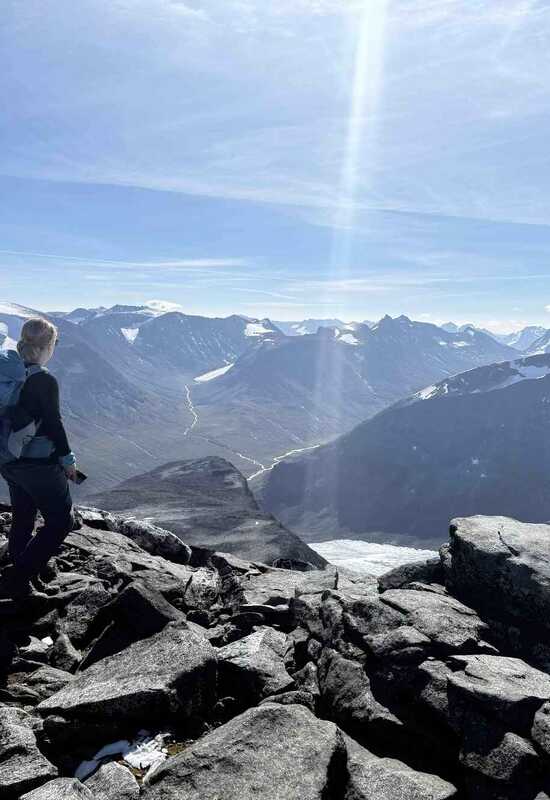
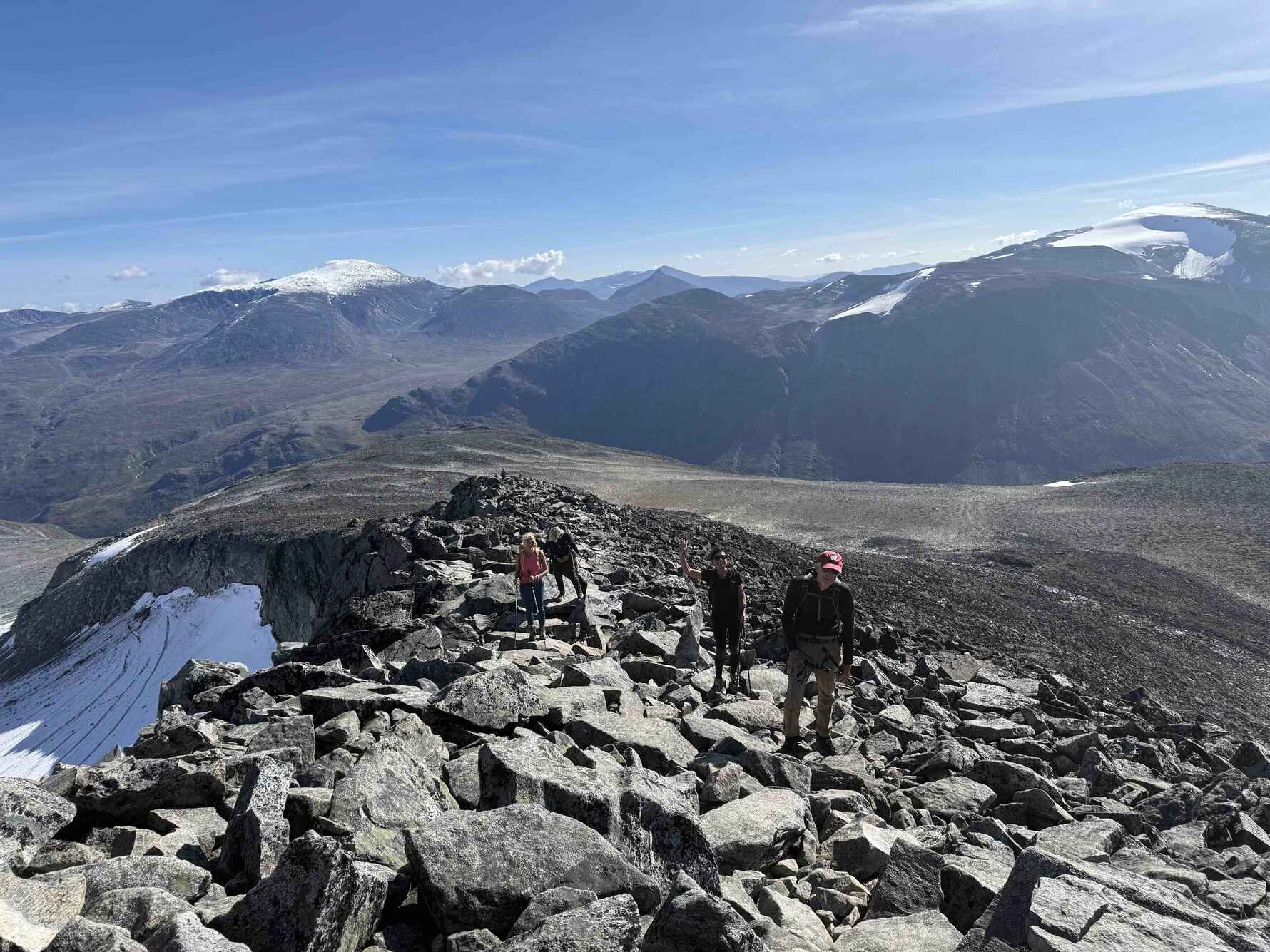
Without doubt, one of the highlights of the week was our ascent of Galdhøpiggen, Norway's highest mountain at 2,469 metres. Setting off from Spiterstulen, we began the long, steep climb towards the summit. The route is rocky from the outset, gaining height steadily before reaching the higher mountain slopes and eventually the summit ridge. There is a particularly tricky rocky step to negotiate before reaching the top, and the terrain demands concentration throughout.
But what a day we'd chosen! The skies were completely clear, and as we climbed higher, the views became even more spectacular, peaks, glaciers and valleys stretched in every direction.
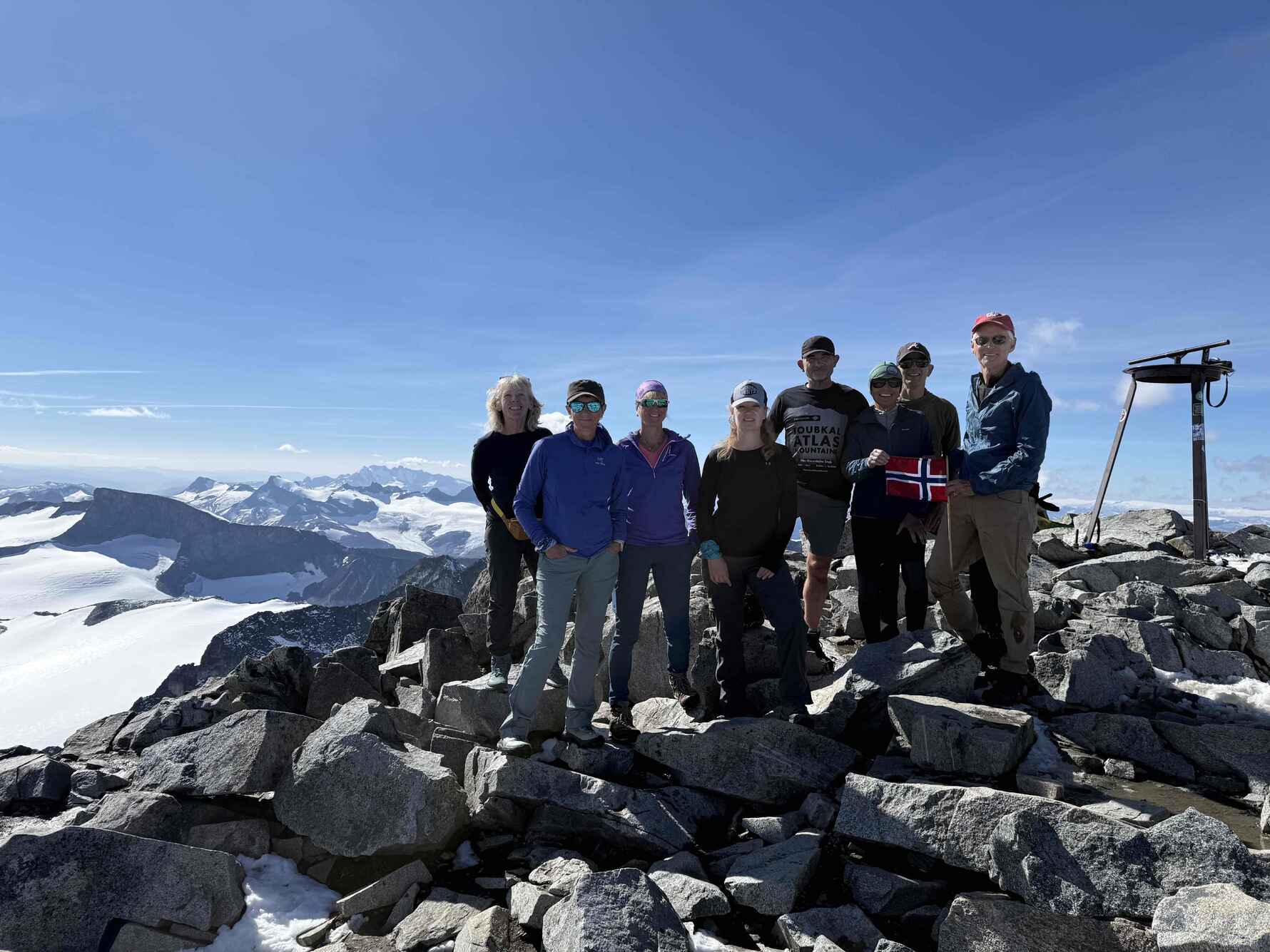
Reaching the summit was a wonderful moment. With perfect visibility, we could appreciate the sheer scale of Jotunheimen, including the neighbouring summit of Glittertind and the extraordinary landscape surrounding us. It was one of those rare mountain days when everything comes together, fabulous weather, magnificent scenery and a real sense of achievement. In fact, we were enjoying ourselves so much that we stayed on the summit rather longer than intended!
Of course, what goes up must come down, and the descent was every bit as demanding as the ascent. Negotiating the steep, rocky terrain required patience, and progress was slow. By the time we arrived back at Spiterstulen, we'd been on the mountain for eleven hours and only just made it back in time for our evening meal. A long day, certainly, but one I won't forget in a hurry.
Into the Heart of Jotunheimen
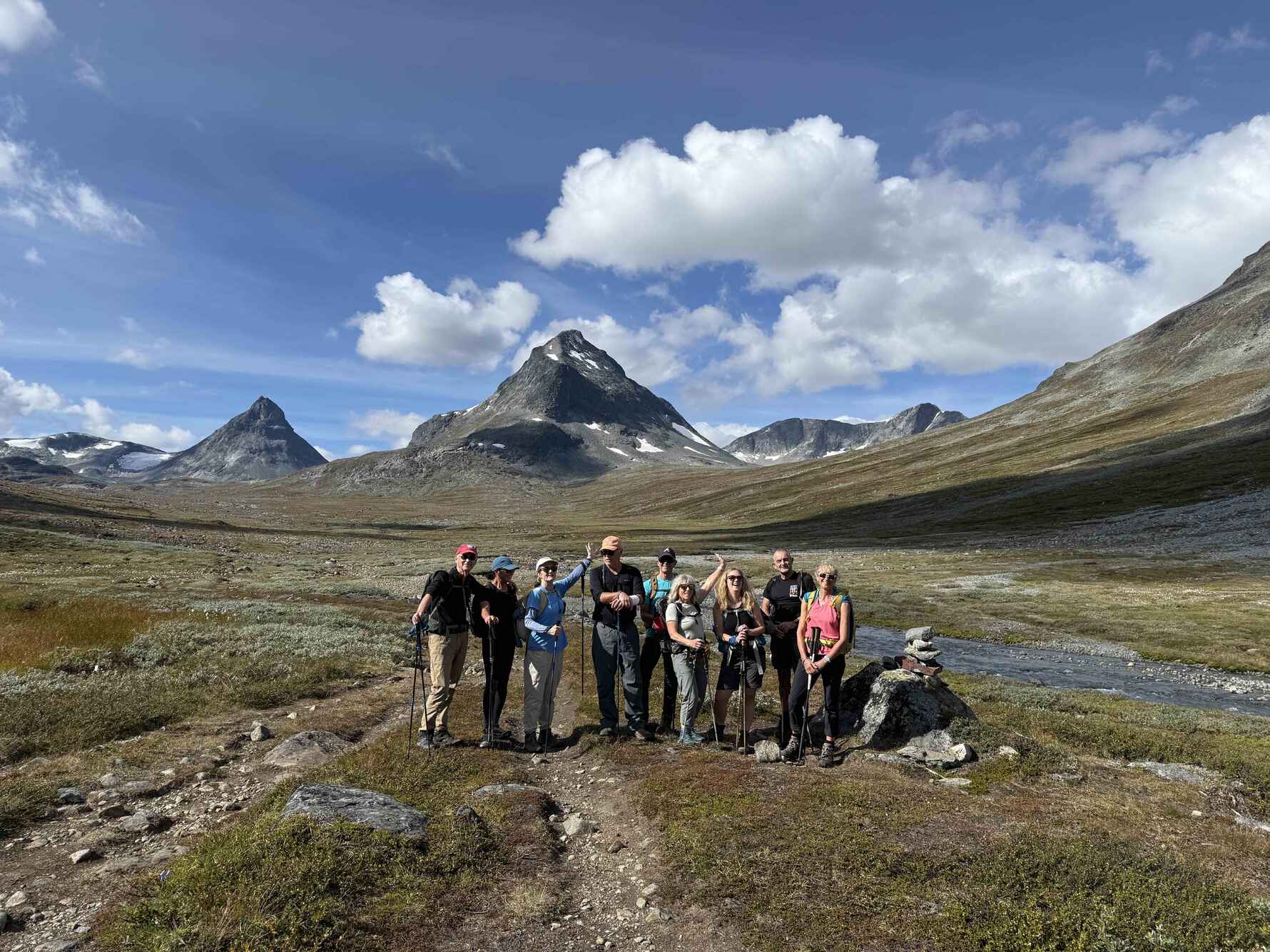
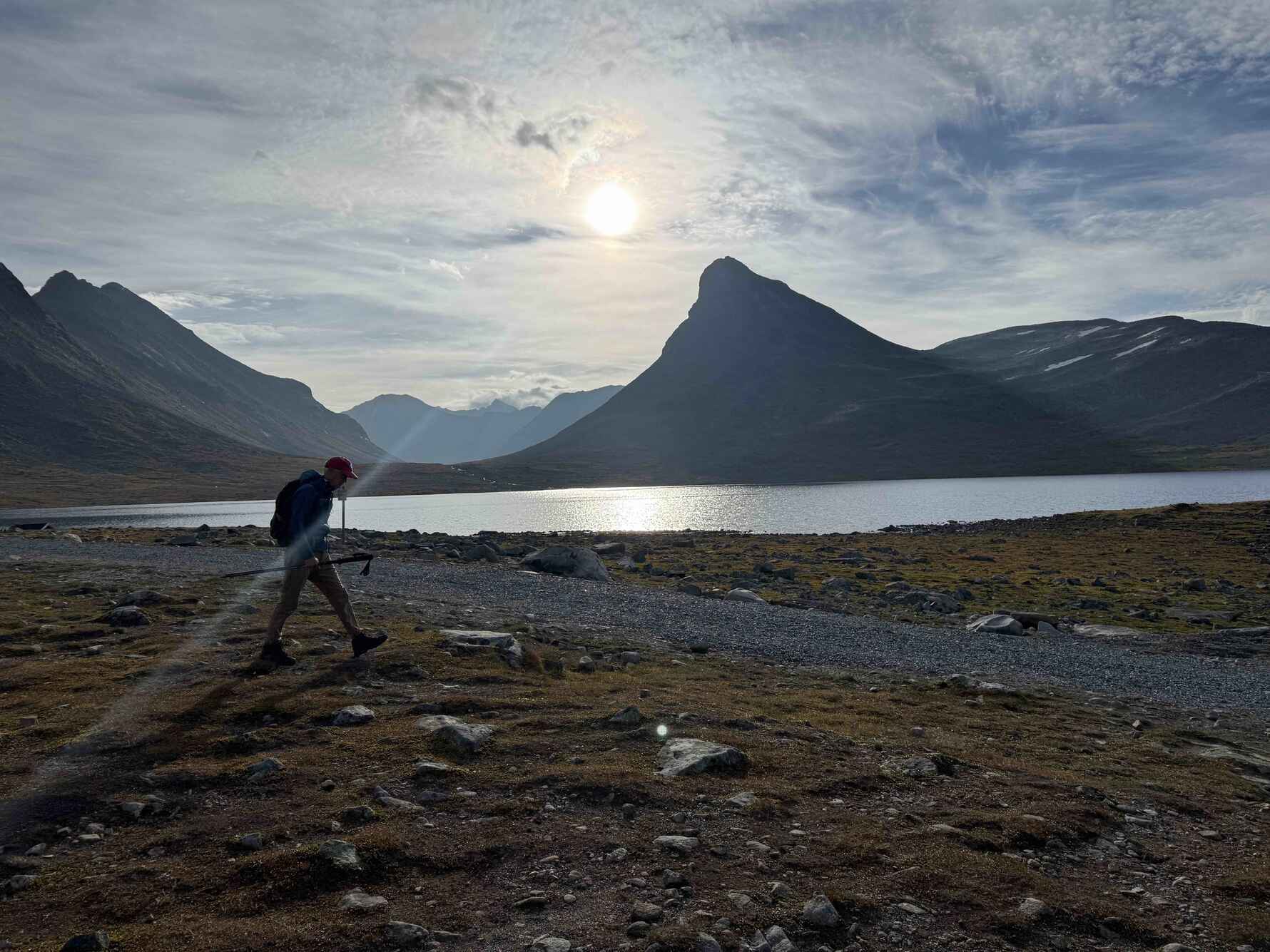
Leaving Spiterstulen, we headed south through the broad Visdalen valley towards Leirvassbu. The landscape here is dominated by towering mountains, including the distinctive pointed summit of Kyrkja, which rises dramatically above the surrounding lakes and rocky terrain.
This was another aspect of Jotunheimen that I particularly enjoyed. Unlike the Alps, where you often find yourself climbing steeply from one valley to cross a high pass before descending into the next, much of our Norwegian route followed vast glacial valleys and crossed open plateaux.
From Leirvassbu, we continued towards Gjendebu, crossing the Høgvaglen pass and passing a series of beautiful mountain lakes before descending through the dramatic surroundings of Svartdalen, the Black Valley.
We spotted reindeer and birds of prey along the way, adding to the sense of being in a genuinely wild mountain environment. And despite the challenging terrain, the glorious weather continued to make the whole experience even more enjoyable.
Norwegian Mountain Huts: A Real Highlight
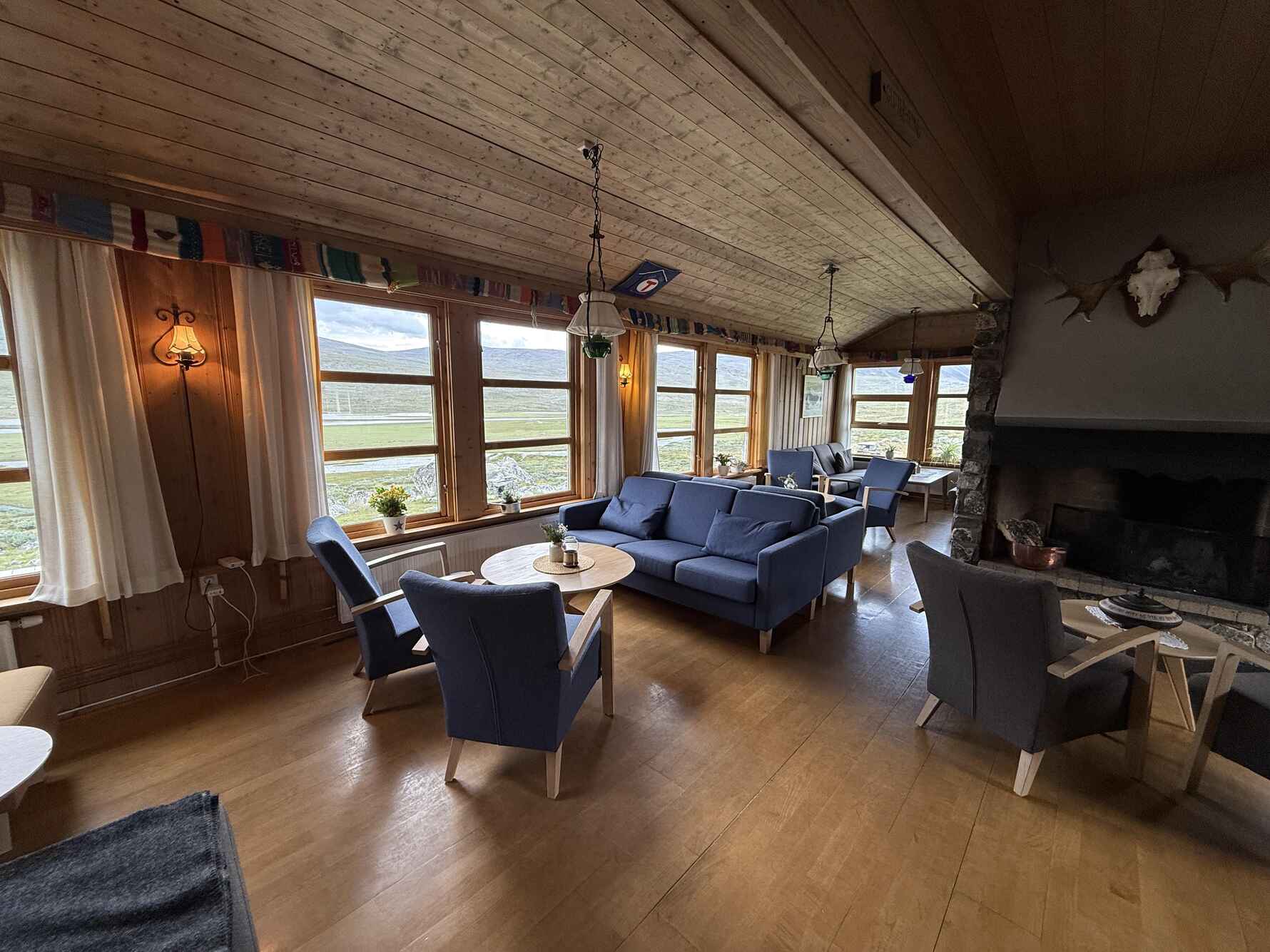
One of the real pleasures of trekking in Jotunheimen is the mountain accommodation. The Norwegian mountain huts are quite something. Beautifully situated, wonderfully cosy and exceptionally well organised, they provide a welcome retreat after a long day on the trail. Many are operated by the Norwegian Trekking Association (DNT), and there's a lovely atmosphere about them. And the food!
After hours of walking over rocky terrain, arriving at a warm, welcoming hut and sitting down to a fabulous evening meal was an absolute treat.
Each hut had its own character, but they all shared that wonderful sense of mountain hospitality. Comfortable accommodation, hearty meals and spectacular surroundings made the evenings a real highlight of the trek.
There is something particularly special about arriving at a remote mountain hut after a long day, knowing that everything you need is waiting for you. A hot shower, a good meal and a comfortable bed — simple pleasures, but very welcome ones!
A Change in the Weather
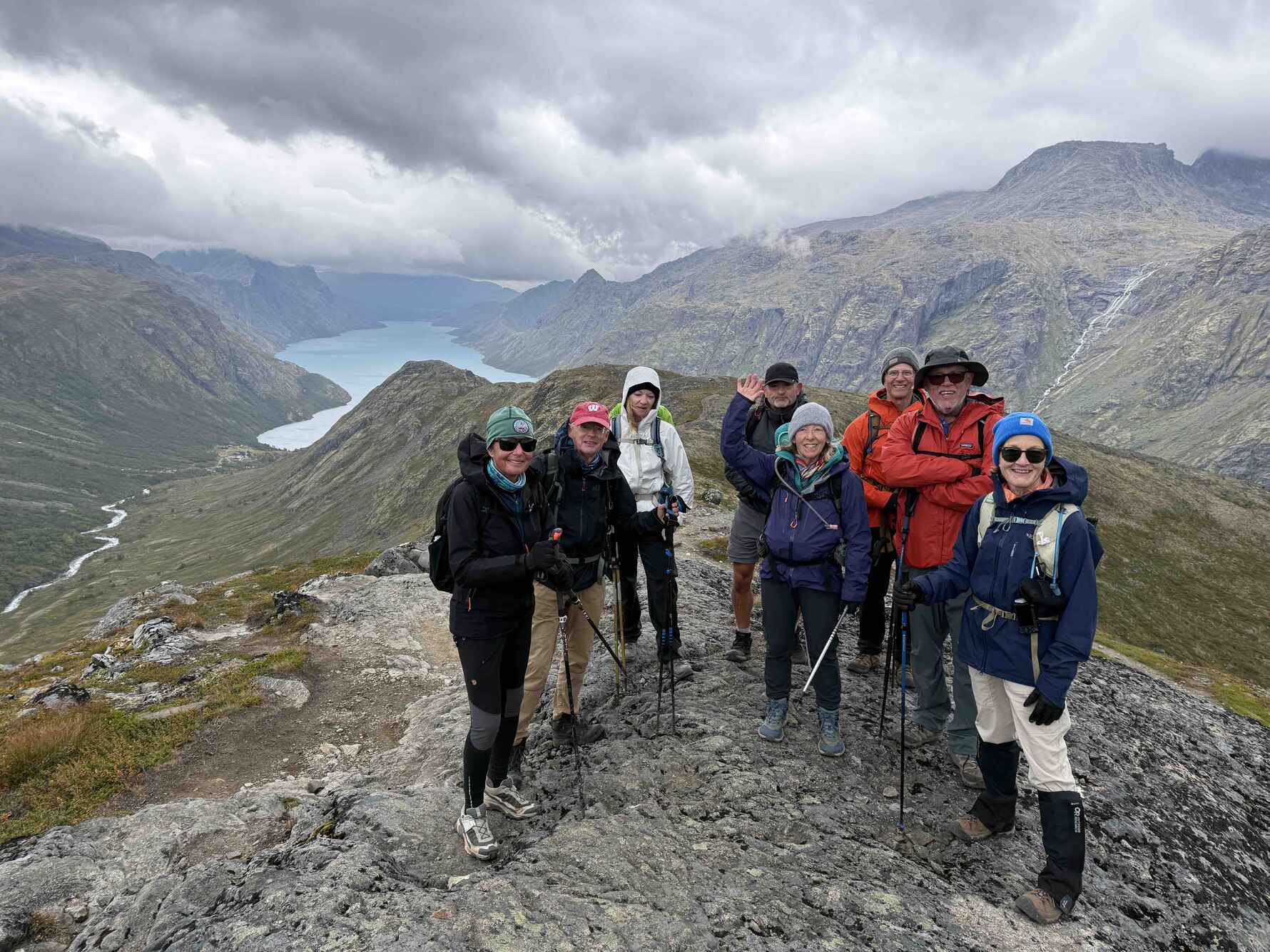
After leaving Gjendebu, the conditions began to change. We took the longer route around and up onto the high plateau towards Memurubu, and as we gained height, the atmosphere became noticeably different. The blue skies gave way to more threatening clouds, the wind picked up and the mountains took on a darker, moodier character.
It was a striking contrast to the sunshine we'd enjoyed earlier in the week, but no less beautiful. In many ways, the dramatic skies suited the wild Norwegian landscape perfectly. By the time we descended towards Memurubu, it felt as though the more familiar Norwegian weather was making a return.
Our final walking day was a wet one, the original plan had been to cross the famous Besseggen ridge, one of Norway's most celebrated mountain walks, with its spectacular views over the contrasting blue and turquoise waters of Bessvatnet and Lake Gjende. However, with wet conditions and poor weather, the exposed rocky ridge wasn't a sensible option.
Instead, we opted for an alternative route following the shoreline of Lake Gjende. Now, you might imagine that a lakeside walk would be a relatively gentle way to finish the trek. Not in Jotunheimen! The path involved a seemingly endless series of ups and downs, with more rocky terrain to negotiate along the way. It was certainly no easy stroll, particularly after a full week in the mountains.
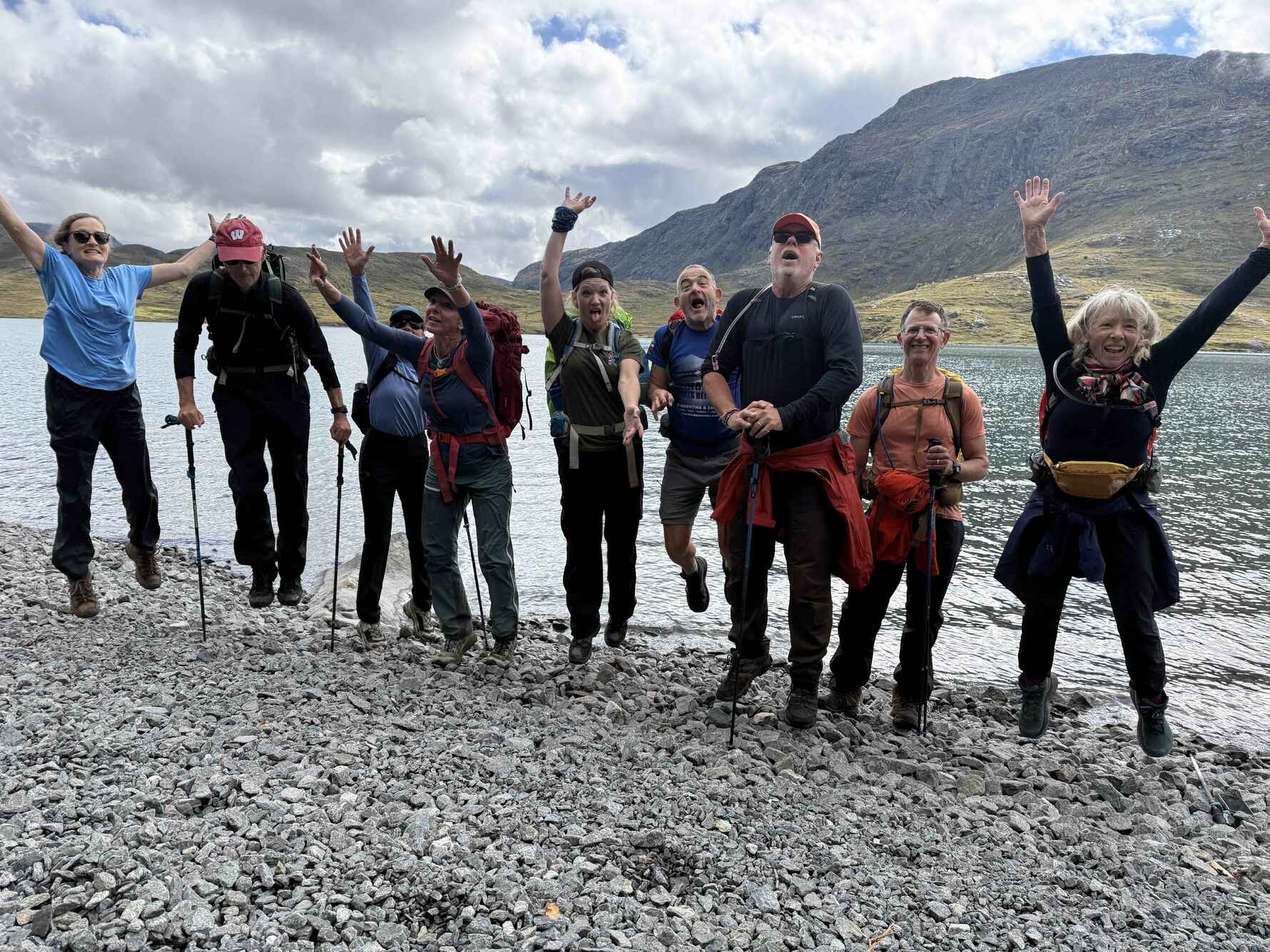
Nevertheless, we eventually made our way to Gjendesheim Lodge, completing our circuit of Jotunheimen and bringing a memorable week of trekking to a close.
A Norwegian Adventure to Remember
Our final evening at Gjendesheim was an opportunity to enjoy one last meal together, share stories from the week and reflect on everything we'd experienced. From the unexpected summer sunshine and magnificent summit of Galdhøpiggen to the endless boulder fields, remote valleys and wonderfully welcoming mountain huts, Jotunheimen had certainly delivered an adventure.
Having guided extensively in the Alps over the years, I found the Norwegian mountains a refreshing change. There's something about the vastness of the landscape, the remoteness and the feeling of being surrounded by wilderness that makes trekking here quite different. It's certainly not a trek to underestimate. You need good mountain fitness, confidence on rough ground and a willingness to embrace whatever the weather decides to do.
But for those who enjoy challenging mountain walking and discovering somewhere a little different, Jotunheimen is a wonderful destination. And as for the weather? Well, having now experienced both extremes of a Norwegian summer, I think I'll continue advising everyone to bring their waterproofs and gaiters. Even if, with a little luck, they spend most of the week tucked away in their rucksacks!
Interested in exploring Norway's wild mountains? Join Mont Blanc Treks on our guided Tour of Jotunheimen and discover this spectacular landscape for yourself.
About the Author