When you walk through the Swiss Alps with us, you don’t just cross a landscape — you cross centuries of living. Every alp-hut, every cowbell, every melting wheel of cheese is a chapter in a culture that still breathes at altitude.
A culture built at 2,000 metres
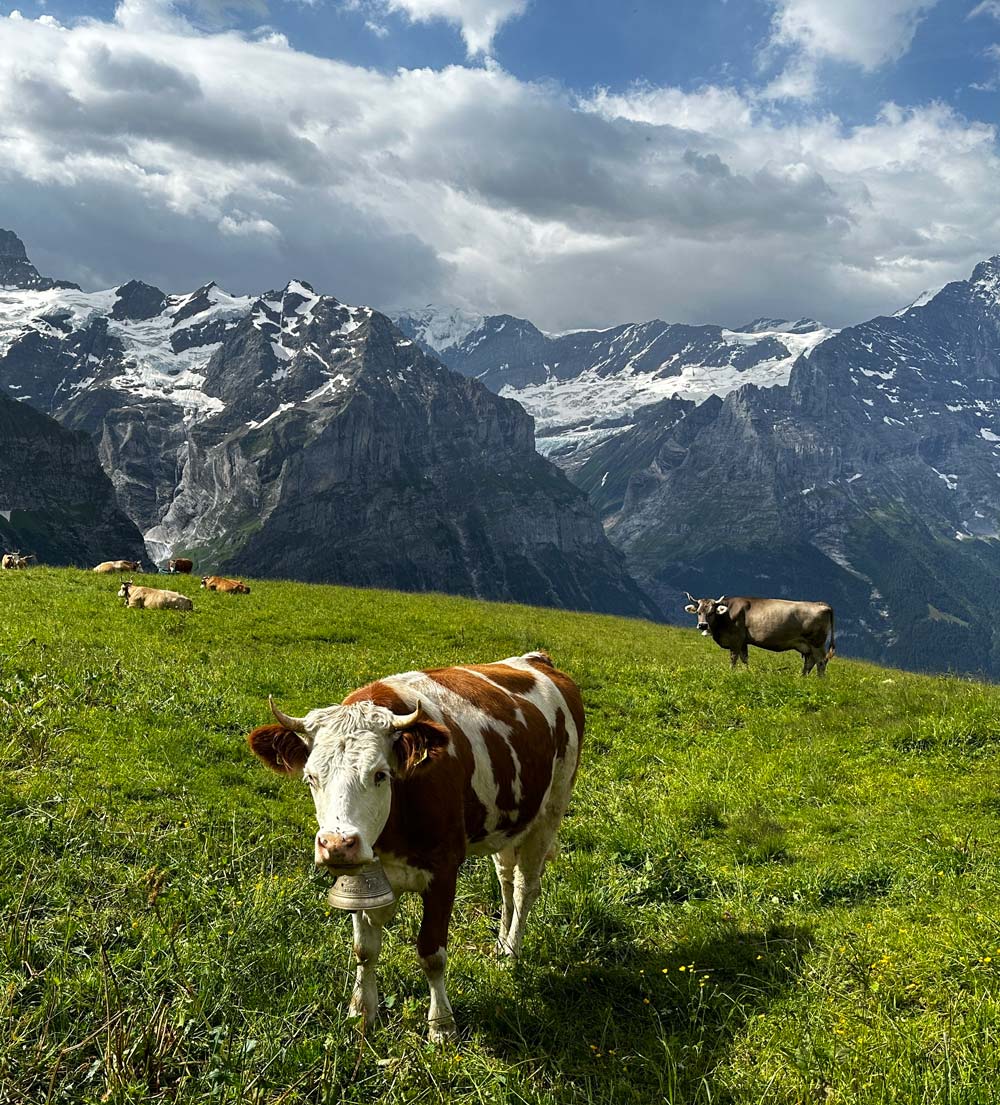
Swiss mountain culture didn’t emerge from cities or courts. It was forged by transhumance — the centuries-old seasonal movement of people and herds between valley villages in winter and high mountain pastures in summer. Every June, as snow retreats, farmers still lead their cows up rocky paths decorated with flower garlands, cowbells ringing across the valley. It is a festival. It is also simply Tuesday for many Swiss families.
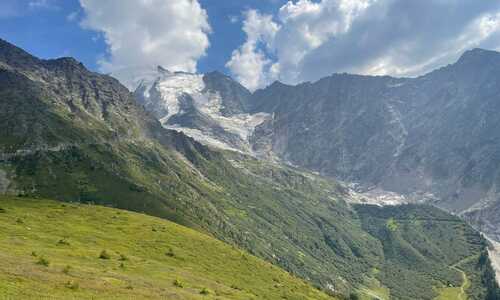
On our multi-day treks through the Bernese Oberland (Tour of the Jungfrau) and the Valais (Walker’s Haute Route & part of the Tour of the Monte Rosa), you’ll pass the remnants of this living tradition: low stone huts, rusted old milk cans by the path, and the occasional farmer who will wave you in for a glass of fresh-pressed whey without asking for anything in return.
The Älpler - the alpine herdsman - spent summers almost entirely isolated, with just his cows, his copper cauldron, and his craft. That isolation created an extraordinary food culture: nothing could go to waste, everything had to last. Cheese, butter, dried meats, and spirits weren’t luxuries; they were survival strategies that happened to be delicious.
What you actually eat when you trek here
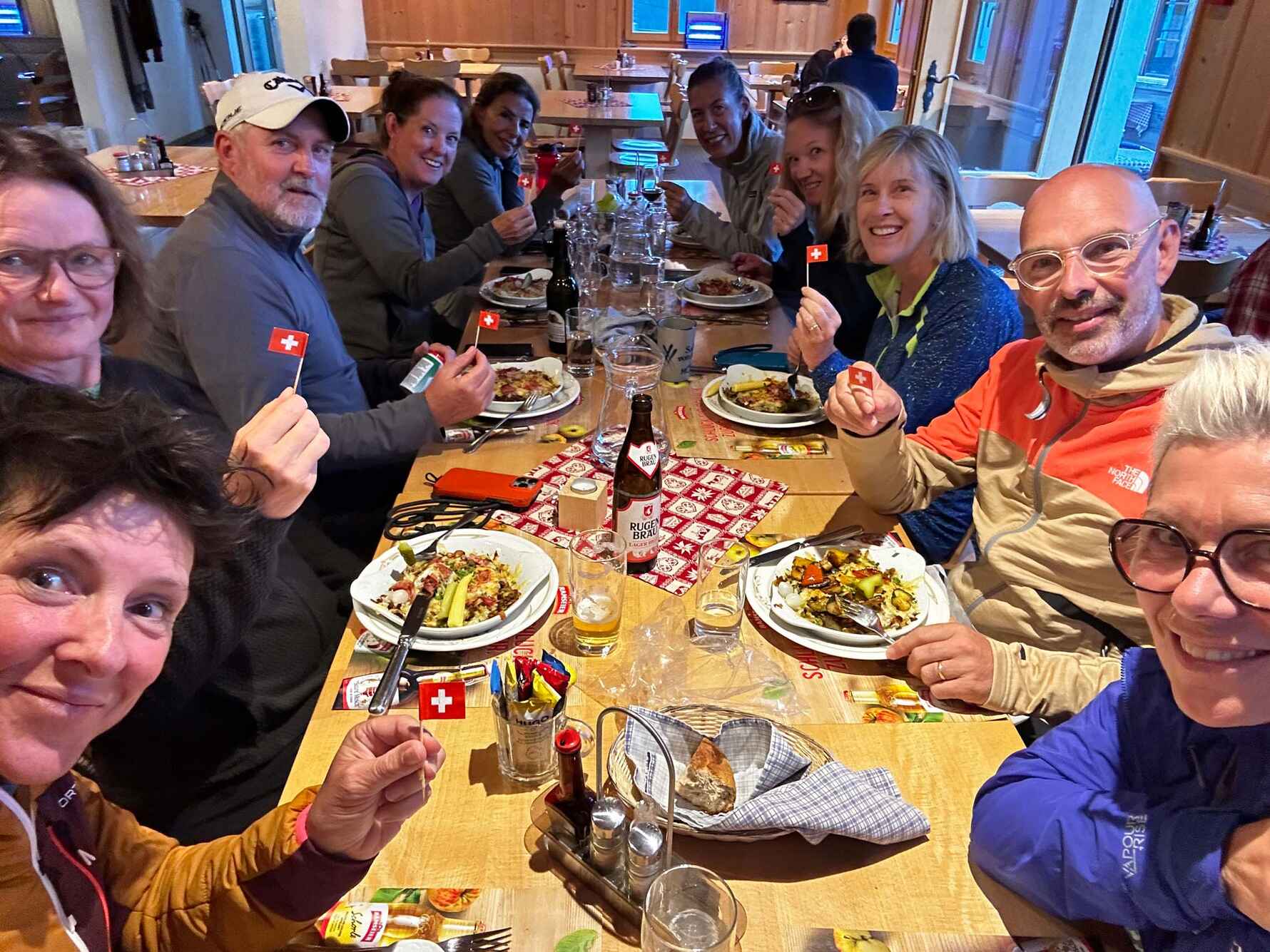
Forget the idea that mountain food is simple fuel. In Switzerland, the hut lunch is a small ceremony. At a Bergrestaurant or staffed SAC hut, you are likely to find Älplermagronen — the alpine mac and cheese that combines pasta, potatoes, Gruyère, caramelised onions, and always a side of warm apple sauce. It sounds unexpected. After eight hours on a ridge, it is revelatory.
Rösti — the crisp potato cake that divides Switzerland into its famous Röstigraben dialect boundary — arrives golden and often topped with a fried egg or a shaving of mountain cheese. Bundnerfleisch, air-dried beef cured in high Graubünden valleys, is sliced paper-thin and pressed onto sourdough that was probably baked in the valley below before dawn.
Our guides are intentional about where we eat. We time lunch breaks at working farms when possible, so you eat what was made that morning, not what was vacuum-sealed last month.
Wheels of time: the great Swiss cheeses
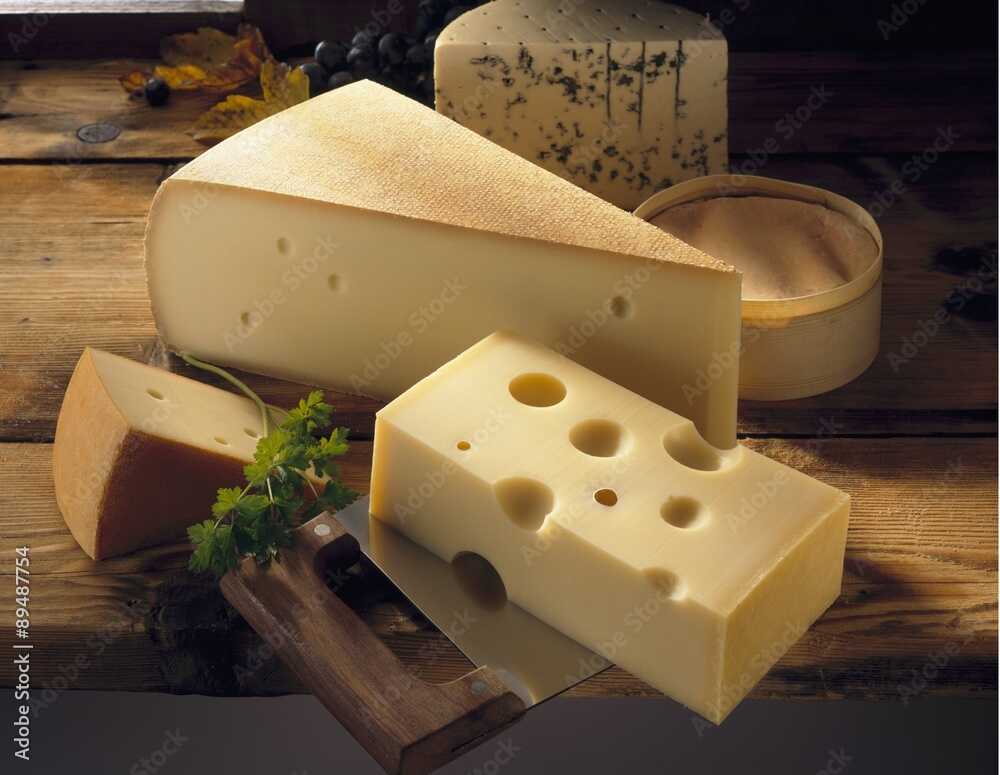
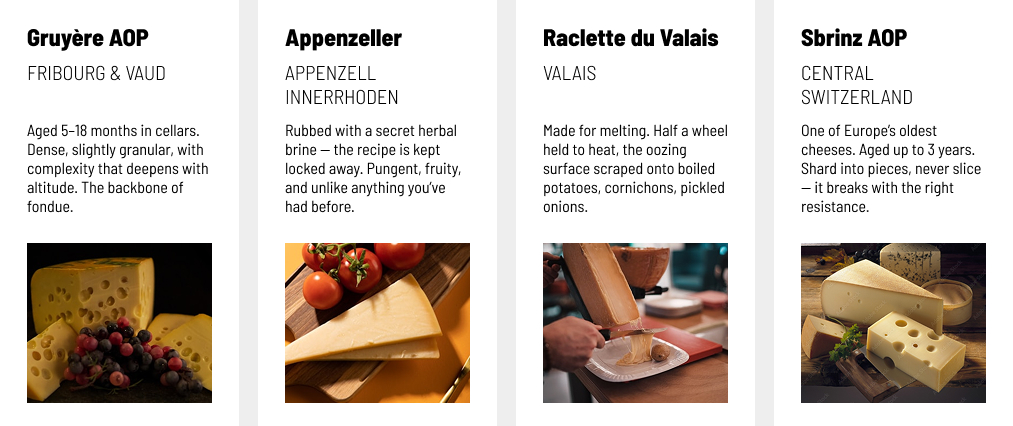
Switzerland makes over 450 varieties of cheese. Most people outside the country know three. Trekking here is an education in the other 447. Each valley, each altitude, each breed of cow produces something distinct — regional cheese is essentially a map of the landscape made edible.
The making of alpine cheese — Alpkäse — still happens on some high pastures between July and September. If our route takes us past a working dairy hut, we stop. Watching a farmer work a copper cauldron of evening milk at 1,800 metres, with nothing but fire and his hands, is the most honest culinary experience the Alps offer.
A guide’s notes on eating well in the mountains
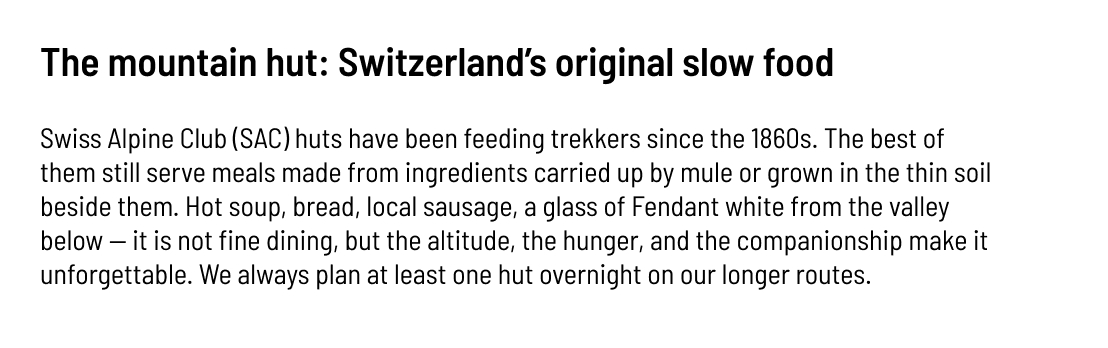
Ask for what’s local: Every Bergrestaurant has a menu item that uses something from the farm or the valley below. It’s rarely the first thing listed. Ask what’s regional and you’ll eat better.
Fondue at altitude is different: The same recipe tastes richer at 1,500m. The cheese is the same; the air and context are not. Don’t miss it on a cold September evening in a hut.
Dried meat is trail gold: Bundnerfleisch and dried sausages like Landjäger carry without refrigeration and provide serious protein. Many valley butchers will vacuum-pack them for multi-day treks.
Accept the whey: If a farmer offers you a cup of Schotte (fresh whey), take it. It’s mild, slightly sour, and a glimpse into how nothing is ever wasted up here.
The Almabtrieb is worth timing a trip around: The autumn cattle descent — happening each September — transforms valley villages into celebrations. If your trekking dates can align, they should.
If you have been wondering about alpine Swiss culture and their food, come and experience it for yourself and join us on our guided or self-guided multi-day treks of the Tour of the Jungfrau or the Walker’s Haute Route. We also offer bespoke guided hikes around Zermatt with views of the iconic Matterhorn.
Look to sample more than one culture in an alpine trek? Our Tour of the Monte Rosa Guided Trek could be of interest as it takes you through Switzerland and Italy, and let's not forget our iconic Tour du Mont Blanc Treks which circumnavigate three countries, Switzerland, France and Italy.