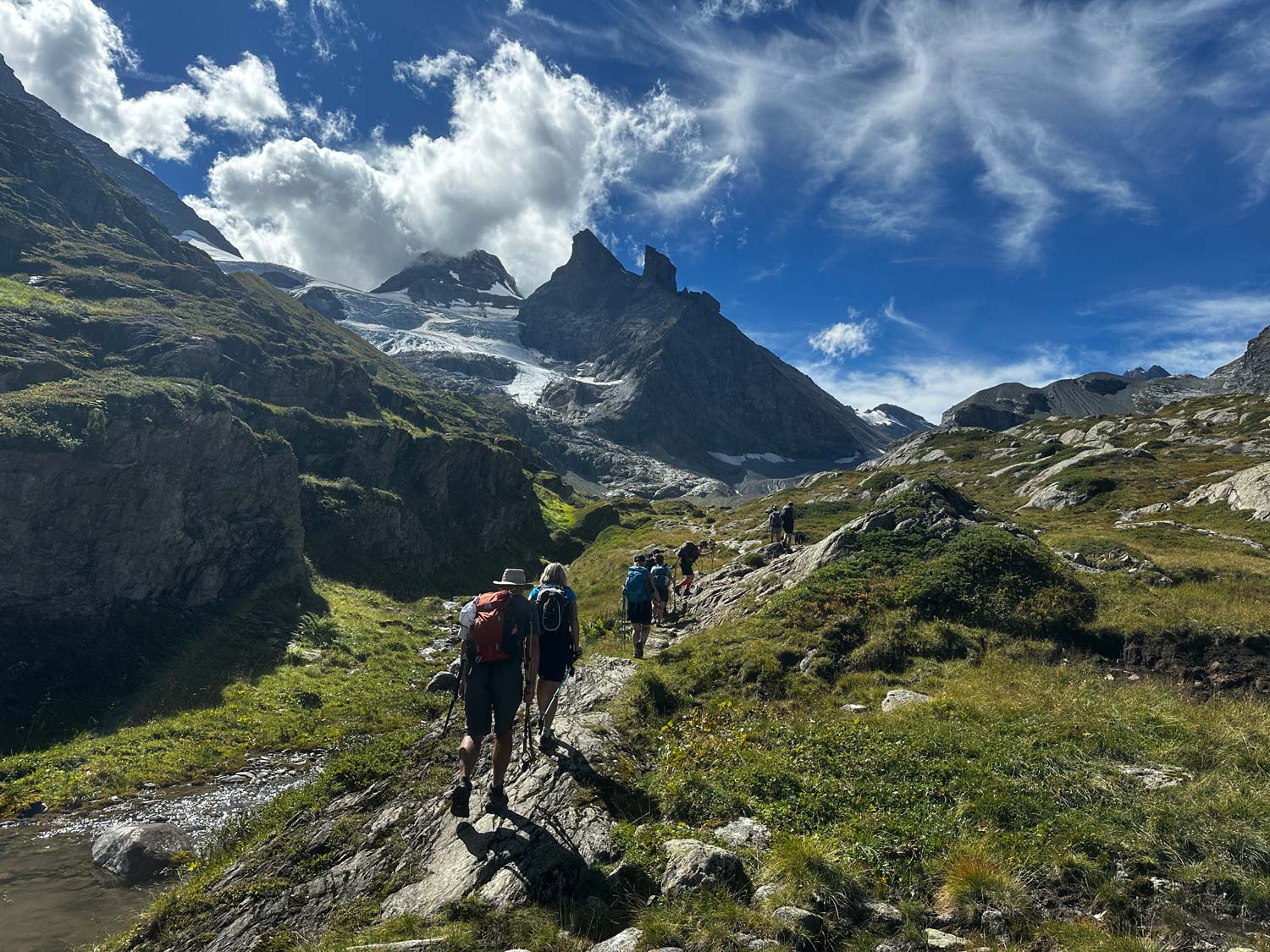
Hiking in Switzerland

Our guides' picks for your ultimate alpine adventure, from iconic peaks to hidden valleys.

Let's be honest, with over 65,000 kilometers of pristine, well-marked trails, choosing your next adventure while hiking in Switzerland can feel a bit overwhelming. That’s why our team of qualified mountain guides did the hard work for you. We got together and hashed out a list of our top 10 Swiss hikes for 2025, broken down by region.

Whether you're dreaming of jagged peaks, glacial lakes, or meadows that look straight out of a storybook, this guide will help you find the perfect trail. We'll start with a quick look at Switzerland's different hiking regions and then jump into our top 10 list to get you inspired.
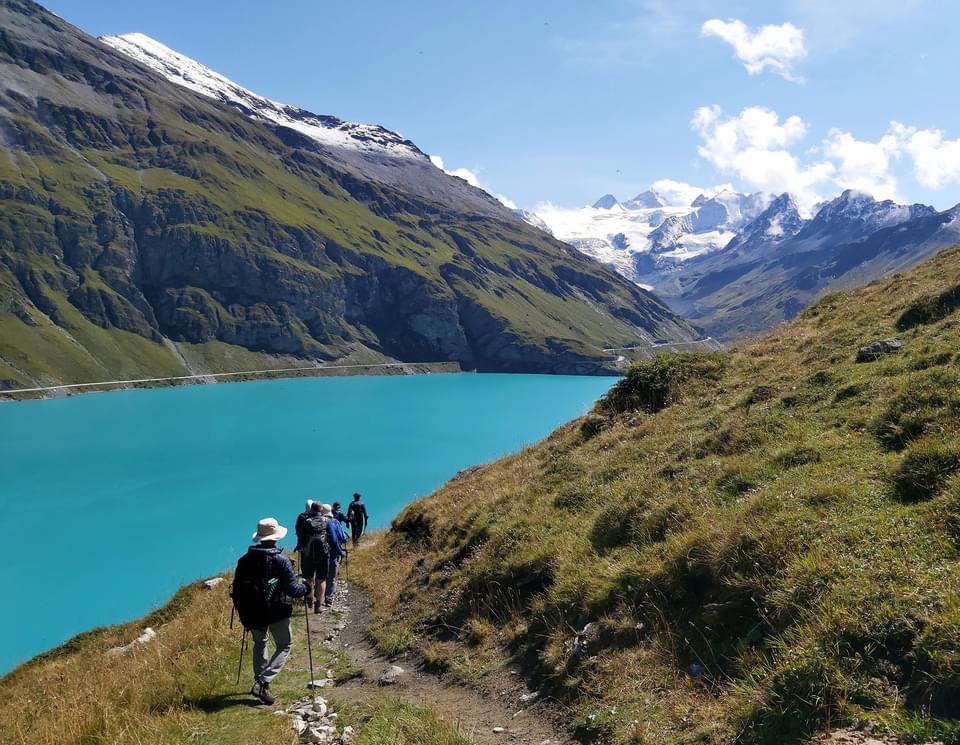
Understanding Switzerland's diverse hiking regions

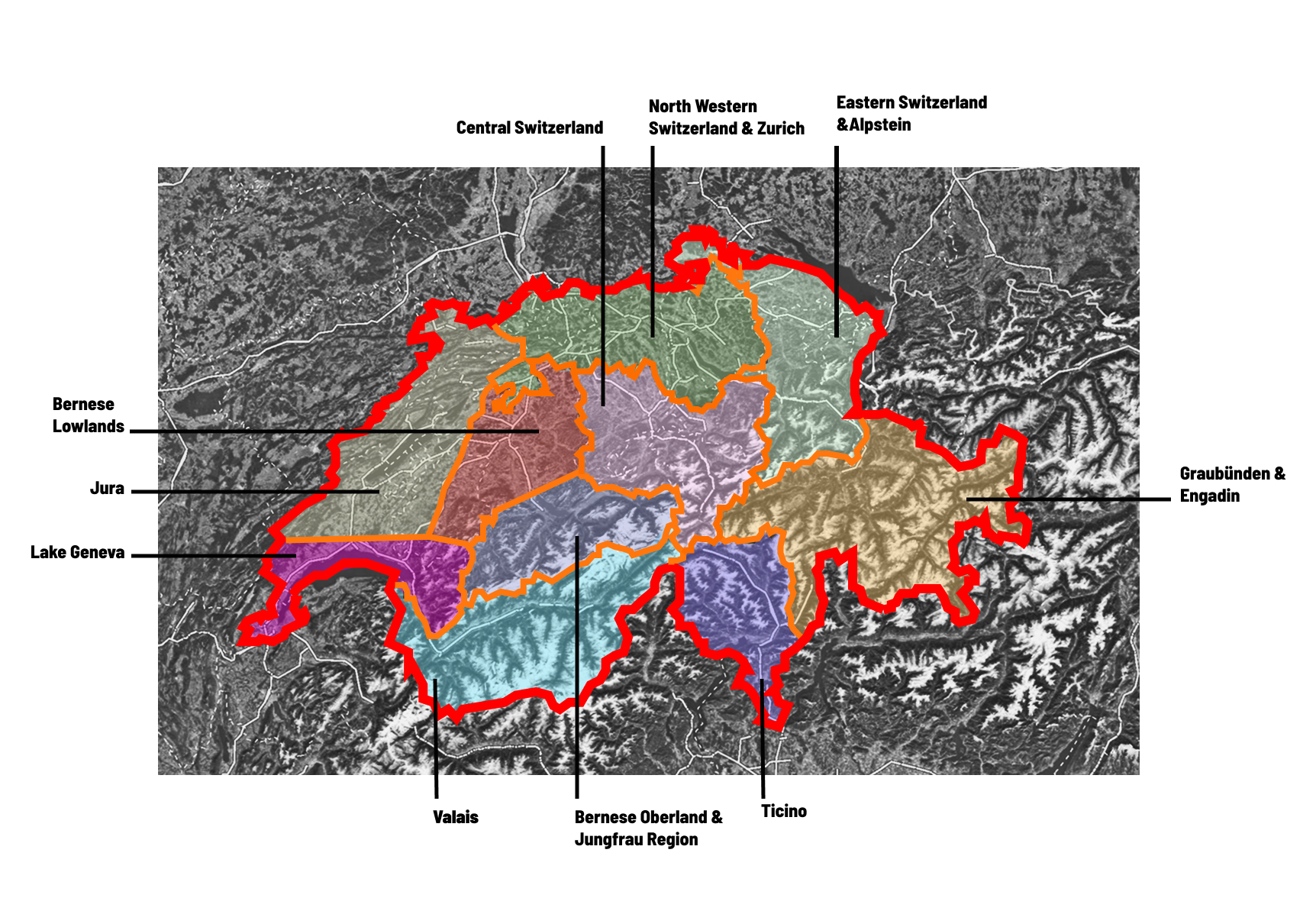
Before we dive into the specific trails, it helps to get the lay of the land. Switzerland is much more than just the Alps; its geography is incredibly varied. We've broken the country down into 10 distinct regions, each with its own unique feel for hiking.

Valais

Home to the Matterhorn and more than 40 other peaks over 4,000 meters, the Valais is a high-alpine paradise. You can expect dramatic, rocky terrain, huge glaciers, and surprisingly sunny, dry conditions. Trails here are often at high altitudes (2,000-3,500m), offering some of the most challenging and rewarding treks in the country. It’s easy to get to from towns like Zermatt and Verbier. The best time to hike here is from July to September.

Bernese Oberland

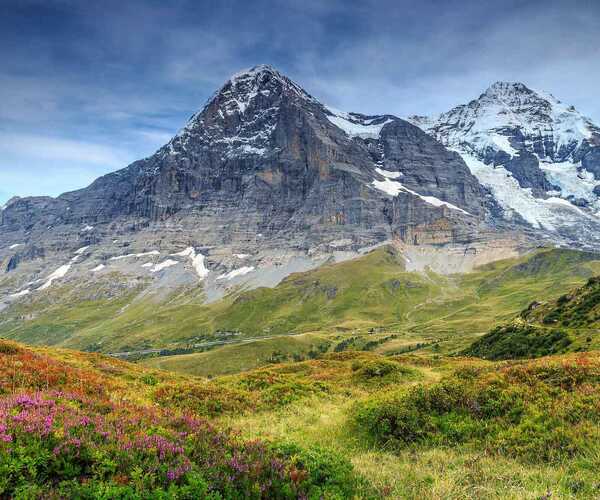
This is the Switzerland you've seen on postcards. We're talking about the iconic Eiger, Mönch, and Jungfrau peaks towering over lush green valleys like Lauterbrunnen. The terrain here has it all, from gentle meadow paths to tough high-altitude passes. It’s incredibly well-connected by trains and cable cars from bases like Interlaken and Grindelwald. Aim for a trip between late June and early October for the best weather.

Graubünden

As Switzerland's largest and most remote canton, Graubünden offers a wilder, less crowded experience. It's home to the Swiss National Park, and its scenery includes rugged peaks, deep blue lakes, and dense pine forests. Altitudes vary, but many classic trails sit between 1,500m and 2,800m. You can get there from hubs like St. Moritz and Chur. The hiking season here runs from June to October.

Central Switzerland

Centered around Lake Lucerne, this region gives you dramatic pre-alpine scenery with limestone peaks like Pilatus and Rigi rising steeply from the water. Hikes here often combine stunning lake views with mountain panoramas. It’s super accessible from Lucerne and has a long hiking season, from May to October, with plenty of lower-altitude options to choose from.

Ticino

The Italian-speaking south of Switzerland feels almost Mediterranean. Here you’ll find palm trees, pristine glacial rivers with smooth rock pools, and rustic stone villages tucked into steep valleys covered in chestnut forests. The terrain can be rugged and steep, but the climate is milder, making it a great spot for spring and autumn hiking (April-June, September-October).

Jura

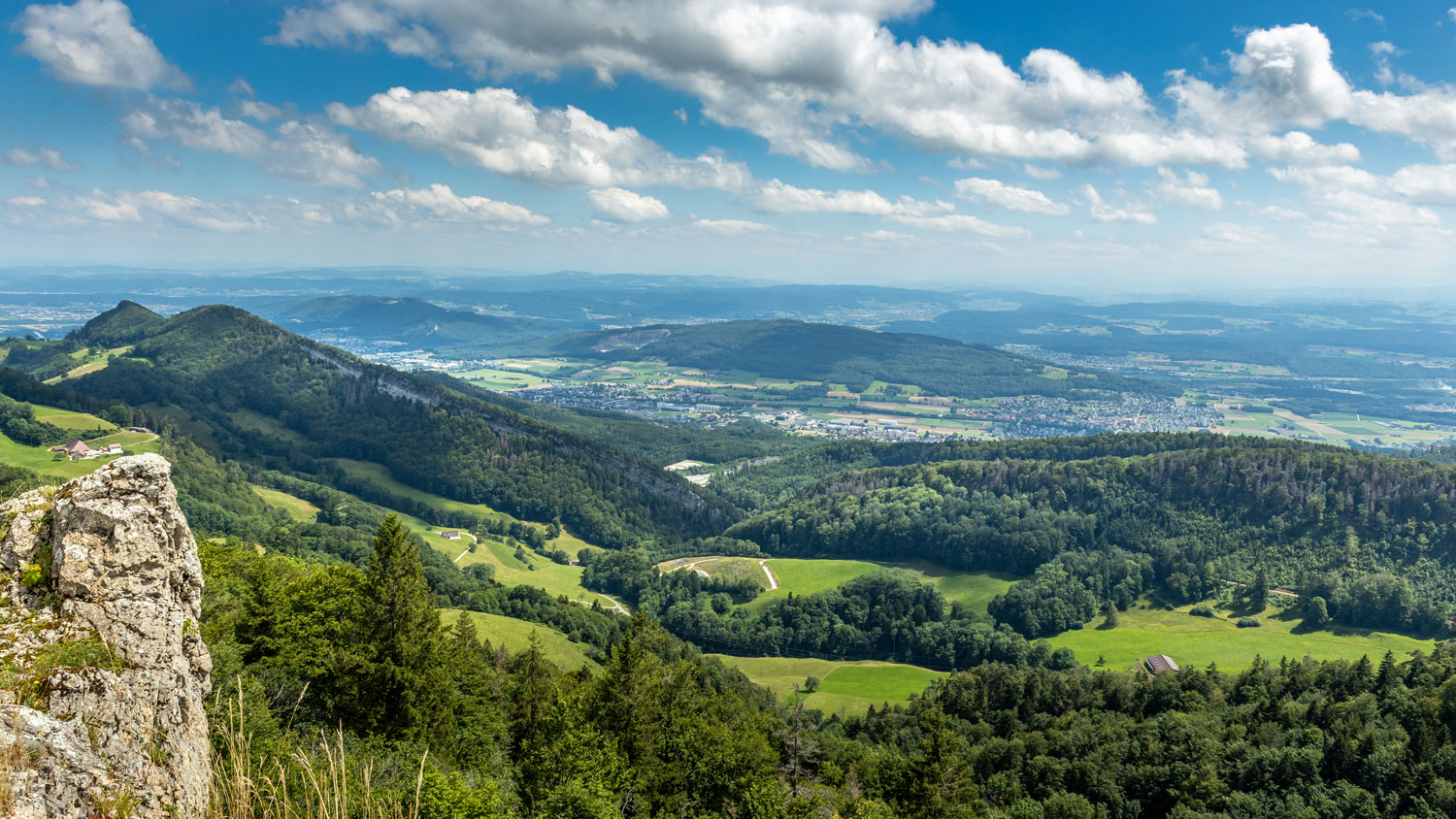
The Jura mountains form a gentle, rolling arc along the French border. This region is known for its limestone plateaus, deep forests, and open pastures. It sits at lower altitudes (1,000-1,700m), so it’s great for less strenuous hiking and has a much longer season than the high Alps, often accessible from May through November.

Lake Geneva

This region blends cosmopolitan flair with natural beauty. You can hike through the UNESCO-listed Lavaux vineyard terraces that slope down to the lake, or climb peaks like Rochers de Naye for incredible views of the entire lake and the French Alps beyond. The best seasons are spring and autumn if you want to avoid the summer heat.

Eastern Switzerland & Alpstein

The Alpstein massif is a unique and dramatic limestone range known for its steep, jagged peaks, famous ridge hikes, and mountain inns (berggasthaus) built right into the cliffs. Though not as high as the central Alps, the terrain is challenging and exposed. It’s a photographer’s dream, best explored from July to September.

Northwestern Switzerland & Zurich

While it's known for cities like Basel and Zurich, this region offers some lovely, accessible nature escapes. Gentle hills, river valleys, and dense forests provide plenty of opportunities for easy to moderate day hikes. The Uetliberg, Zurich's local mountain, offers great city views and is accessible year-round, though spring and autumn are particularly nice.

Bernese Lowlands

Often called the "Mittelland," this is the heartland of Switzerland. It's a plateau of rolling hills, meandering rivers, and charming farmland between the Jura and the Alps. Hiking here is gentle and pastoral, perfect for leisurely walks and family outings, especially in the Emmental valley. It's accessible all year.

Our top 10 Swiss hikes for 2025

Alright, here's the part you've been waiting for. Now that you have a feel for the regions, here is our definitive list of the best hikes in Switzerland, mixing iconic multi-day treks with unforgettable day hikes.

How we picked these hikes

Our UIMLA-certified guides didn't just throw darts at a map. They selected these trails based on a few key things: scenic beauty, trail quality, how unique the experience is, and accessibility for different fitness levels. This list represents the very best of what Swiss hiking has to offer.

At a glance: Switzerland's top 10 hikes

1. Walker's Haute Route

  • Region: Valais

  • Stats: ~200 km / 12-14 days / Challenging / July-Early Sept.

This is one of the world's most famous and challenging treks, connecting Chamonix, France, to Zermatt. The Swiss portion crosses 11 alpine passes, offering unbelievable views of Mont Blanc, the Matterhorn, and countless glaciers. It’s a serious undertaking that requires excellent fitness and some real mountain experience. You'll cross high alpine passes, glacial moraines, and remote valleys, with the final approach to Zermatt and its view of the Matterhorn being a real highlight. This one is for experienced, very fit trekkers looking for the ultimate alpine challenge.

Pro Tip: The Walker's Haute Route is one of our signature guided treks. Our guides and detailed logistics let you focus on the epic scenery, not the map.

2. Tour of the Jungfrau

  • Region: Bernese Oberland

  • Stats: ~110 km / 9 days / Challenging / July-Early Sept.

This is a spectacular loop around the iconic Jungfrau massif, showcasing the best of the Bernese Oberland. You'll see the thundering waterfalls of the Lauterbrunnen Valley and stand at the foot of the mighty Eiger North Face. It’s a true deep dive into classic Swiss scenery on well-maintained but steep mountain paths. You'll cross high passes like the Sefinenfurgge and stay in lovely car-free villages like Mürren and Wengen. It's perfect for fit hikers who want a challenging multi-day trek through some of Switzerland's most famous landscapes.

Pro Tip: Our Tour of the Jungfrau is a fully supported trek. We handle luggage transfers and book charming mountain hotels, making it a much more comfortable way to tackle this tough route.

3. Oeschinensee Panorama Trail

  • Region: Bernese Oberland

  • Stats: 8.5 km / 3-4 hours / Moderate / Late June-September.

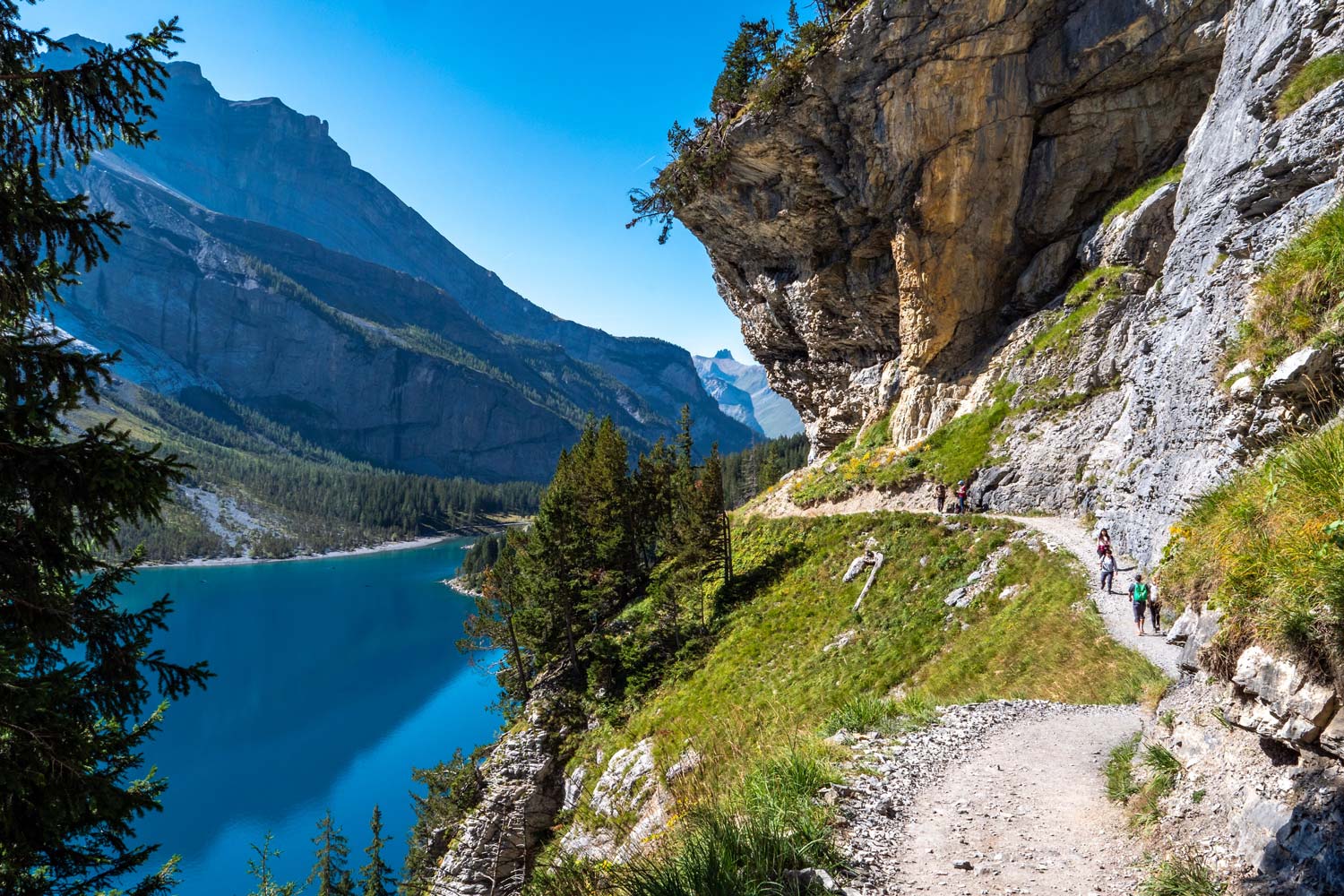
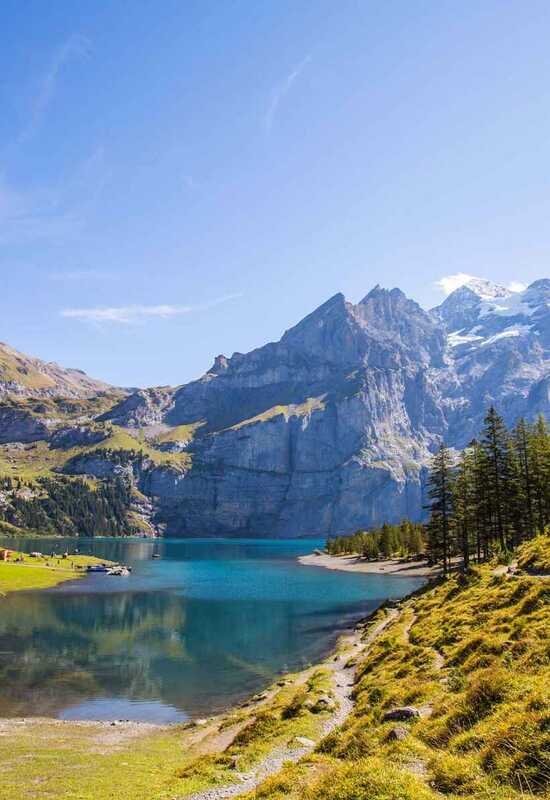
Oeschinensee is arguably the most beautiful alpine lake in Switzerland. This high trail circles above the impossibly blue water, giving you jaw-dropping views of the lake and the surrounding Bluemlisalp massif, with its cascading glaciers and waterfalls. The path is well-graded but can be narrow as it cuts along a steep hillside. The real reward is the constantly changing, incredible view of the lake from above. It's a dream for photographers and moderately fit hikers.

4. Zermatt's 5 Lakes Walk (5-Seenweg)

  • Region: Valais

  • Stats: 9.8 km / 2.5-3 hours / Easy / July-September.

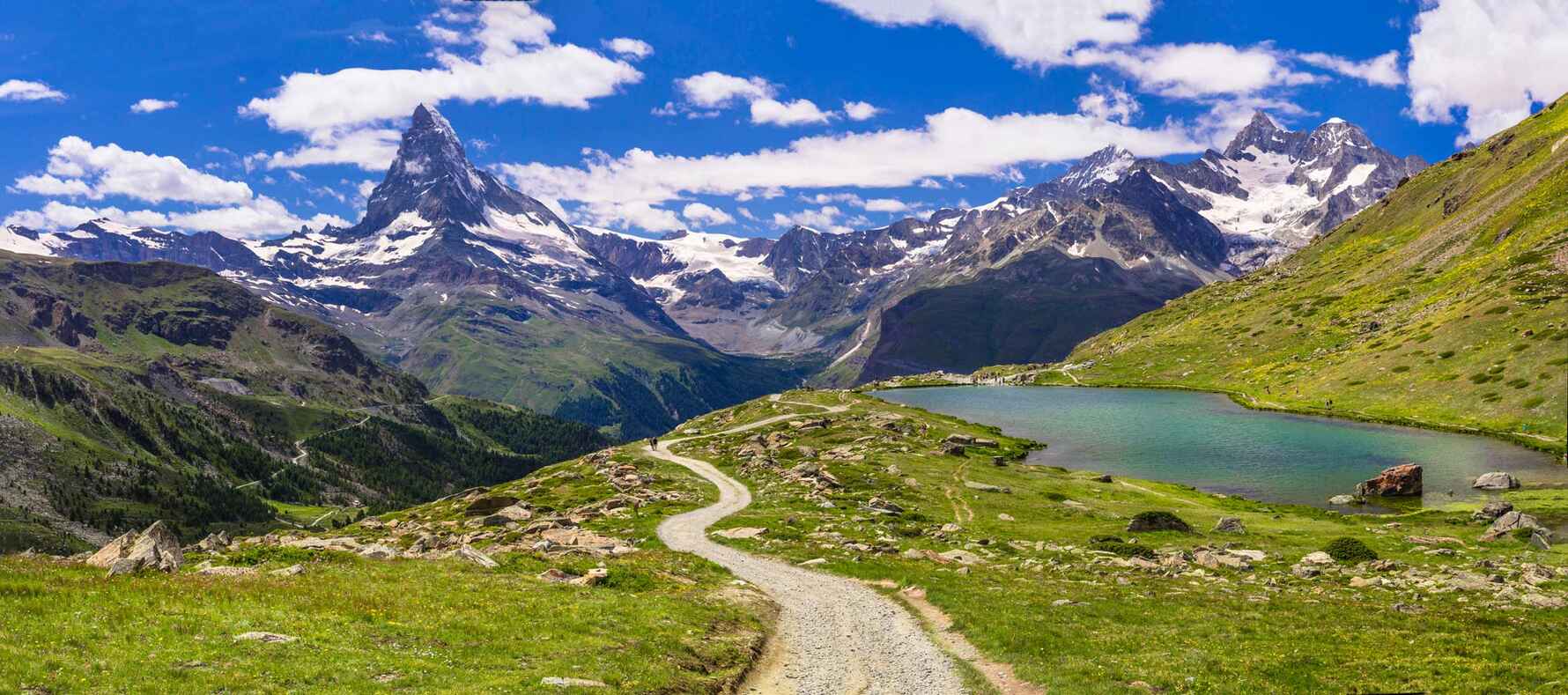
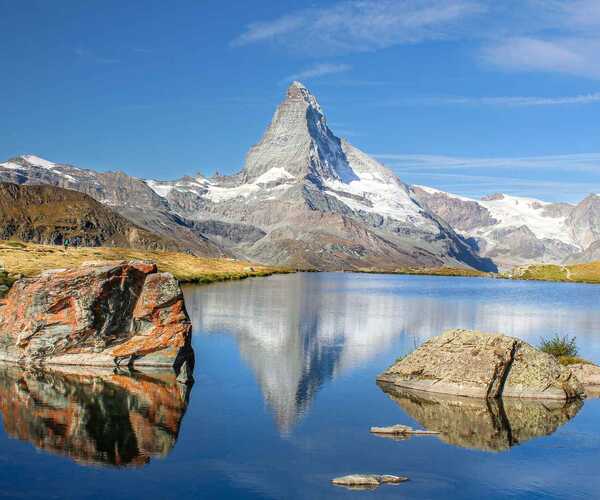
This trail delivers some of the best Matterhorn views without a grueling climb. It links five alpine lakes (Stellisee, Grindjisee, Grünsee, Moosjisee, and Leisee), and on a calm day, three of them offer stunning reflections of the famous peak. The trail is easy, mostly downhill walking on wide paths, making it great for families, novice hikers, and anyone hunting for that perfect Matterhorn reflection shot in Stellisee.

Pro Tip: Zermatt has endless hiking options. If this trail sounds a bit too easy, get in touch with us about abespoke Zermatt hiking package that we can tailor to your fitness and interests.

5. Schäfler Ridge

  • Region: Eastern Switzerland & Alpstein

  • Stats: 8 km / 4-5 hours / Moderate-Hard / July-September.

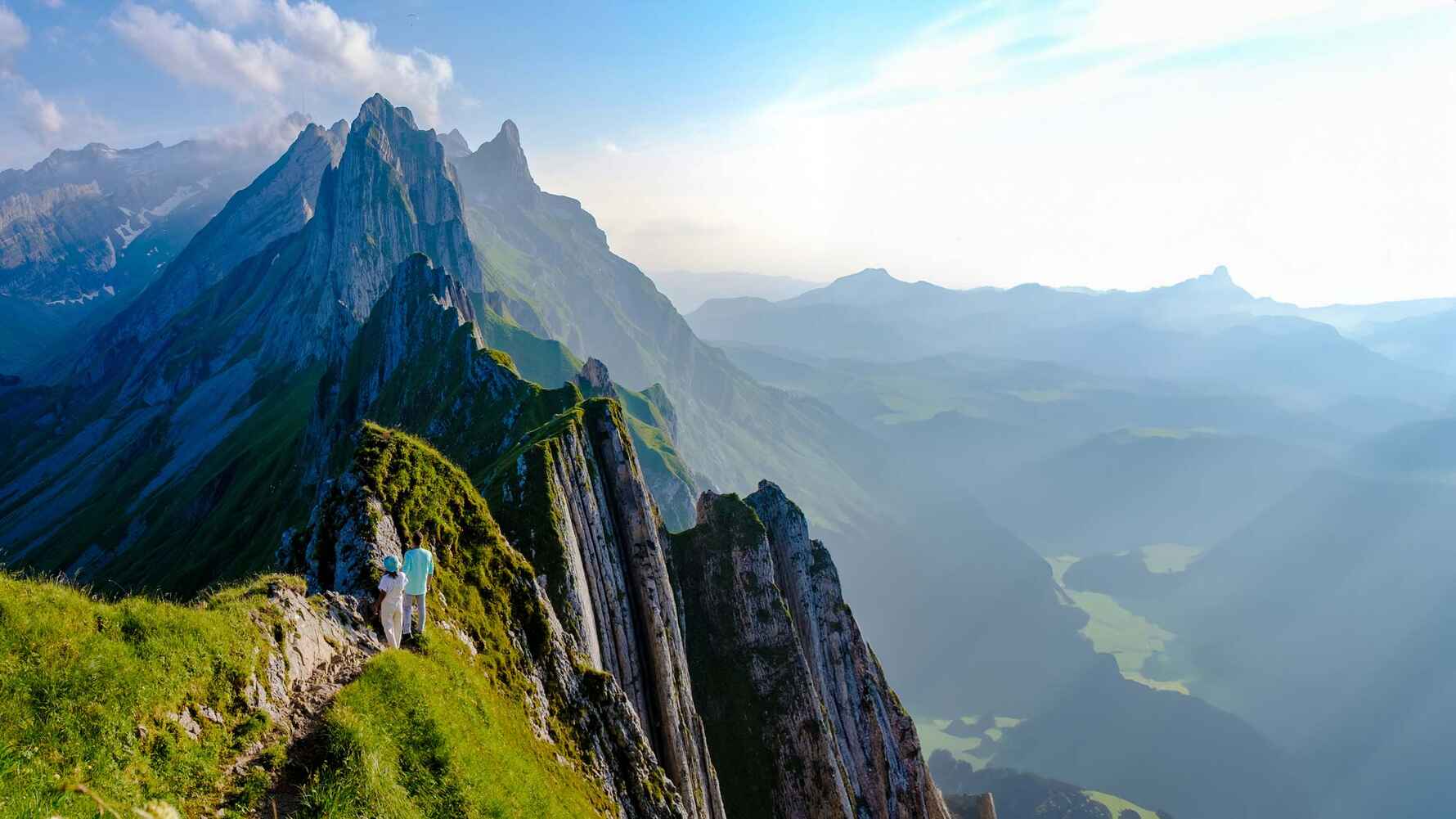
This is a thrilling and highly photogenic ridge walk in the Alpstein region. After a steep climb to the Schäfler Hut, the trail follows a narrow, exposed ridgeline with dramatic drop-offs and spectacular views of the surrounding jagged peaks. The trail has some cable-secured sections to help you along the rocky ridge. It’s an adrenaline rush with amazing views, but it's best for sure-footed, experienced hikers with a good head for heights.

6. Stoos Ridge Trail (Klingenstock to Fronalpstock)

  • Region: Central Switzerland

  • Stats: 4.7 km / 2-3 hours / Moderate / July-October.

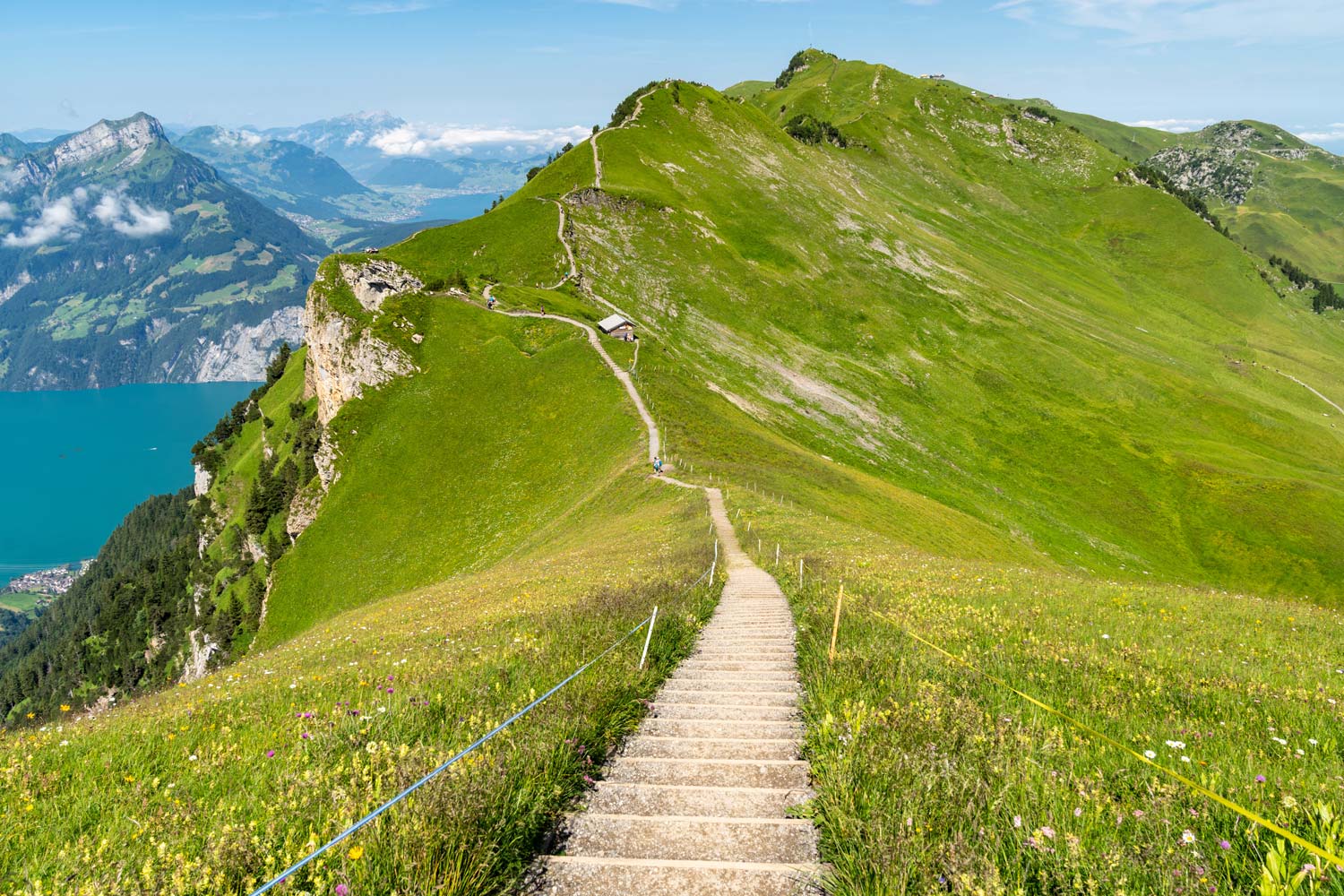
This is one of Switzerland's most famous panoramic ridge hikes for a reason. A chairlift whisks you to the Klingenstock peak, where you begin a stunning walk along a secure ridge path towards Fronalpstock, with Lake Lucerne shimmering far below. The path is well-built with stairs and railings along the exposed sections. The 360-degree view of over ten lakes and countless peaks of Central Switzerland is the main draw here. It’s perfect for anyone with decent fitness looking for maximum views with moderate effort.

7. Via Engiadina Segment: Guarda to Scuol

  • Region: Ticino

  • Stats: 14 km / 3.5-4 hours / Easy-Moderate / May-October.

Follow the emerald-green Verzasca River from the remote village of Sonogno down to Lavertezzo, known for its double-arched Roman bridge. This trail leads through ancient forests, past cascading waterfalls, and alongside spectacular water-sculpted rock formations. The path is mostly flat and follows the river, with highlights like the crystal-clear water and the iconic Ponte dei Salti bridge. You can even take a dip in the rock pools, but be careful as the water is freezing! It’s a great walk for families and anyone looking for a refreshing and relatively easy day out.

9. Jura Crest Trail: Chasseral

  • Region: Jura

  • Stats: 12 km / 3-4 hours / Easy / May-November.

The Jura Crest Trail is the oldest long-distance hike in Switzerland. This section takes you to the summit of Chasseral (1,607m), the highest point in the region. From the top, you get vast, open views across the Swiss plateau to the entire Alpine chain on one side and the Vosges mountains in France on the other. The trail winds through open, rolling pastures and gentle forest paths, making it a great option for hikers of all levels looking for huge, gentle landscapes.

10. Rochers de Naye from Montreux

  • Region: Lake Geneva

  • Stats: 11 km / 3-4 hours (descent) / Moderate / June-October.

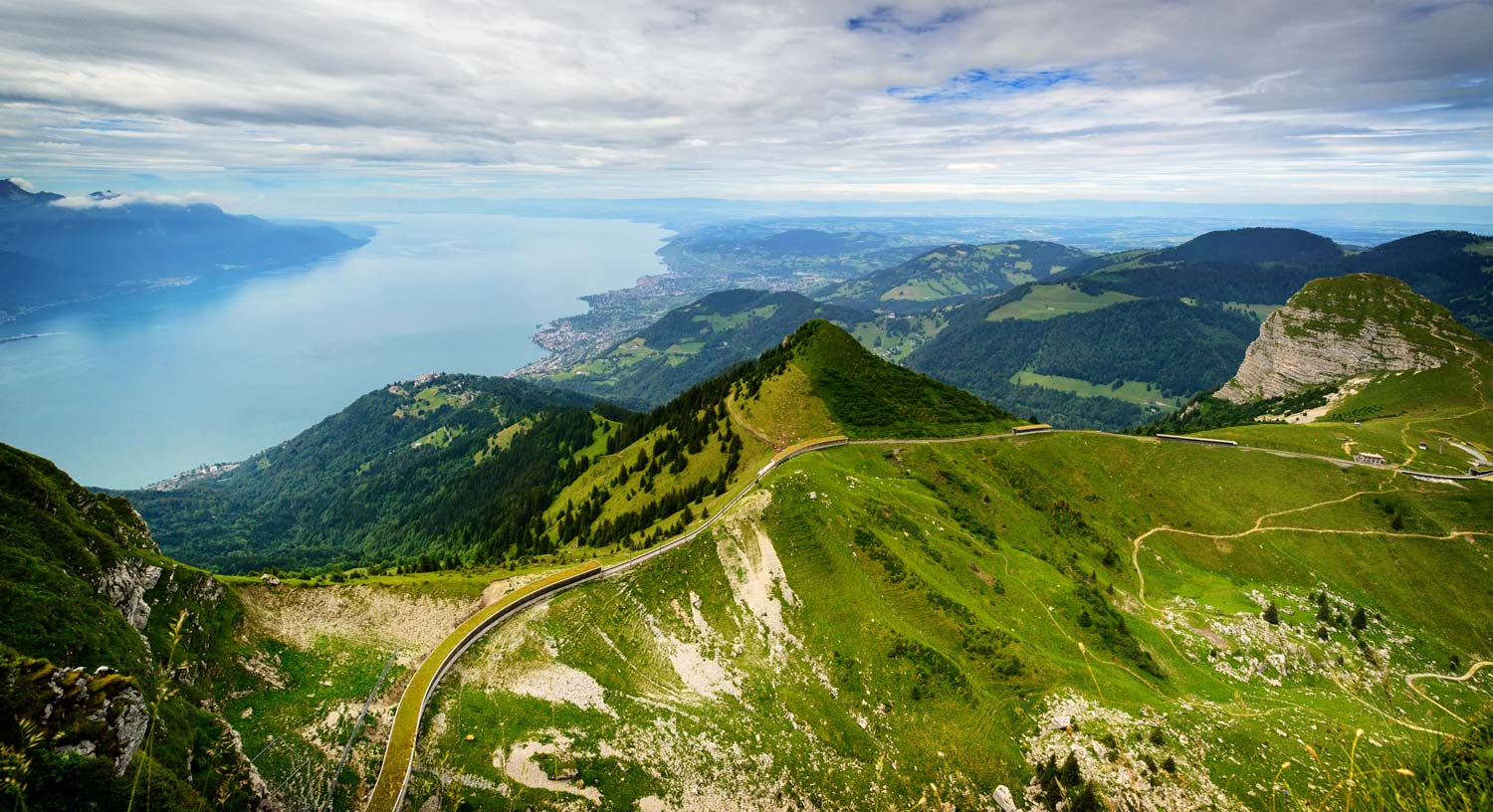
For one of the best views of Lake Geneva, here's a little trick: take the cogwheel train from Montreux up to Rochers de Naye (2,042m) and hike back down. The trail descends through alpine meadows and forests, offering ever-changing perspectives of the lake and the French Alps. The highlight is the incredible bird's-eye view from the summit, where you can see the whole lake from Geneva to Villeneuve. This one is perfect for hikers who prefer going downhill and want a rewarding view without the exhausting climb.

Let us handle the details

Feeling inspired? We get it. Planning a multi-day trek in the Alps can be complicated, but it doesn't have to be a headache. At Mont Blanc Treks, we specialize in putting together unforgettable hiking holidays.

  • Guided Treks: Join a small group led by a qualified International Mountain Leader (UIMLA). They’ll keep you safe and share all sorts of cool insights into the local culture, plants, and animals.

  • Self-Guided Packages: Want to hike at your own pace? We can set you up with detailed route notes, pre-booked accommodations, and luggage transfers. All the freedom, none of the planning stress.

  • Bespoke Treks: We can even design a custom itinerary around Chamonix, Zermatt or Courmayeur that’s perfectly matched to what you want to do and see.

We take care of the details so you can focus on the trail. Check out our  guided treks, our self-guided options, or our bespoke treks to see what’s possible.

Practical tips for your Swiss hiking trip

A little prep goes a long way in making sure you have a safe and fun trip. Here are a few essential tips for anyone planning on hiking in Switzerland.

When's the best time to go?

High-alpine trails (above 2,000m) are generally snow-free from early July to mid-September. Mid-altitude hikes (1,000-2,000m) are often accessible from June to October. Lower-altitude and Jura trails can usually be hiked from May to November.

What about fitness and gear?

Be honest with yourself about your fitness level. Swiss trails are well-marked but can be seriously steep. You'll need sturdy, broken-in hiking boots, layers of moisture-wicking clothing, a waterproof jacket and pants, a sun hat, and trekking poles, which are a lifesaver on steep descents.

Where to stay and how to get around

Mountain huts (Hütten/Cabanes) offer a unique alpine experience but you need to book them far in advance. In the valleys, you'll find everything from campsites to fancy hotels. The Swiss Travel System (trains, buses, boats) is incredibly efficient and can get you to almost any trailhead you can think of.

How far in advance should I book?

For popular multi-day treks like the Walker’s Haute Route or our Tour of the Jungfrau, we recommend booking 6 -12 months and 4-12 months respectively ahead of time, especially for guided trips, as the good spots fill up fast.

Ready to start your Swiss adventure?

Whether you're ready to book one of our classic treks or just have a few questions, our team is here to help you plan the perfect alpine journey. Your adventure in the Swiss Alps is waiting!

FAQs (Frequently Asked Questions)

When is the best time of year to go hiking in Switzerland for the iconic high-alpine routes?

For high-alpine trails above 2,000m, the optimal time is generally from early July to mid-September when they are mostly snow-free. Mid-altitude routes (1,000-2,000m) are accessible from June to October, while lower-altitude trails can be enjoyed from May to November.

What essential gear do you recommend bringing for hiking in Switzerland to be prepared for alpine conditions?

You'll need sturdy, broken-in hiking boots, moisture-wicking layers, and waterproof outer shells for potential weather changes. Trekking poles are also highly recommended, especially for steep ascents and descents.

How important is my fitness level when planning hiking in Switzerland, particularly for multi-day treks?

Being honest about your fitness is crucial, as Swiss trails, while well-maintained, can be very steep and challenging. Multi-day treks like the Haute Route require excellent fitness and some mountain experience.

Can I rely on public transportation for getting to trailheads while hiking in Switzerland?

Absolutely, the Swiss Travel System, encompassing trains, buses, and boats, is incredibly efficient and can get you to nearly any trailhead. It makes navigating the country for hikers very convenient.

How far in advance should I book my trip for hiking in Switzerland if I want to secure accommodation or a guided trek?

For popular multi-day treks and guided trips, like the Walker’s Haute Route we strongly recommend booking 12 months in advance. Mountain huts and prime spots fill up quickly, especially during peak season.

Are there options for less strenuous hiking in Switzerland for families or those new to alpine trekking?

Yes, regions like the Bernese Lowlands, Jura, and some easier routes in Valais (like Zermatt's 5 Lakes Walk) offer gentle hikes perfect for families or beginners. The blog highlights several easy-to-moderate options that provide stunning views without extreme effort.