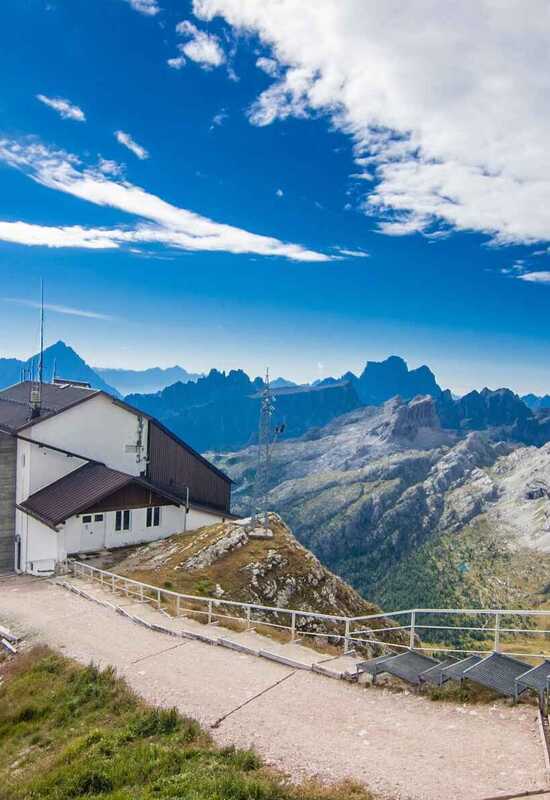
Join our self guided Tour du Mont Blanc full trek this summer and explore the Alps on a rewarding journey through France, Italy and Switzerland. This spectacular long-distance route winds its way beneath iconic glaciated peaks, across high alpine meadows and along dramatic ridge lines, offering ever-changing panoramas and authentic mountain hospitality each evening in traditional mountain refuges and charming valley hotels.
With long summer days, wildflower-filled trails, and golden light illuminating the rugged landscape, July and August is one of the best times to trek the Mont Blanc massif. With carefully planned stages, comfortable accommodation and detailed route notes, you'll have everything you need to complete this legendary circuit at your own pace — the perfect blend of challenge, freedom and awe-inspiring scenery.
Tour du Mont Blanc - Best of Self-Guided Trek
Tour du Mont Blanc - Best of Self-Guided Trek
FAQs
General Questions
What is the Tour du Mont Blanc (TMB)?
The Tour du Mont Blanc (TMB) is one of the most iconic long-distance treks in Europe, circumnavigating the Mont Blanc massif and covering approximately 170 km (105 miles) through France, Italy, and Switzerland. It offers breathtaking alpine scenery, diverse landscapes, and a mix of cultural experiences. The Tour du Mont Blanc features in the World’s top ten 'must do' treks.
How difficult is the Tour du Mont Blanc?
The TMB is a challenging trek with significant daily ascents and descents. It requires good fitness and stamina. Guided treks offer the support of a guide, while self-guided options require strong navigation skills and self-sufficiency.
TMB TREK GRADING - GRADE 3: DIFFICULT
Treks are graded 1-4 (low to high) with 1 being relatively easy and 4 being the toughest. The Tour du Mont Blanc is a grade 3 trek. Described as difficult, the TMB is hard and physically demanding. You will be travelling over rugged and mountainous terrain with a sustained amount of ascent and descent on a daily basis. You can expect to hike roughly 15km (10 miles) each day with a height gain and descent of 1,000 metres (4,000 ft).
How long does it take to complete the Tour du Mont Blanc?
The TMB Full Guided Trek takes 10 days with 12 nights accommodation.
Shorter treks - A ‘Best of’ trek, Easterly or Westerly trek routes are available and take between 4-6 days.
When is the best time to hike the TMB?
The trek is best done from mid-June to mid-September, when the mountain passes are snow-free and accommodations are open. Early-season treks (June) may have some lingering snow, while late-season treks (September) offer quieter trails and cooler weather.
What if I can’t complete the trek?
If you feel, for whatever reason, you are unable to fully complete the trek, it will be necessary for you to return to your start or finish hotel, using public transport. If you inform the Mont Blanc Treks office, we will try and help with your arrangements. This will incur extra charges for any extra accommodation that may be necessary and unfortunately will result in you forfeiting any already booked accommodation on the trek which you may not have used.
What size are the guided groups?
We run our guided treks with between 2 and 10 people. We don't oversubscribe our groups to ensure that each client enjoys their time with the guide and the group and that the group remains safe.
What are the hardest parts of the Tour du Mont Blanc?
Col du Bonhomme & Col de la Croix du Bonhomme (France)
A long and sustained ascent from Les Contamines (1,150m) to Col du Bonhomme (2,329m), followed by another steep climb to Col de la Croix du Bonhomme (2,483m). The climb is exposed, often snowy early in the season, and followed by a long descent to Les Chapieux.
Col de la Seigne (France - Italy)
A long ascent from Les Chapieux (1,549m) to Col de la Seigne (2,516m) marking the border between France and Italy. Strong winds, unpredictable weather, and a steep final push to the top.
Grand Col Ferret (Italy - Switzerland)
A long climb from Rifugio Elena (2,062m) up to 2,537m, with some of the most sustained elevation gain on the TMB. Cold temperatures, strong winds, and snow possible early in the season. The descent into Switzerland is long and tiring.
Self Guided Questions
How does a self-guided trek work?
We book your accommodation and meals, give you unlimited expert advice and supply you with all the necessary information before you depart. We supply you with a detailed itinerary, daily route cards, emergency and language cards, IGN 1:25,000 or 1:50,000 Swiss Topo maps, safety and information cards giving you further essential information on your chosen trek.
We meet you before you start your trek to give you any last minute advice and route information that will be essential to the smooth running of the trek.
Do I need prior trekking experience for a self-guided trek?
Yes, self-guided trekkers should have experience with multi-day hikes, navigation, and managing varying weather conditions in the mountains.
What support is available on a self-guided trek?
Mont Blanc Treks provides 24/7 emergency support, detailed route guidance, and logistical assistance to ensure a smooth journey.
Can I customise my self-guided trek?
If you require a different itinerary to one of those advertised on our website we can tailor make the itinerary to suit you if you book well in advance, we recommend 18 months before your intended arrival date.
It's sometimes a good idea to add in an extra day before the trek starts or after it finishes to explore the area fully. Let us know what you have in mind and we can tailor the self guided Tour du Mont Blanc trek to suit you (additional costs will apply if extra nights are required).
The TMB has become an incredibly popular trek, and we recommend booking at least 18 months in advance. For those reserving later, we also offer a selection of pre-booked full TMB itineraries on set dates throughout the summer season.
When do I need to book a self guided TMB trek?
Many of the routes we offer are very popular and accommodation is is short supply in certain locations. Therefore; it is essential that you book early, we recommend you book at least 12 months in advance. For those folks reserving later, we also offer a selection of pre-booked full TMB itineraries on set dates throughout the summer season.
"RMT's" Pre arranged Self Guided TMB itineraries on set arrival dates
The Tour du Mont Blanc is one of the most popular long-distance treks in the world. With limited accommodation in key locations such as Les Chapieux, Val Ferret, and Trient, availability sells out quickly. We pre-book a number of Full TMB itineraries on set dates during the summer. This is to ensure that our clients who book later have access to a complete, reliable, and high-quality itinerary when they are ready to reserve their trek.
Why do you book accommodation so far in advance?
Key sections of the Tour du Mont Blanc have extremely limited accommodation, often just one or two refuges. These fill very quickly each season. By reserving rooms early, we ensure our guided and self guided clients can follow a complete, well-designed itinerary without competing for scarce availability.
Why do I need the services of Mont Blanc Treks if trekking self guided? Can’t I just book everything myself?
You can, and some trekkers enjoy doing this. However, securing the most critical refuges often requires booking the moment availability opens. We pre-book so clients who plan 6–10 months before their trek can still access a viable, safe, and enjoyable itinerary.
Do you block accommodation and resell it?
No. We reserve only what we need to offer high-quality itineraries for the season. Accommodation providers prefer partnering with trusted companies because it simplifies their workload and ensures reliable bookings. This supports the small, remote refuges along the route.
Does pre-booking mean I’m paying more for the same rooms?
The price includes far more than accommodation. Our service provides daily route cards, maps, guidebooks, transport information, pre-trek briefings in Chamonix, and local support during the trek. You’re paying for a complete, safe, expertly planned experience—not just a room.
Can we choose any accommodation we want?
Yes, if you booking early enough, we advise booking 12-18 months in advance. Saying this we tend to use tried and tested accommodation that we know give our clients the best service. We appreciate that many people can't plan that far in advance, in this case we suggest opting for one of our pre-booked TMB itineraries on set arrival dates.
What happens if something goes wrong during the trek?
We are based in Chamonix and available if you need assistance. Our team is familiar with the route, accommodations, transport links, and weather, allowing us to support you effectively throughout the trekking season.
Booking & Logistics
How do I book a trek?
Once you have decided on your trek all you have to do is fill out our booking form, make the payment and get ready for an experience of a lifetime!
It is essential that you fill in all the relevant sections, so we have all the necessary information at the time of booking.
Once we have received the booking form and a deposit payment, we will confirm your booking and send you further information about the trek. To make the booking a simple process, we have explained all the methods of payment we accept. If you have any queries while booking your trek, do not hesitate to get in touch with us in Chamonix.
What is the cancellation policy?
We recommend you take out cancellation insurance at the time of booking your trek. Should you need to cancel you will need to inform Mont Blanc Treks Ltd by email. If you cancel your trek the following conditions apply:
More than 16 weeks before trek start date - loss of deposit.
8 – 16 weeks before trek start date - loss of 50% of the trek fee.
Less than 8 weeks before trek start date loss of 100% of the trek fee.
Do I need travel insurance?
Yes, travel insurance covering trekking activities, medical emergencies, and trip cancellations is required.
Medical
Your own insurance is crucial. If you are on a guided tour, your guide will do their utmost to ensure your safety, but accidents can happen and even trivial accidents can result in a hefty bill if evacuation off the mountain or transport is involved. If you are unsure of your insurance cover, please ask us before the trek, rather than at the time when you may require assistance.
Possessions
Equipment can easily be lost or left behind on a trek and Mont Blanc Treks cannot be held responsible for your private possessions. During transfers, bags are left for collection and again after delivery, in some relatively public places within the hotels we use. Please make sure possessions, bags and equipment are adequately insured and kept safe. Suggestions for trekking insurance companies that have been used by previous clients are:
For residents worldwide: World Nomads, TravelEx 'Adventure Plus Pak', True Traveller
For residents in the UK: British Mountaineering Council, World first
For UK and EU residents: Globelink
For residents in the USA: TravelEx 'Adventure Plus Pak'
For residents in Australia:Insure4less
When do I need to book a self guided TMB trek?
Many of the routes we offer are very popular and accommodation is is short supply in certain locations. Therefore; it is essential that you book early, we recommend you book at least 12 months in advance. For those folks reserving later, we also offer a selection of pre-booked full TMB itineraries on set dates throughout the summer season.
When do I need to book a place on one of our guided TMB treks?
The Tour du Mont Blanc is one of the most popular long-distance treks in the world and our guided treks book up early especially at certain times during the season. We would advise booking no later than 6 months in advance. Take a look at the available places on offer, this information is updated regularly so should be pretty accurate.
"RMT's" Pre arranged Self Guided TMB itineraries on set arrival dates
The Tour du Mont Blanc is one of the most popular long-distance treks in the world. With limited accommodation in key locations such as Les Chapieux, Val Ferret, and Trient, availability sells out quickly. We pre-book a number of Full TMB itineraries on set dates during the summer. This is to ensure that our clients who book later have access to a complete, reliable, and high-quality itinerary when they are ready to reserve their trek.
Why do you book accommodation so far in advance?
Key sections of the Tour du Mont Blanc have extremely limited accommodation, often just one or two refuges. These fill very quickly each season. By reserving rooms early, we ensure our guided and self guided clients can follow a complete, well-designed itinerary without competing for scarce availability.
Why do I need the services of Mont Blanc Treks if trekking self guided? Can’t I just book everything myself?
You can, and some trekkers enjoy doing this. However, securing the most critical refuges often requires booking the moment availability opens. We pre-book so clients who plan 6–10 months before their trek can still access a viable, safe, and enjoyable itinerary.
Do you block accommodation and resell it?
No. We reserve only what we need to offer high-quality itineraries for the season. Accommodation providers prefer partnering with trusted companies because it simplifies their workload and ensures reliable bookings. This supports the small, remote refuges along the route.
Does pre-booking mean I’m paying more for the same rooms?
The price includes far more than accommodation. Our service provides daily route cards, maps, guidebooks, transport information, pre-trek briefings in Chamonix, and local support during the trek. You’re paying for a complete, safe, expertly planned experience—not just a room.
Can we choose any accommodation we want?
Yes, if you booking early enough, we advise booking 12-18 months in advance. Saying this we tend to use tried and tested accommodation that we know give our clients the best service. We appreciate that many people can't plan that far in advance, in this case we suggest opting for one of our pre-booked TMB itineraries on set arrival dates.
Accommodation & Food
What type of accommodation is used on the Tour du Mont Blanc?
On the Tour du Mont Blanc trek we use 3* hotels, auberge or mountain refuge accommodation depending on location. Rooms are on a twin/double basis unless requested otherwise. Single rooms are available most nights at a supplement. Private twin rooms are available in the refuges at a supplement and are subject to availability. You can request your room preference at the time of booking.
See our Where to Stay page for more information.
What meals are included?
Bed, breakfast and 3 course evening meals will be included with the exception of Chamonix and Courmayeur, which will be breakfast only. Please let us know any dietary requirements at the time of booking.
Breakfast:
This varies depending on accommodation. You can expect at least cereal, milk, break and jam and hot drinks. Our hotels on the treks offer a more substantial breakfast including yogurt, cheeses, cold meats, eggs and pastries.
Picnic lunch:
This is not included and you will need to purchase a picnic to carry with you each day. This is easily bought from local bakeries or supermarkets and when staying in more remote locations it can be ordered from the refuge on the night of arrival. Allow approx. 10 euros each day for your picnic. Make sure you take plenty with you and don’t rely on stopping for lunch en-route. Although on some days this will be possible it’s always good to have your own provisions in case the refuge or café is closed or busy.
Evening meal:
When on the trek, this is always provided and will consist of 3 courses, typically you will have soup or a salad for the starter, a meat or vegetarian option for the main course and a home-made dessert or cheese.
Can I get clothes washed en-route?
Some of the hotels offer a laundry service (e.g. the hotel in Courmayeur at the halfway point on the Tour du Mont Blanc). We recommend that you take clothing that can be washed by hand and dries quickly.
Packing & Gear
What should I pack for the trek?
Essentials include:
Hiking boots with ankle support
Waterproof jacket and trousers
Warm layers (fleece, down jacket)
Trekking poles
Daypack (25-30L)
Hydration system (water bottles or hydration pack)
Head torch, sunscreen, sunglasses
View our What to Bring page for more detailed information.
Do I need trekking poles?
Yes, trekking poles are highly recommended for stability and reducing strain on descents.
Do I need a first aid kit?
We advise you to carry the basics, including plasters for blisters and pain killers for aches and muscle strains. (Don’t forget any of your usual medication). You will be able to replenish supplies along the routes in certain locations.
Travel
How do I get to the starting point of the trek?
Most TMB treks start in Les Houches (France) or Courmayeur (Italy). The nearest airports are:
Geneva (Switzerland) – The most common arrival point, with transfers available to Chamonix/Les Houches.
Turin or Milan (Italy) – Suitable for starting in Courmayeur.
How does airport transfer work?
Airport transfer can be booked online. See www.mountaindropoffs.com and by using our promotional code MBTCHX you will receive a discount off their flexi fare. The flex fare gives you peace of mind if your flight is delayed as they will transfer to the next available transfer unlike the supersaver which if missed, will be recharged. This would cost approx. 45€ per person each way. If you are a group of 4 or more, we can get preferential rates for you. Please contact Mike Booth at Alplinks and mention that you are trekking with us. He can be contacted via the Resort Rides website: www.resortrides.com or by email: info@resortrides.com.
Tour du Mont Blanc Self Guided Trek Itinerary
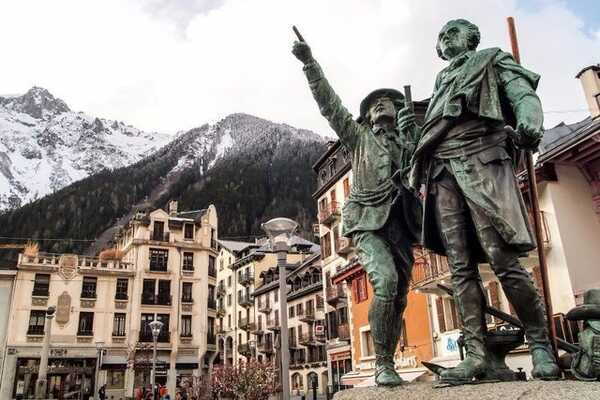
Day 1 ARRIVAL IN CHAMONIX
As we are based in Chamonix please ask if you wish to have a self guided trek briefing to go through any aspect of your trek before you start on your adventure.
If you require a briefing on your day of arrival please specify at the time of booking so we can make sure someone will be available.
Accommodation:
3* Hotel, private en-suite rooms, B & B
Day 2 CHAMONIX TO LES HOUCHES
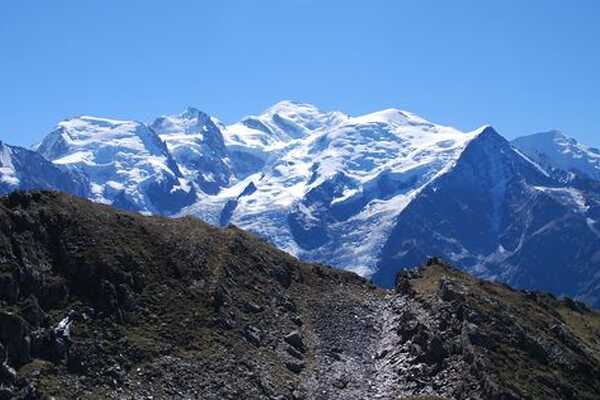
You commence the Tour Mont Blanc full trek from Chamonix taking the cable car to the Planpraz at 2000m, from here you take the TMB route to the Col du Brevent, Brevent 2525m and descend along the stunning ridge to Refuge Bel Lachat. From the refuge, you make the long and tough descent via Parc Merlet to Les Houches and your hotel accommodation for the night.
Daily stats:
Using the cable car
Distance: 13k | Height gain: +700m | Descent: -1500mGuide notes:
This day often feels one of the toughest on the trek generally because people are not fully acclimatised. The descent can be punishing & is probably the most difficult during the trek due 1500m sustained down hill & at times rocky terrain. Walking poles are recommended to save the knees!
Accommodation:
3* Hotel, private en-suite rooms, evening meal & breakfast
Day 3 LES HOUCHES TO LES CONTAMINES:
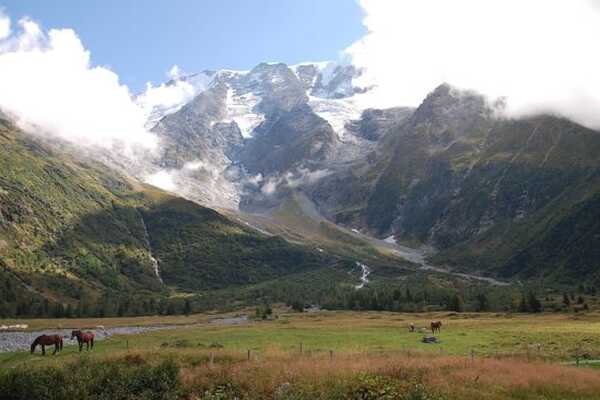
Your day starts with a cable car ride to Bellevue 1802m with stunning views of the Mont Blanc range from high above the westerly end of the Chamonix valley. You then have a choice of routes to Les Contamines via Bionnassay & Chapel or the Col du Tricot & Chalets des Miage.
Daily stats:
Using the cable car
Via Bionnassay: Distance: 15k | Height gain: +100m | Descent: -700m
Via Col du Tricot: Distance: 13k | Height gain: +800m| Descent: -1300mGuide notes:
Day two & you are probably feeling a little tiered from the first day. The terrain is very different today, less rugged & more green as you will be trekking though high altitude pastureland. If you are trekking via the Col du Tricot check out the Blueberry pie at the Chalets des Miage, very memorable & delicious!
Accommodation:
3* Hotel, private en-suite rooms, evening meal & breakfast
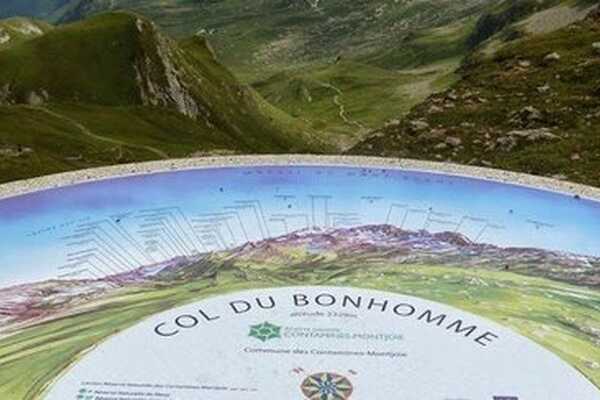
Day 4 LES CONTAMINES TO CHAPIEUX / VILLE DES GLACIERS:
A great day ahead as you make the steady ascent toward the Col du Bonhomme, passing the Refuge de la Balme on the way, a good spot for a short break or refreshments. Beyond the refuge, the trail climbs more steeply to the Plan des Dames before continuing up to the Col du Bonhomme and then the Col de la Croix du Bonhomme. From here, your onward route depends on where you’re staying for the night: you may continue over the Col des Fours and descend to Ville des Glaciers and on to the Refuge Mottets, or, if you’re staying in Les Chapieux, begin the descent leading you directly down to the hamlet.
We always try to reserve accommodation in Chapieux or Refuge Mottets. In the event that this isn’t possible, we arrange minibus transport to alternative accommodation in Bourg-St-Maurice, returning to Les Chapieux early the following morning.
Daily stats:
Distance: 20k | Height gain: +1500m | Descent: -900m
Guide notes:
On paper this looks like one of the longest & toughest days on the trek but don’t worry its very doable. There is a fair amount of height gain but it is integrated with sections of gentle terrain, which make the day more manageable. The key is to start early & allow plenty of time.
Accommodation:
Dormitory (upgrade possible), evening meal & breakfast
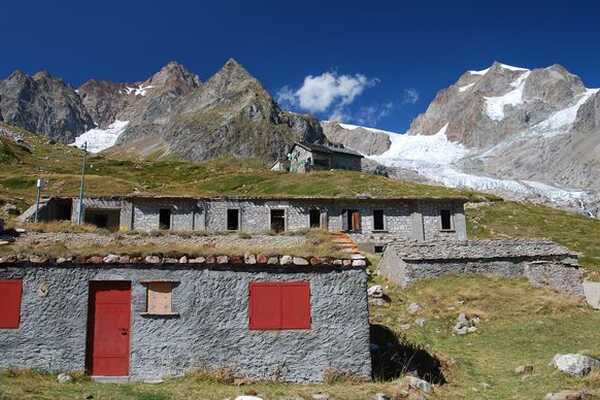
Day 5 CHAPIEUX / VILLE DES GLACIERS TO COURMAYEUR:
Your start for the day will depend on your accommodation. If you are staying in Les Chapieux, you’ll take the bus to Ville des Glaciers and continue on the trail to the Refuge des Mottets. The refuge sits in a superb position just below the Col de la Seigne (2516m). Although the climb to the col is steep in places, you soon find yourself crossing the French–Italian border and entering Italy. From the col, you descend into the beautiful Val Veny, following easy paths through the hanging valleys to Lac Combal. From here, you continue down to La Visaille and take the shuttle bus to Courmayeur.
Daily stats:
Distance: 14k | Height gain: +700m | Descent: -700m
Guide notes:
One of my favourite days on the Tour du Mont Blanc, the views from the Col du Seigne is second to none! Once you are at the col & if the weather is right rest for a while & take in the far-reaching views in to Italy & Switzerland, just wonderful!
Accommodation:
3* Hotel, private en-suite rooms, B & B
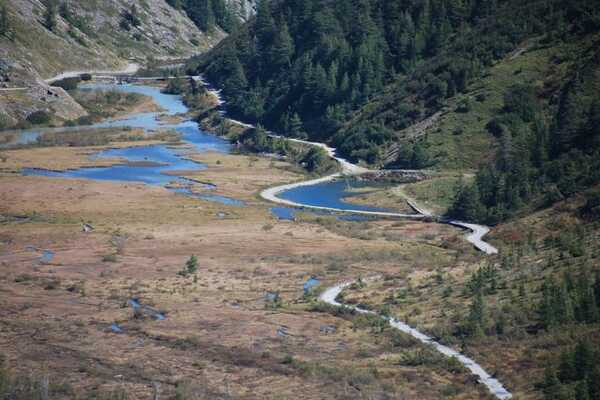
Day 6 COURMAYEUR TO VAL FERRET:
Fully refreshed from an evening in Courmayeur, you begin the ascent to the Refuge Bertone and enjoy superb views of Mont Blanc and the town below. The day continues with a high-level traverse above the Val Ferret, offering excellent views of the Italian side of the Mont Blanc range, before you descend to your accommodation in the beautiful Val Ferret.
We always aim to reserve private rooms when staying in Val Ferret; however, if this isn’t possible, we arrange a third night in Courmayeur and return by bus at the end of the day. This does not affect the TMB route in any way, as the bus the following day takes us back to the exact point where we left the trail.
Daily stats:
Distance: 19k | Height gain: +750m | Descent: -350m
Guide notes:
A steep but steady climb up to the Refuge Bertoni, it’s worth it because the coffee is fabulous & the views just stunning, elevenses’ here is a must! Fabulous views of some of the most famous peaks in the European Alps including Mont Blanc & the Grand Jorasses. And for the hamlet of Lavachey... it's just fabulous, if the night is clear go our side after diner & just 'be' in this impressive location.
Accommodation:
Dormitory (upgrade possible), evening meal & breakfast
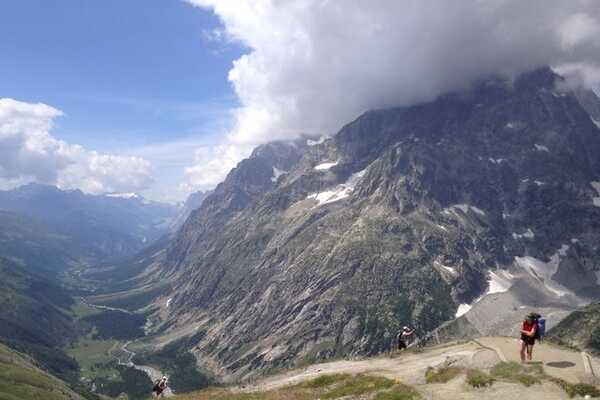
Day 7 VAL FERRET TO FERRET OR LA FOULY:
An early start and a new country await. From Arnouva, we make the long ascent to the Grand Col Ferret (2537m), passing the Rifugio Elena on the way and crossing the Italian–Swiss border at the col. From here, we enjoy a relatively easy descent via La Peule, an ideal spot to pause for refreshments, before continuing on gentle terrain to Ferret or La Fouly.
Daily stats:
Distance: 20k | Height gain: +900m | Descent: -1400m
Guide notes:
Again this day looks tough but the hard bits are nicely spaced with less challenging terrain & once at the Col stare in wonder at the view looking back at your last 3 days of trekking towards the Col du Seigne & over the boarder into Switzerland. The descent is long but at an easy angle & the path is good. Plenty of opportunity to stop for refreshments at Arnurva, Refuge Elena & La Peule.
Accommodation:
3* Hotel private en-suite rooms, evening meal & breakfast
Day 8 FERRET / LA FOULY TO CHAMPEX-LAC:
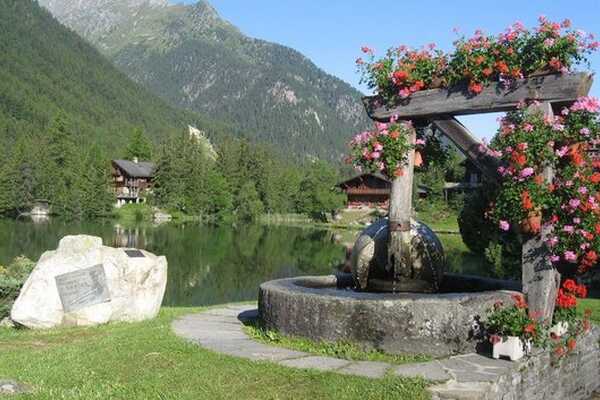
A gentler day awaits as we follow the trail through the beautiful Swiss Val Ferret, with easier walking and time to enjoy the scenery. The route leads us through the quiet villages of La Fouly, Praz-de-Fort and Issert, each offering a glimpse of traditional Swiss alpine life. From Issert, we begin our final ascent through woodland and meadows to reach the charming lakeside village of Champex-Lac, our resting place for the night.
Daily stats:
Distance: 15k | Height gain: +420m | Descent: -570m
Guide notes:
The easiest day on the trek with only 400m of ascent, which comes at the end of the day. Relax & take advantage with a later breakfast before wandering down the beautiful Swiss Val Ferret. Cafe at Issert but its not open on a Tuesday so plan ahead if you are trekking this leg on that day of the week!
Accommodation:
3* Hotel private en-suite rooms, evening meal & breakfast
Day 9 CHAMPEX-LAC TO TRIENT:
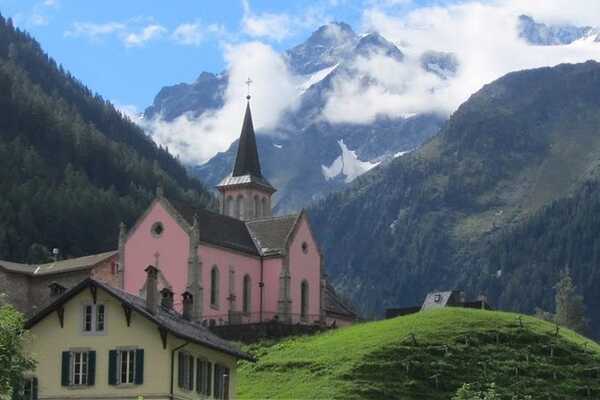
The day begins gently as we follow easy paths to Plan de l’Au, a relaxed warm-up before the climb ahead. From here, the trail rises steadily to the Alpage Bovine (1987m), where we’re rewarded with wonderful views over Martigny and the Swiss Valais. After a break at this scenic high point, we begin our descent, following the trail down towards the Col de la Forclaz (1526m) before making the final descent into the village of Trient for the night.
Option to take the variant via the Fenetre d'Arpette.
Daily stats:
Via Bovine: Distance: 18k | Height gain: +750m | Descent: -950m or via the Fenetre d'Arpette: Distance: 15k | Height gain: +1200m | Descent: -1350m
Guide notes:
The Bovine route is a fabulous day not too tricky over lovely terrain. Lunch stop at the high alpine farm at Bovine is a must, you can purchase local food or even eat your own picnic on the terrace as long as you buy a drink. Amazing views across to Lac Leman & down the Rhone valley. Or perhaps try the challenging variant over the Fenetre d'Arpette with amazing views of the Trient Glacier once at the col.
Accommodation:
Auberge with private rooms & shared facilities, evening meal & breakfast
Day 10 TRIENT TO ARGENTIERE:
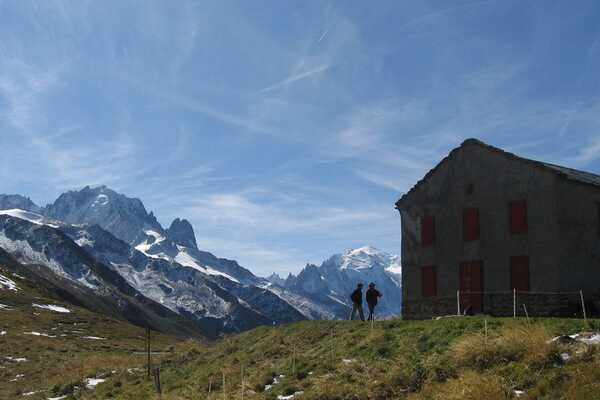
Today offers two route options. We can either follow the direct path from Trient to the Col de Balme, or take the more scenic route through alpine woodland to the Alpage of Tseppes and Catogne before continuing on to the Col de Balme (2191m) on the Swiss–French border. From the col, we make our descent to the hamlet of Le Tour and then continue across pastureland to the village of Argentière, where we spend the night.
Daily stats:
Direct via the Col du Balme: Distance: 13k | Height gain: +900m | Descent: -900m or Via Catogne & the Col du Balme: Distance: 15k | Height gain: +1000m | Descent: -1000m
Guide notes:
Personally unless the weather is bag take the route via Catogne, the views are far superior as one up high you take a lofty traverse with excellent views over towards Emossom dam & the Aiguille Rouges nature reserve.
Accommodation:
3* hotel in private en-suite rooms, HB
Day 11 ARGENTIERE TO CHAMONIX
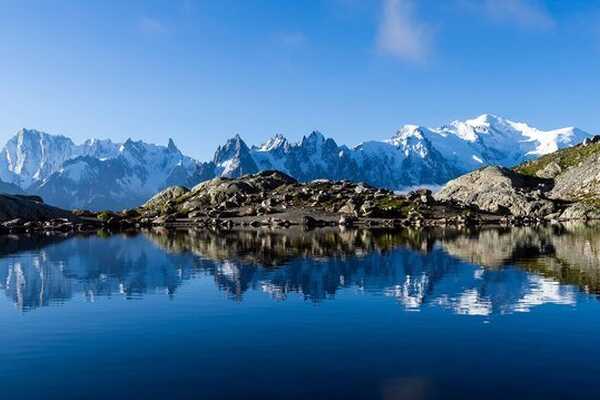
Our final day is a fitting end to the trek as we return to the Aiguilles Rouges, high above the Chamonix Valley, with stunning views of the Mont Blanc massif throughout. From here, we descend to Flégère and follow the balcony path that traverses high above the valley to Plan Praz, bringing us back to the point where we began 11 days earlier and completing the full circuit. A final descent by cable car takes us back to Chamonix in time for a well-earned celebratory drink—you’ve just completed the Tour du Mont Blanc, one of the finest multi-day treks in the world.
In the event of lift closures, we descend on foot to Chamonix via Flégère.Daily stats:
Distance: 14k | Height gain: +1200m | Descent: -500m
Guide notes:
A fitting end to the trek back in the Aiguille nature reserve with pristine views of the Mont Blanc massif & all its peaks & glaciers. Visiting the iconic Lac Blanc is a must & stop for refreshments in the refuge. It gets busy with day walkers in August so make an early start if possible.
Accommodation:
3* hotel in private en-suite rooms, B & B
Day 12 DEPART CHAMONIX
Breakfast is included however on the departure day you are free to leave at any time you wish.
Guide notes:
Once you have completed the trek I hope you will agree that the Tour du Mont Blanc is truly an exceptional trek & has a worthy place as of one of the worlds top 10 long distance walks.