18/12/2025
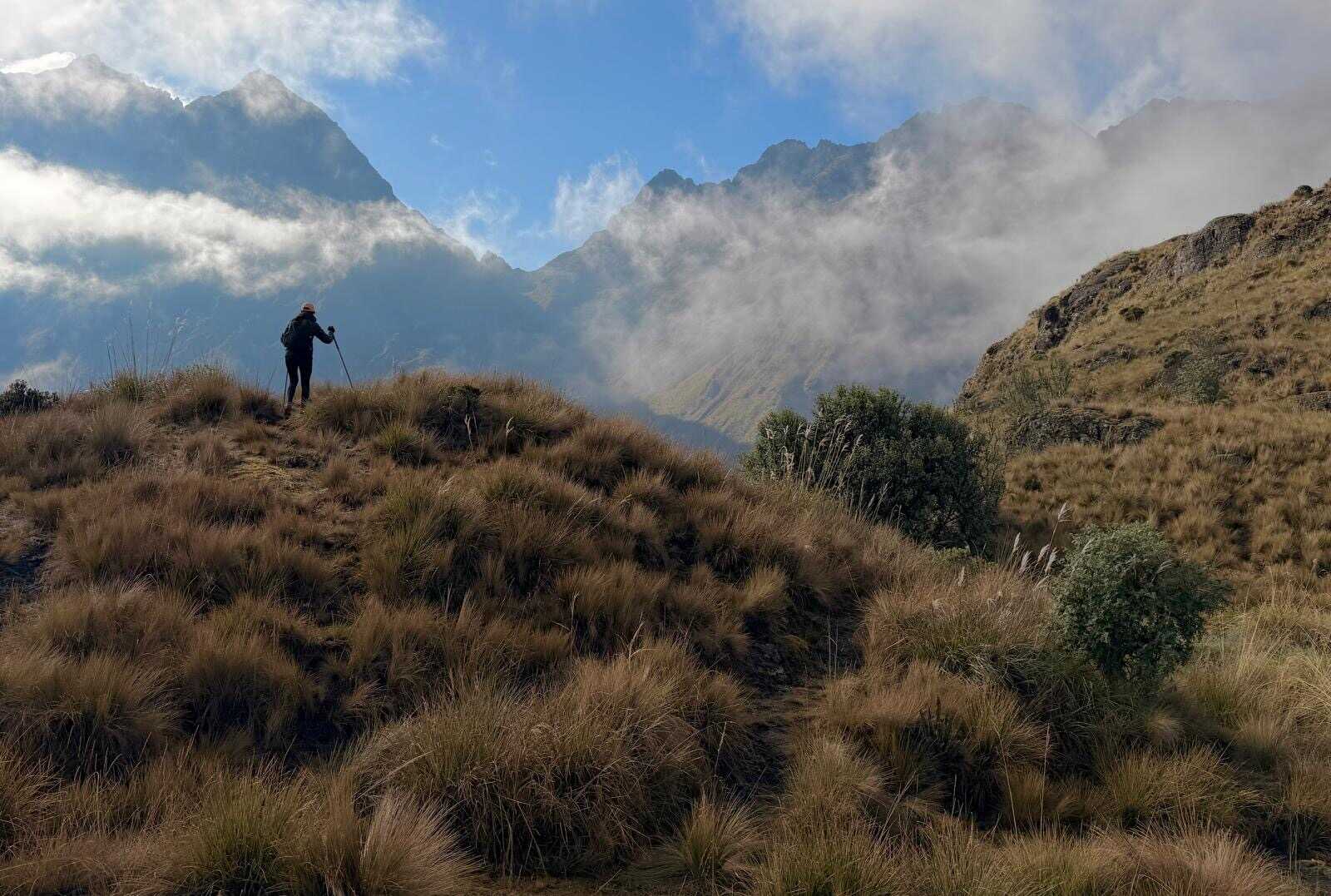
Peru has a way of capturing the imagination long before your boots touch the trail. Ancient paths threading through high Andean passes, cloud forest giving way to stone cities, and a culture that feels inseparable from the mountains themselves. Our 2025 journey combined the wild, high-altitude landscapes of the Salkantay route with the history and rhythm of the classic Inca Trail, finishing at one of the most iconic places on earth: Machu Picchu. Like many real mountain journeys, this one asked us to be adaptable, patient and open-minded, and in return, it gave us an adventure rich in beauty, challenge and shared experience.
Arrival in Cusco
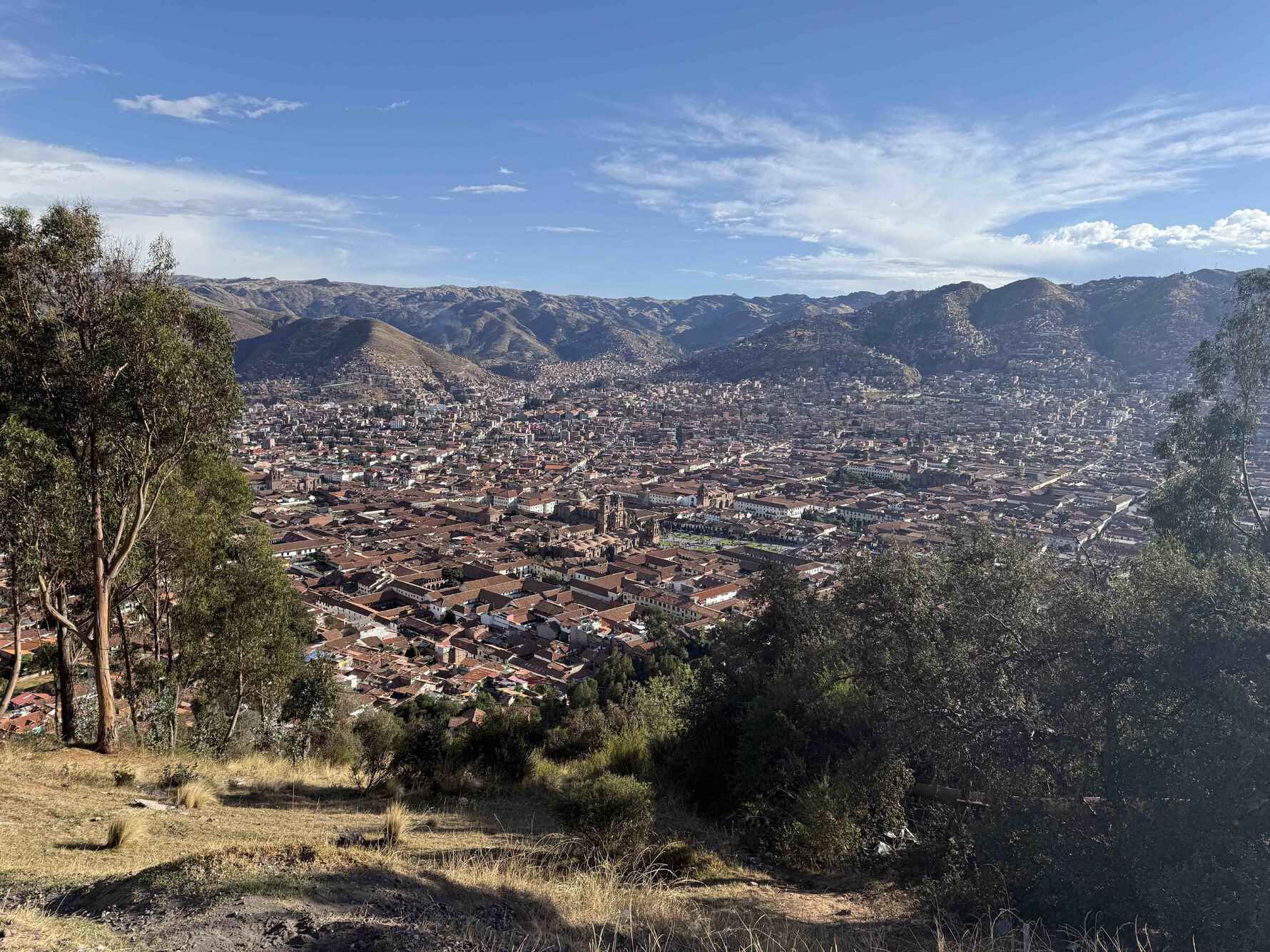
It’s fair to say that Peru had been quietly waiting its turn on our adventure list. For many of our team, this wasn’t their first trek with Mont Blanc Treks, most have spent many weeks with us in the Alps over the years, and some have joined us further afield in Morocco, Nepal and Patagonia. So there was a shared sense of excitement (and confidence) as we gathered in Cusco, knowing that this journey would be something very different: higher, more cultural, and woven deeply into history.
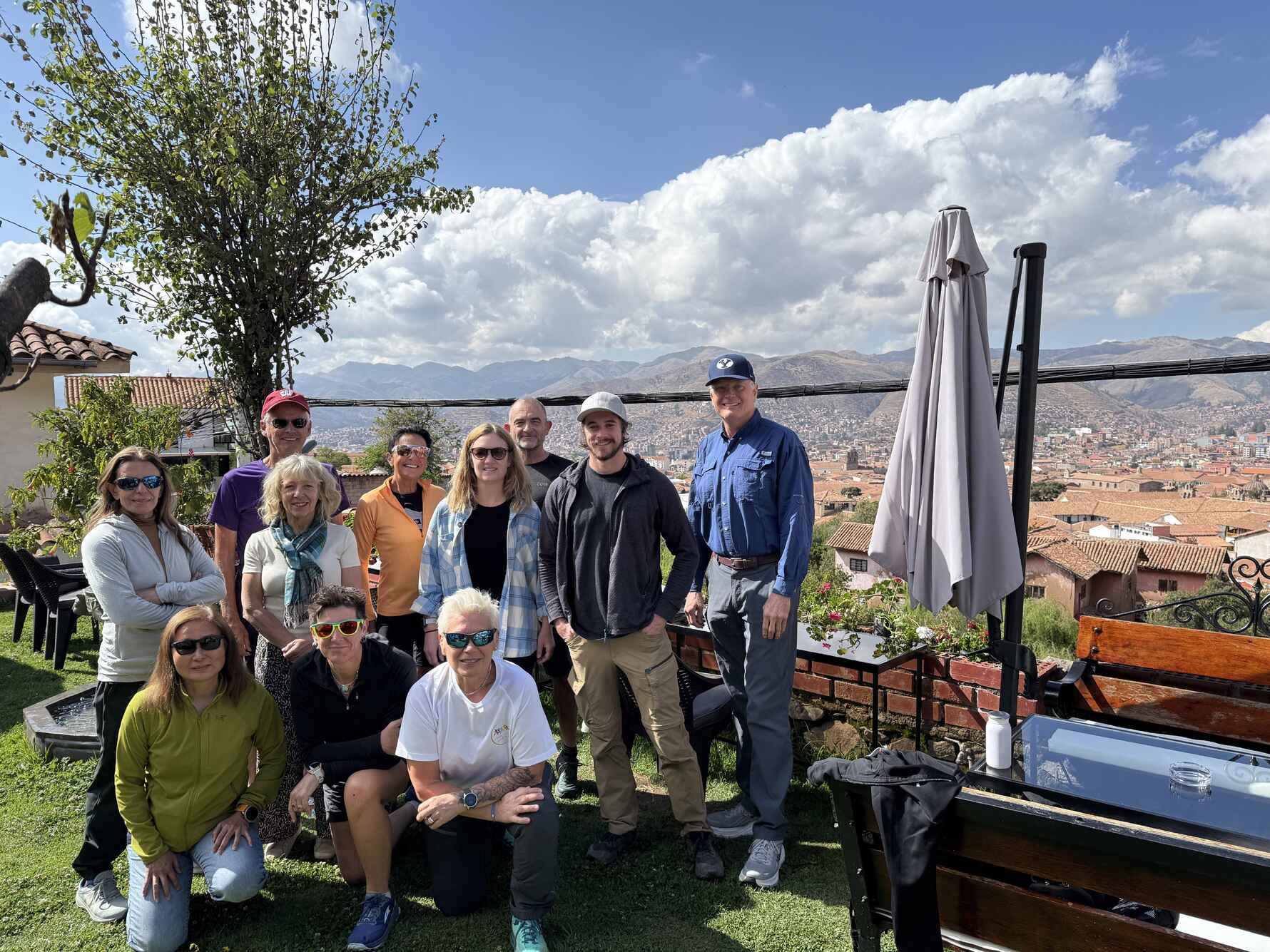
Our wonderfully international group of clients came together from the USA, the UK, France and Kuwait, joined by two MBT staff, myself and my son Fin, and our local guide, George. We met at our hotel in Cusco for an early evening welcome and trek briefing, conscious that we were already at 3,399m and that the sensible approach was to take things slowly.
Acclimatisation & the Sacred Valley
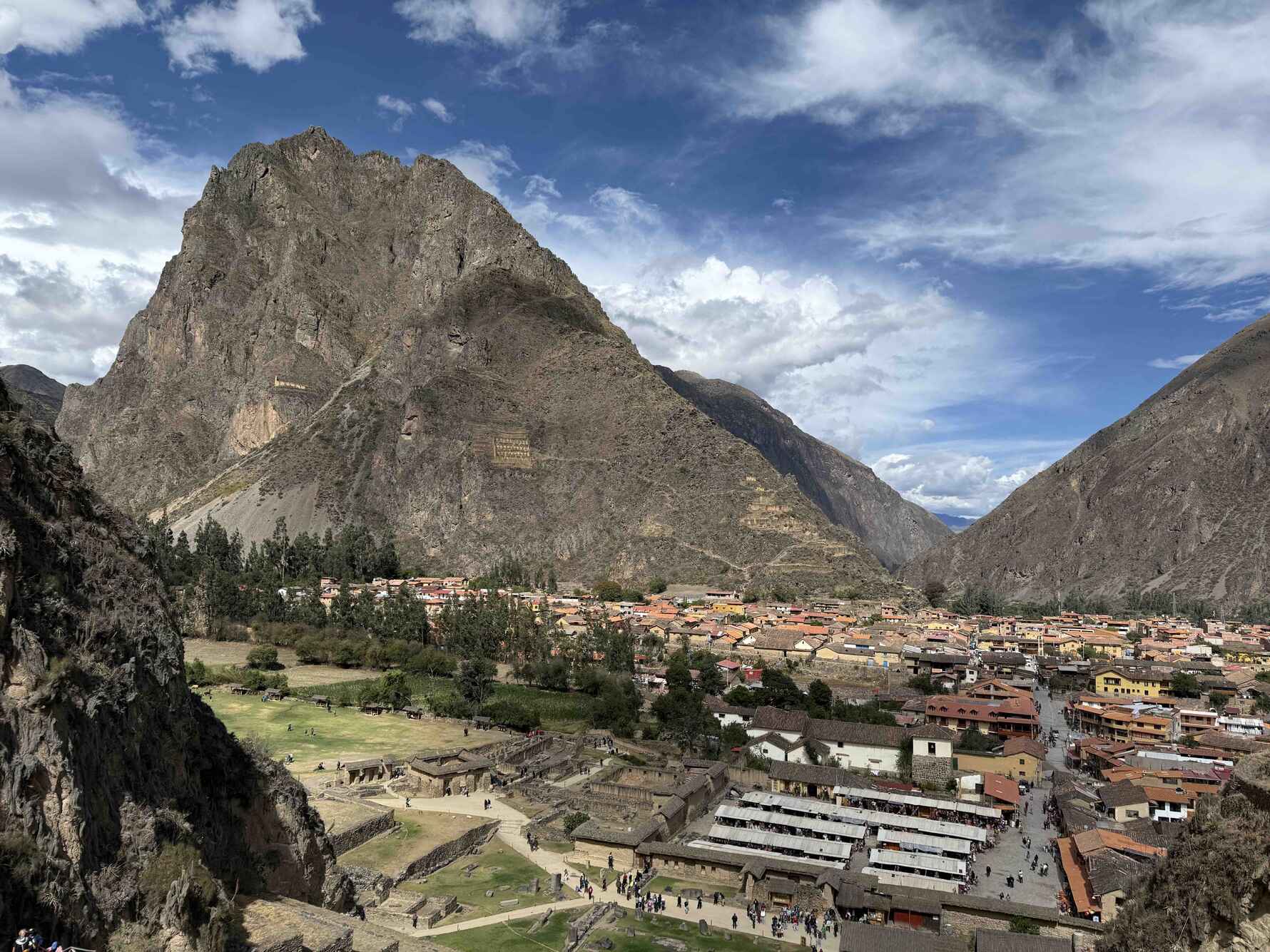
Our acclimatisation day took us into the Sacred Valley, a perfect introduction to Peru’s cultural richness. Our first stop was at the Chinchero District full of colour, textiles and local life, we had time at the craft workshop and a tour of the Inca ruins.
After lunch in Urubamba, we continued on to Ollantaytambo, an extraordinary fortress with vast stonework and a palpable sense of history. Returning to Cusco in the evening, we finalised trek plans, packed our duffel bags, and answered last-minute questions. Spirits were high.
Onto the Salkantay Trail
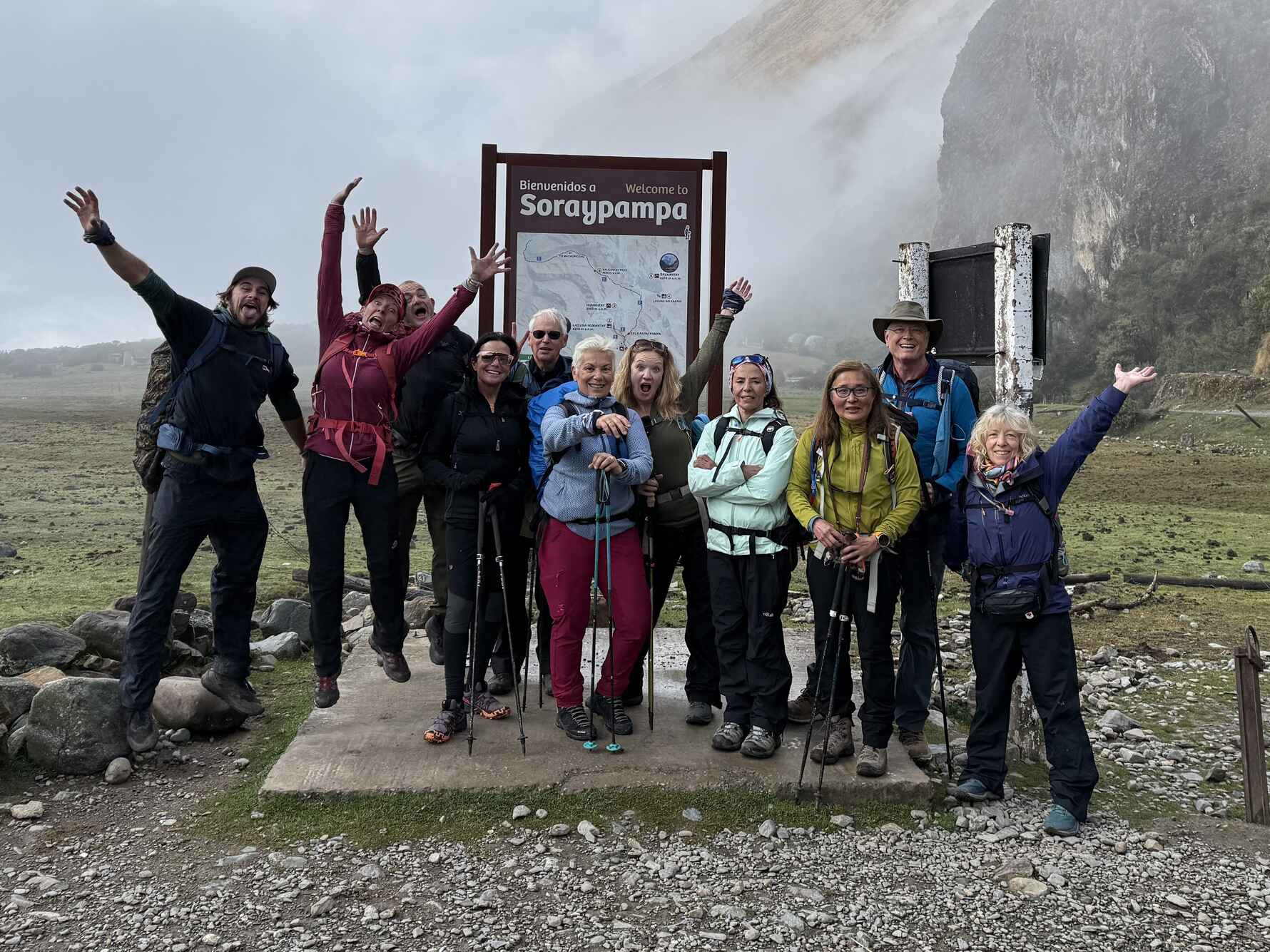
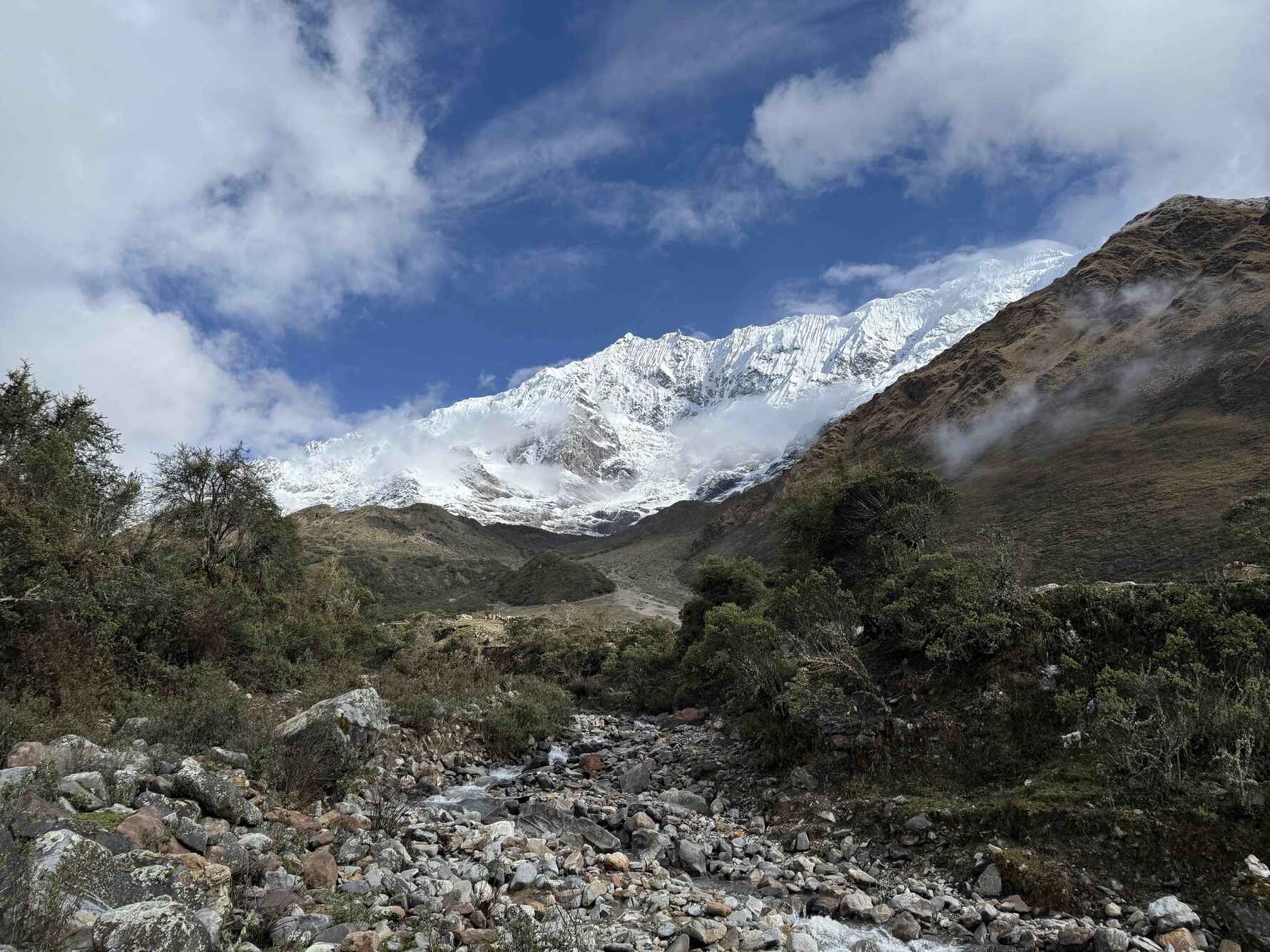
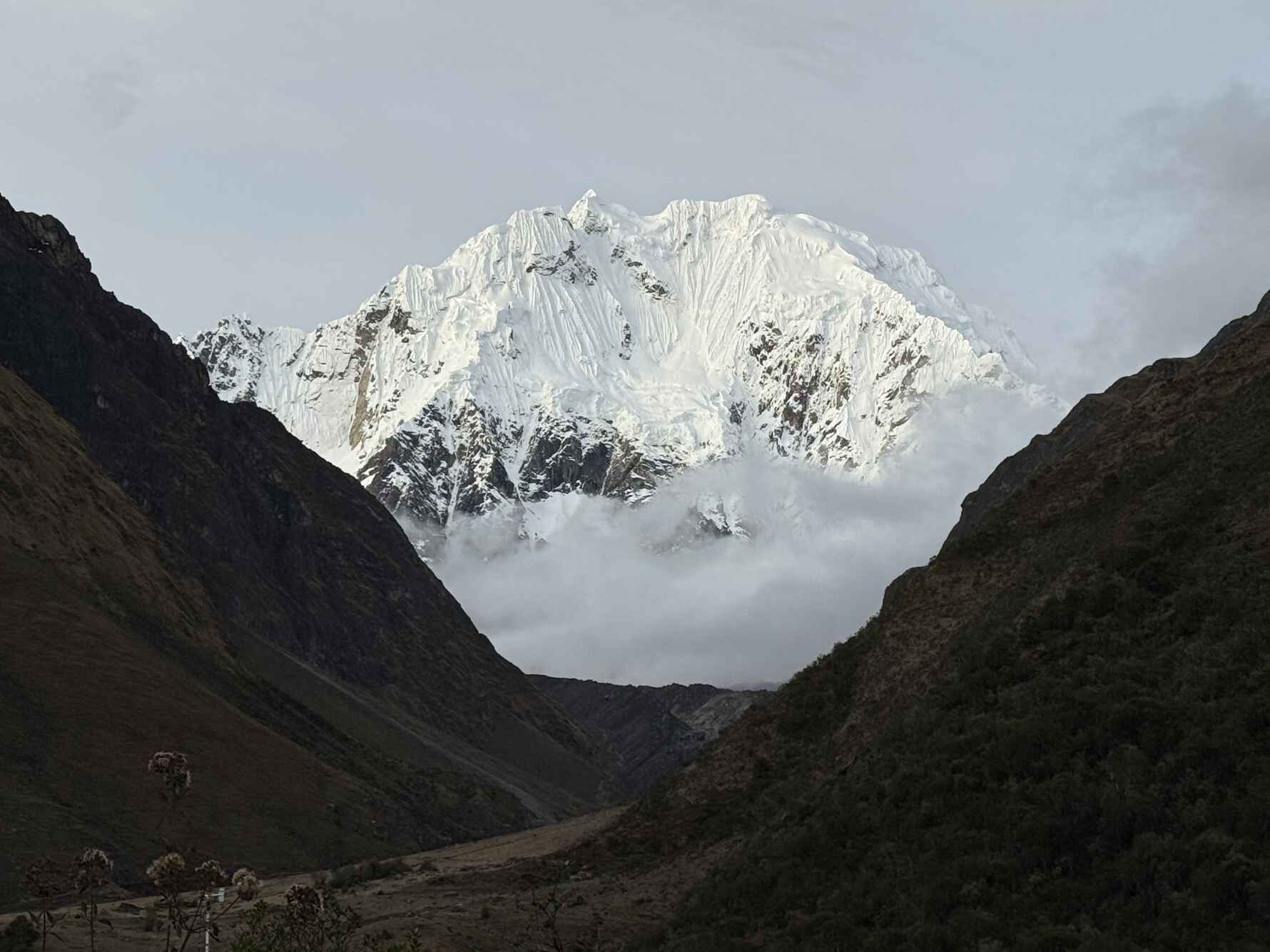
An leisurely start the next morning saw us heading toward Soraypampa to begin the Salkantay section of our trek. The Andes delivered big scenery straight away: wide valleys, glacial peaks, and that sense of scale that reminds you how small you are in the mountains.
It would be fair to say that this section of the journey tested us more than expected. A combination of logistical hiccups and the ever-present challenge of altitude meant that plans had to remain flexible. After a slight change in itinerary due to a burnt out clutch we hiked into to Soraypampa making our first day hiking easier than expected. The following day was going to be a different story!
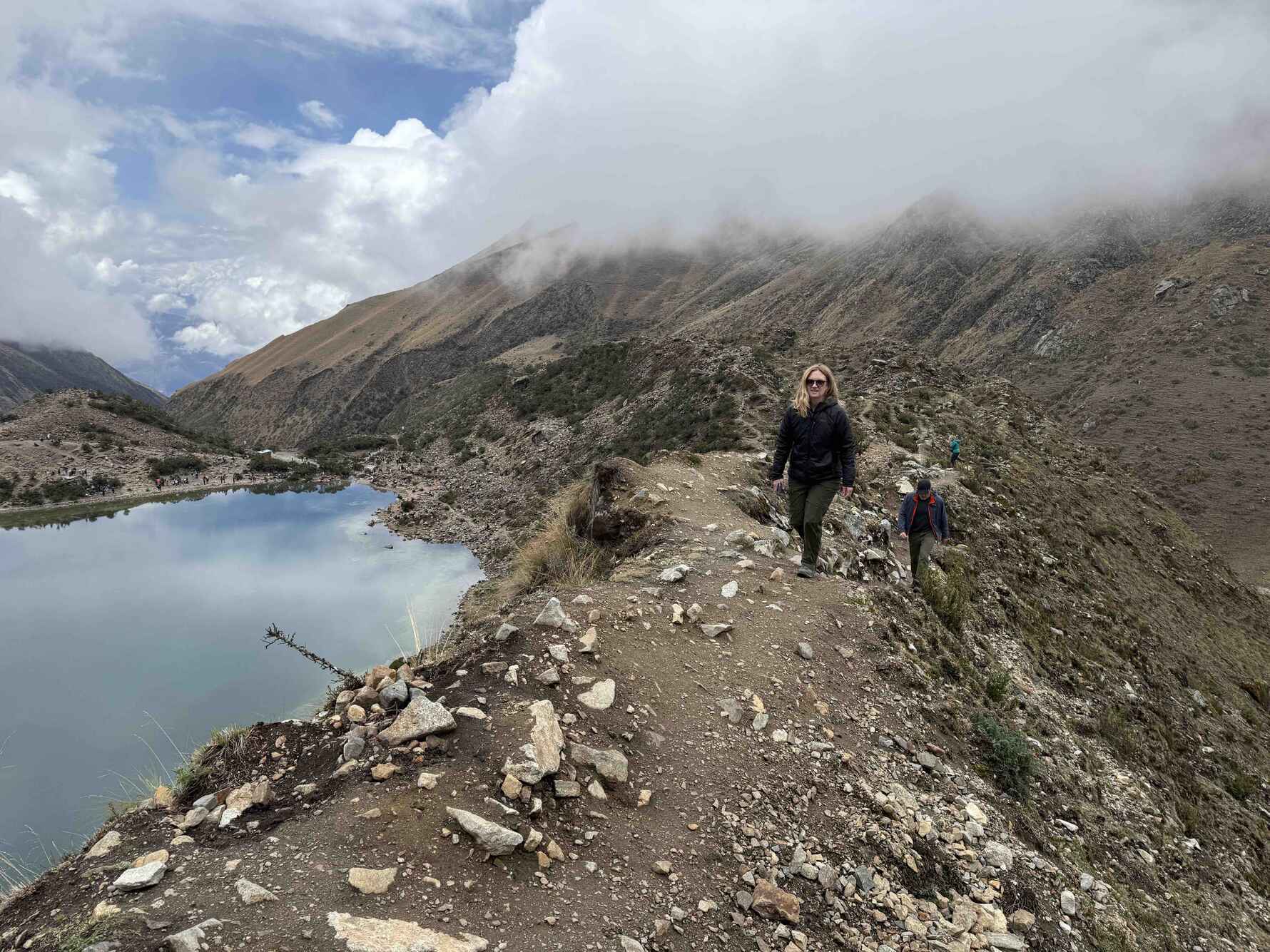
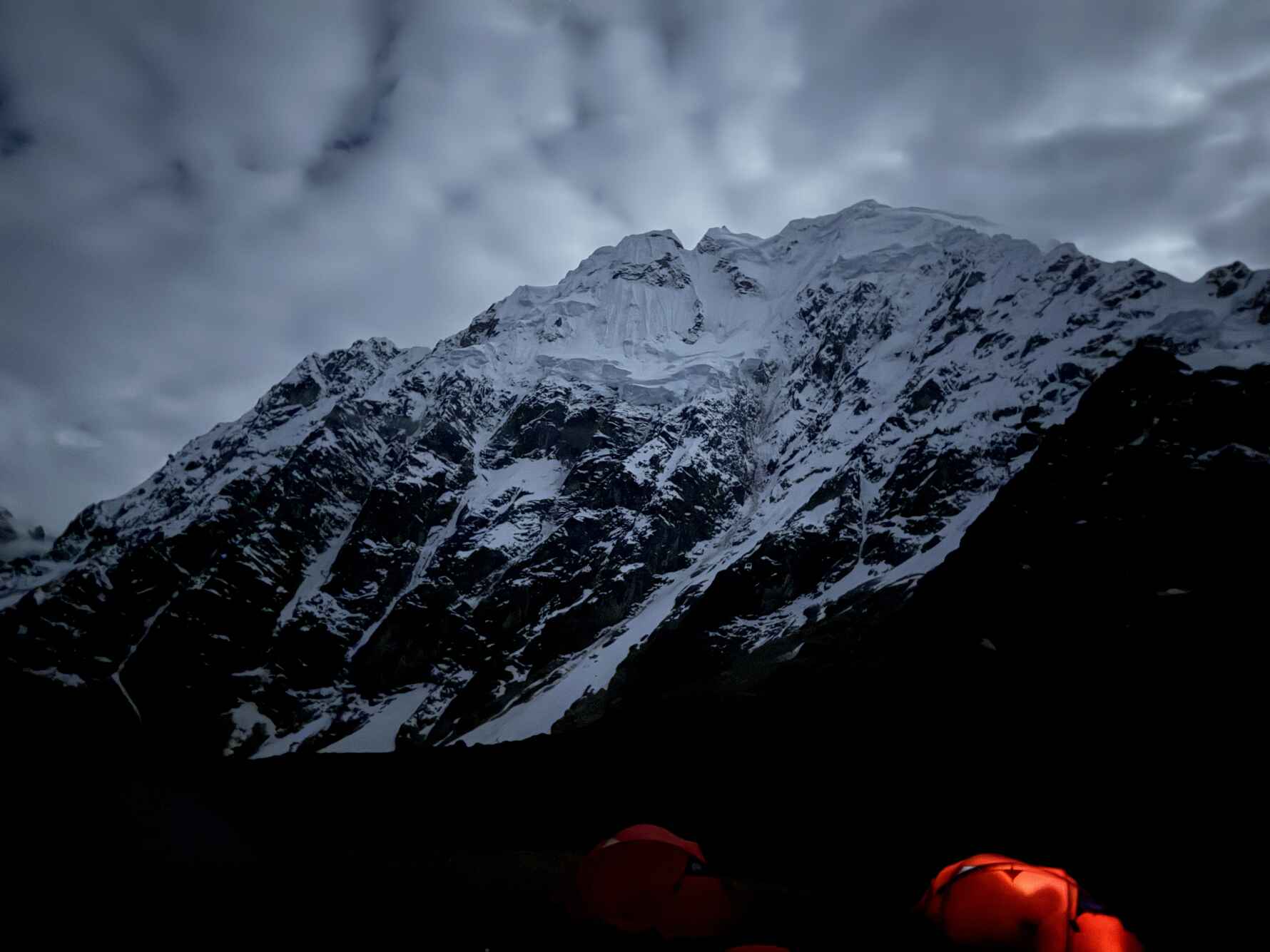
Up early, after a hearty breakfast and we headed out from Soraypampa. We made a steady ascent to Humantay Lake, taking a measured pace as the altitude became noticeable. The lake sits beneath the glaciated slopes of Humantay Mountain and offers a striking first highlight of the trek. From the lake, we descended back toward Soraypampa before joining the trail toward Salkantay Mountain, maintaining a steady, unhurried pace as the altitude increased. We stopped for lunch at Salkantay Pampa, surrounded by open high-altitude terrain and expansive mountain views, before continuing on to our camp at Pampa Japonesa at 4,700m. We arrived just before dark, tired, quiet, and very ready to crawl into sleeping bags.
A Mountain Decision
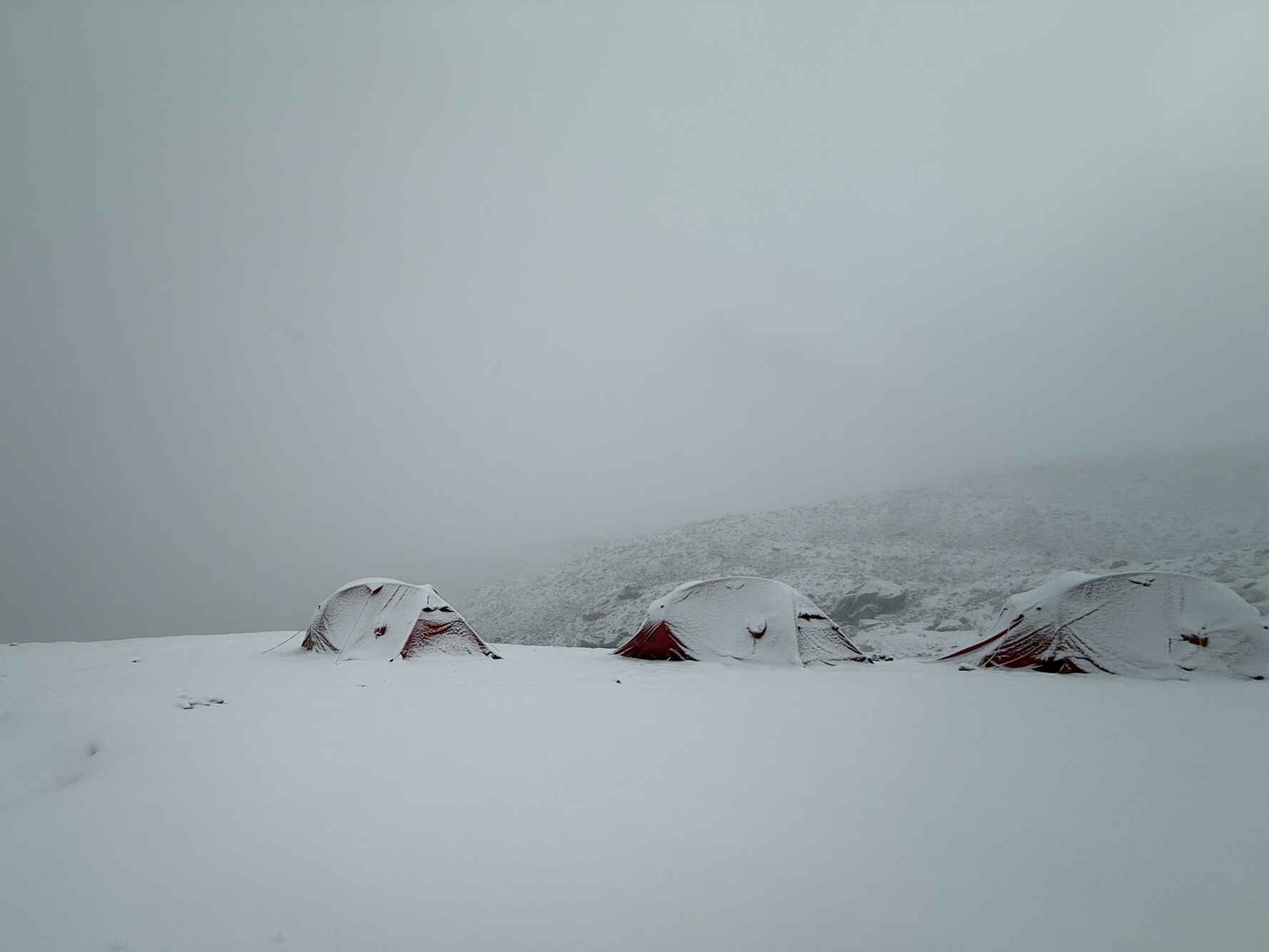
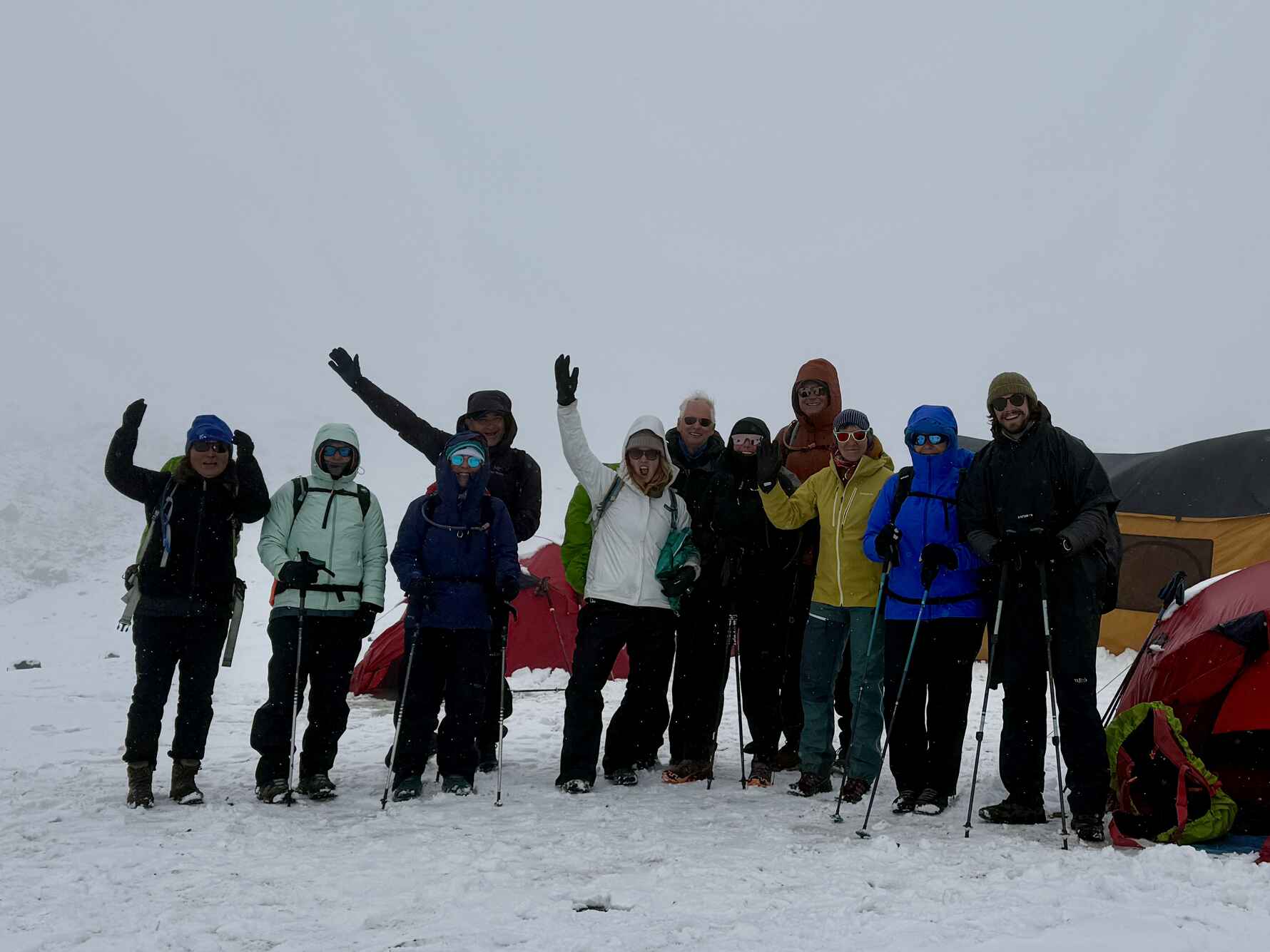
We woke the following morning to around 20cm of fresh snow and poor visibility. With wet gear, uncertain forecasts, and a high pass at 5,200m ahead of us, it was one of those moments where mountain judgement matters more than ambition. After careful consideration, I made the call to descend rather than press on.
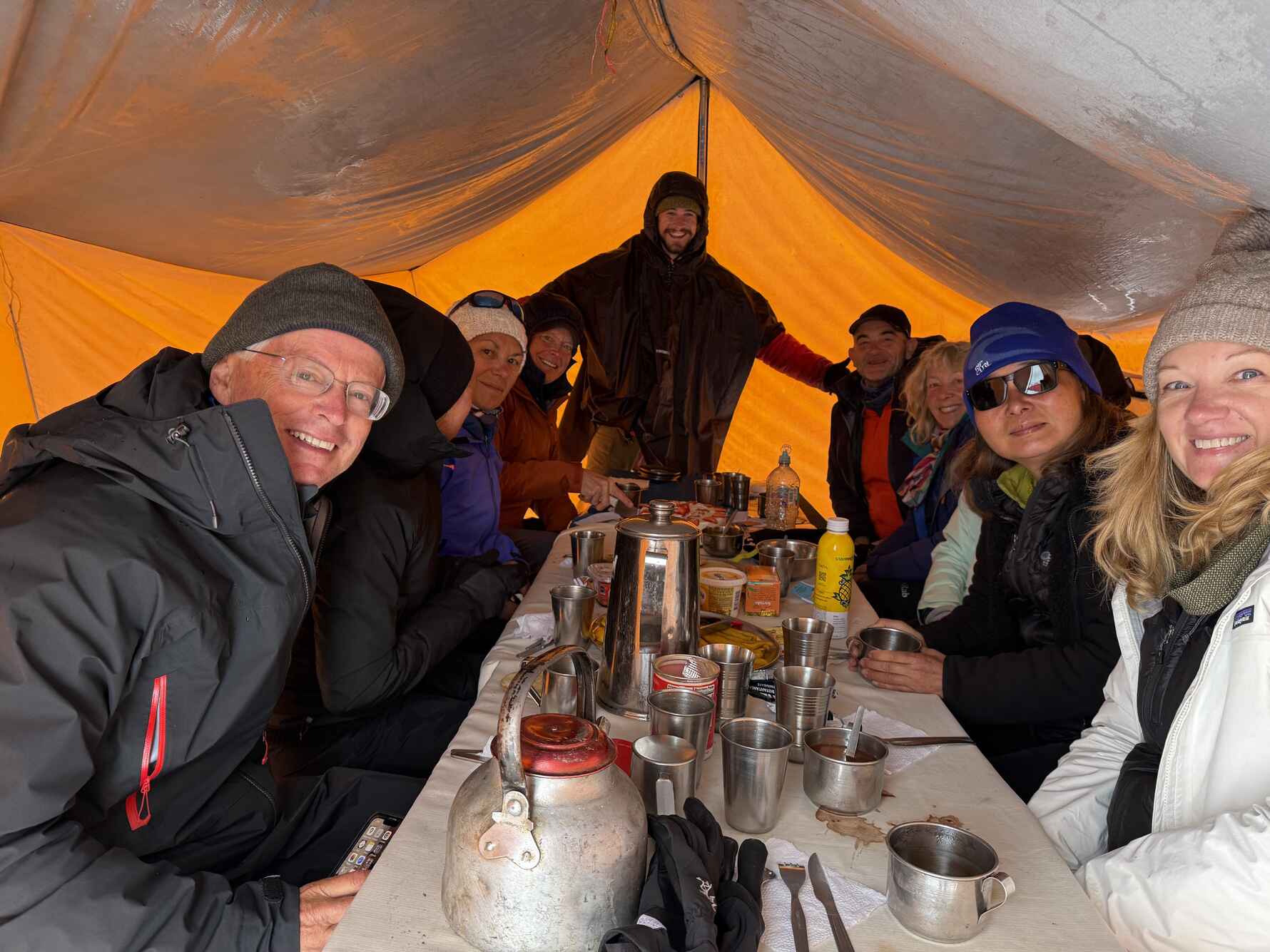
It’s never an easy decision, but it was the right one for the group. We returned to Soraypampa and transferred to Ollantaytambo, where hot showers, dry clothes and a good restaurant restored both energy and morale. In good spirits, we looked ahead to rejoining the journey via the Inca Trail.
Joining the Inca Trail
From Ollantaytambo, we travelled to the Inca Trail checkpoint to continue our journey. As is sometimes the case on longer expeditions, we encountered another unexpected logistical challenge here, which required patience, flexibility and good humour from everyone involved. The group handled the situation with calm good grace, something that speaks volumes about their experience and resilience as trekkers.
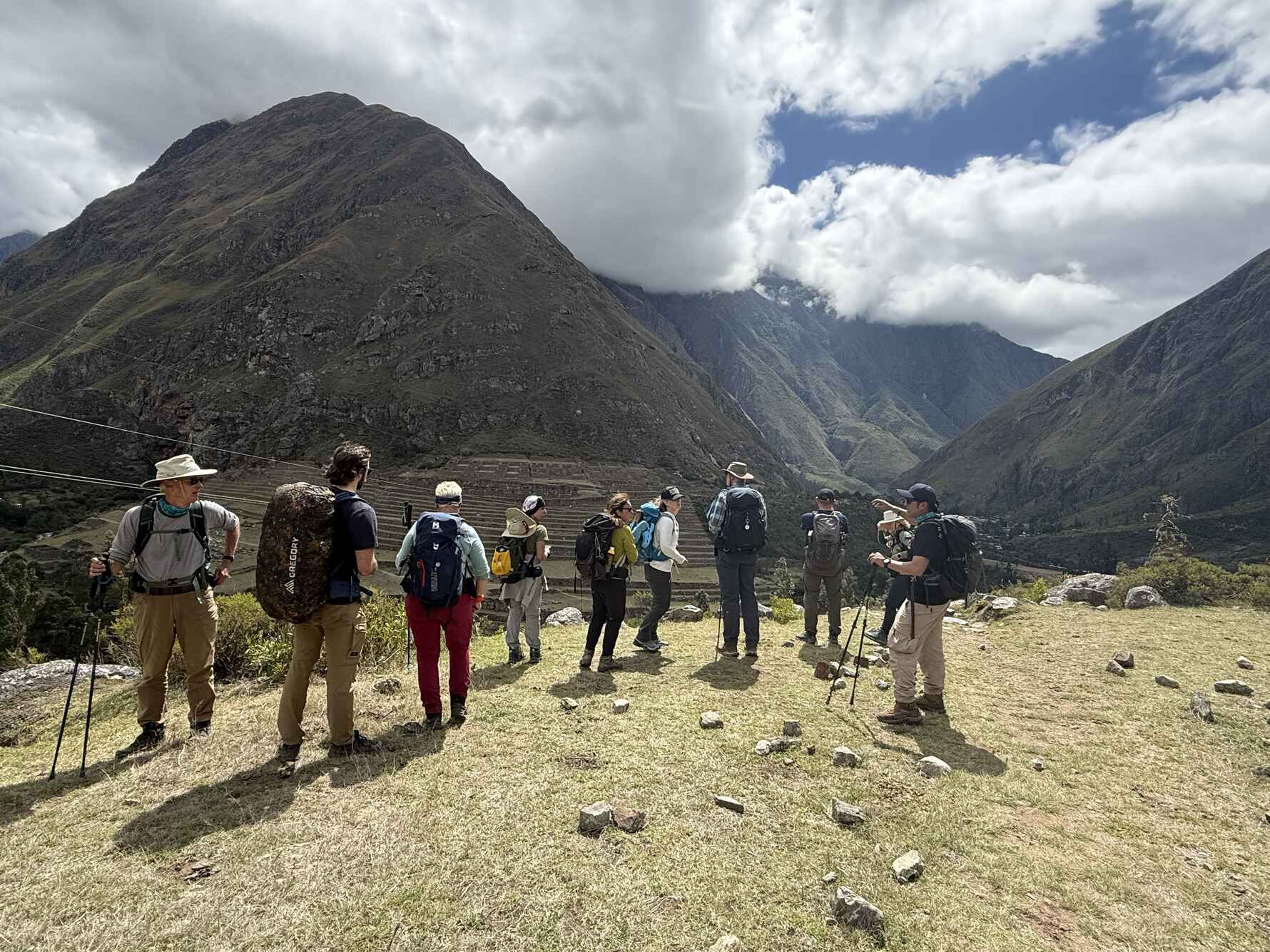
Once underway, we joined the Inca Trail proper and began the hike to our first campsite at Huayllabamba. The trail follows a wide valley, gradually gaining height as it winds past small settlements and farmland. Along the way, we stopped at the impressive ruins of Patallacta (Llaqtapata), our first opportunity to explore an Inca site on the trail, before continuing on to camp.
We set off early from Huayllabamba toward Dead Woman’s Pass, the highest point of the Inca Trail. Shortly after starting the day, further logistical complications meant that Valerie was unable to continue, and I made the decision to descend back to Ollantaytambo with her while the rest of the group continued as planned.
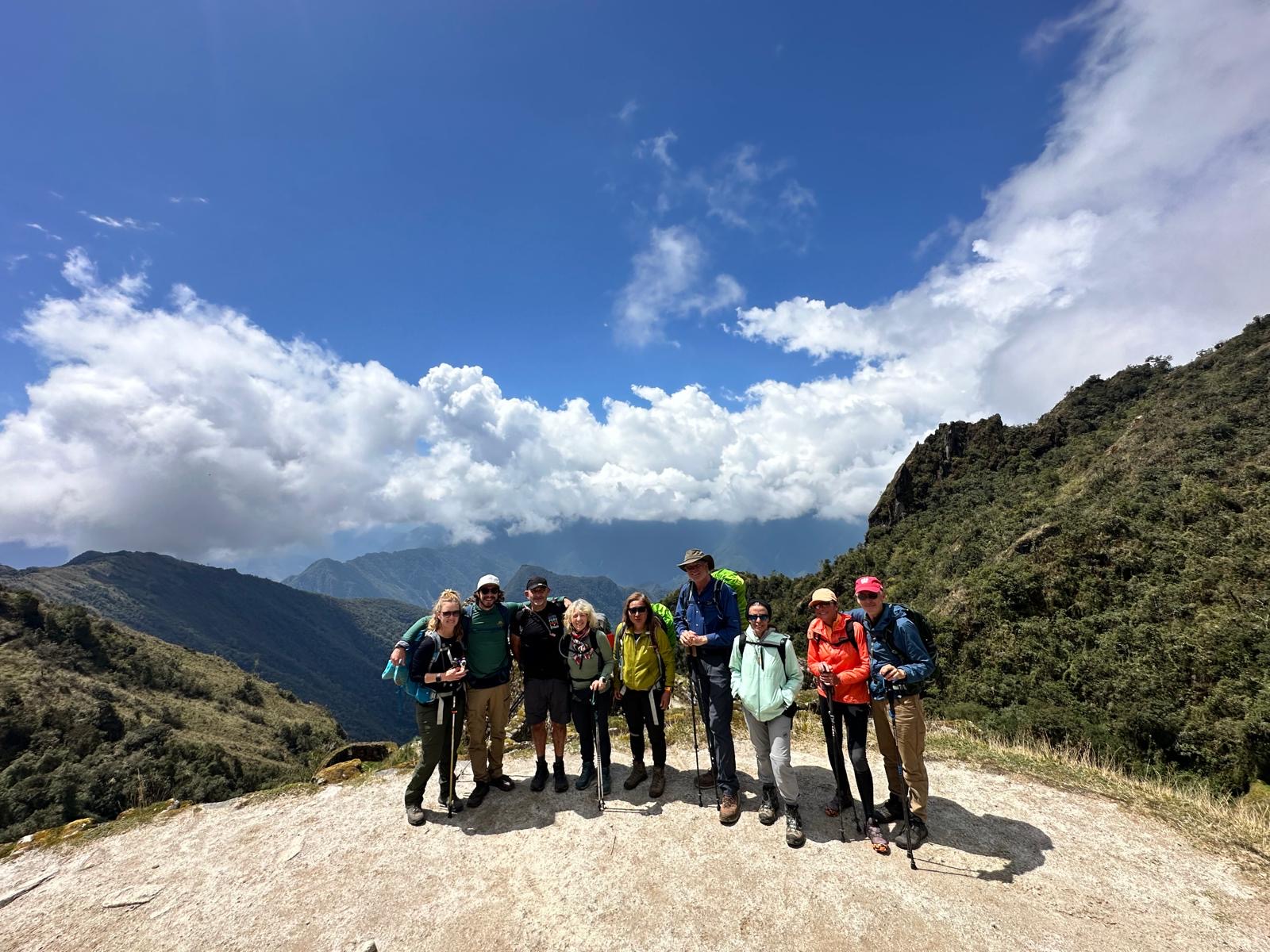
The group carried on under Fin’s & Georges leadership, with Fin doing an outstanding job managing the logistics and guiding the team forward. For the rest of the group, the day involved a long, steady climb to the pass at 4,200m, followed by a descent to Pacaymayo campsite.
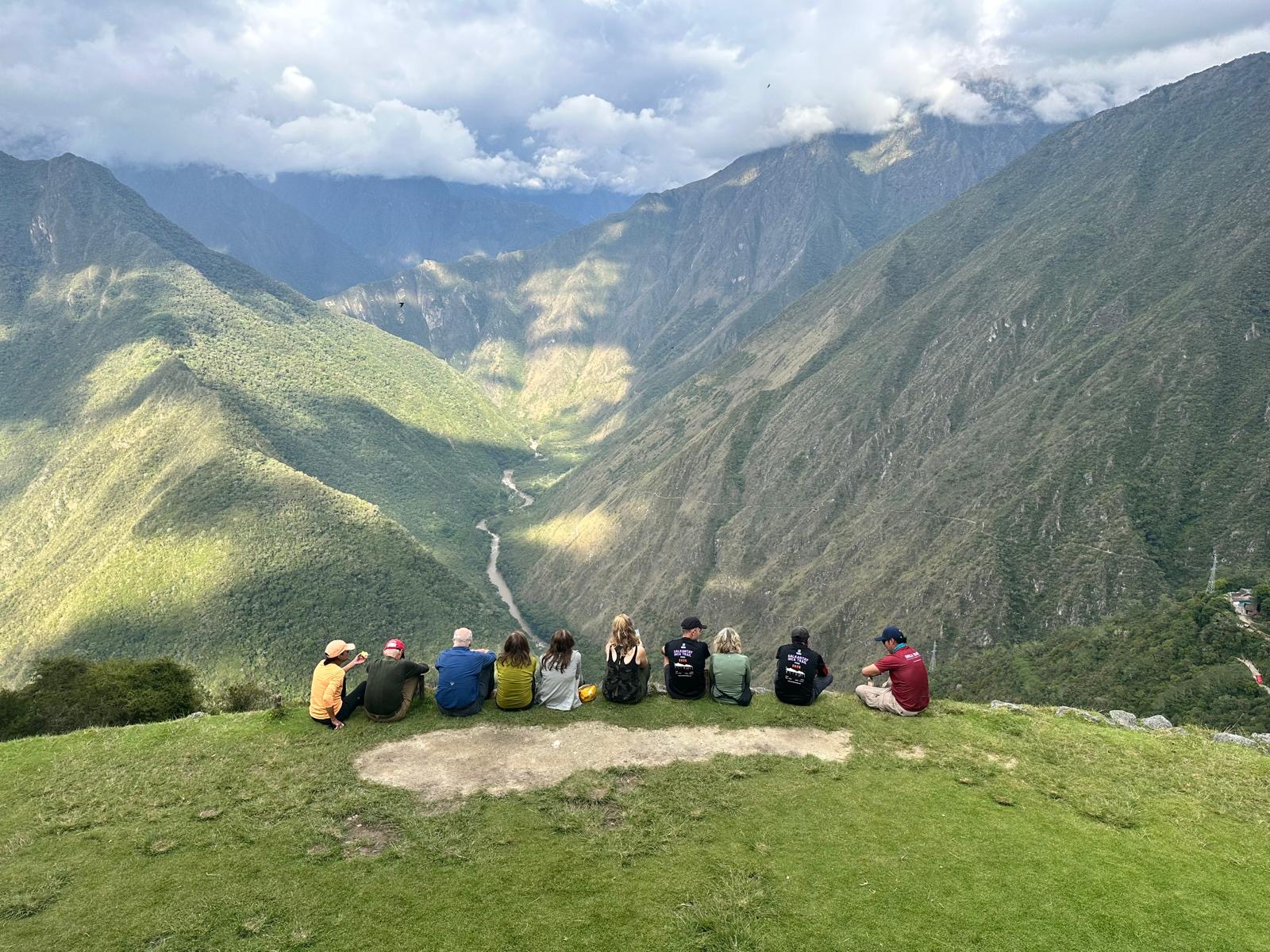
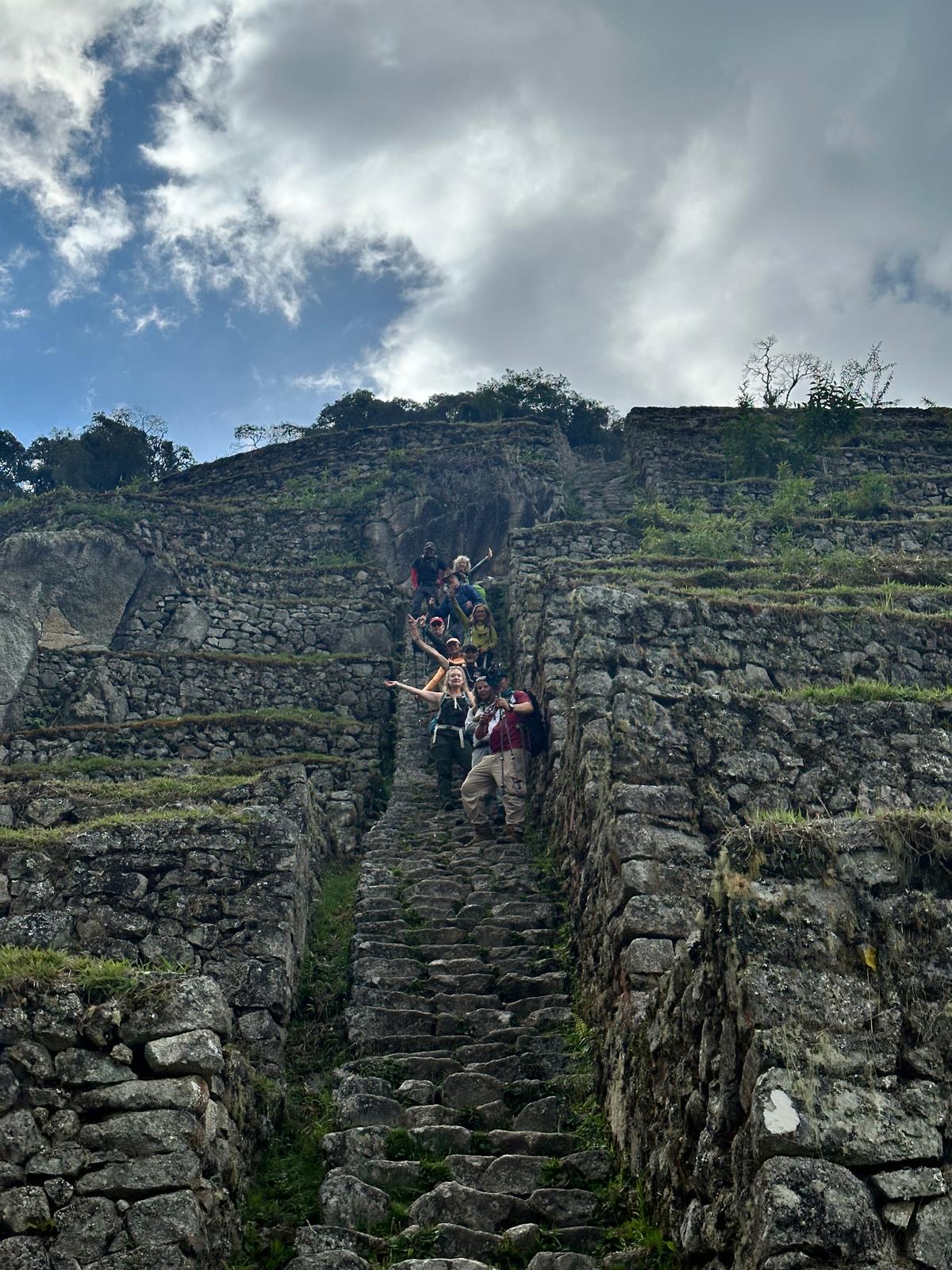
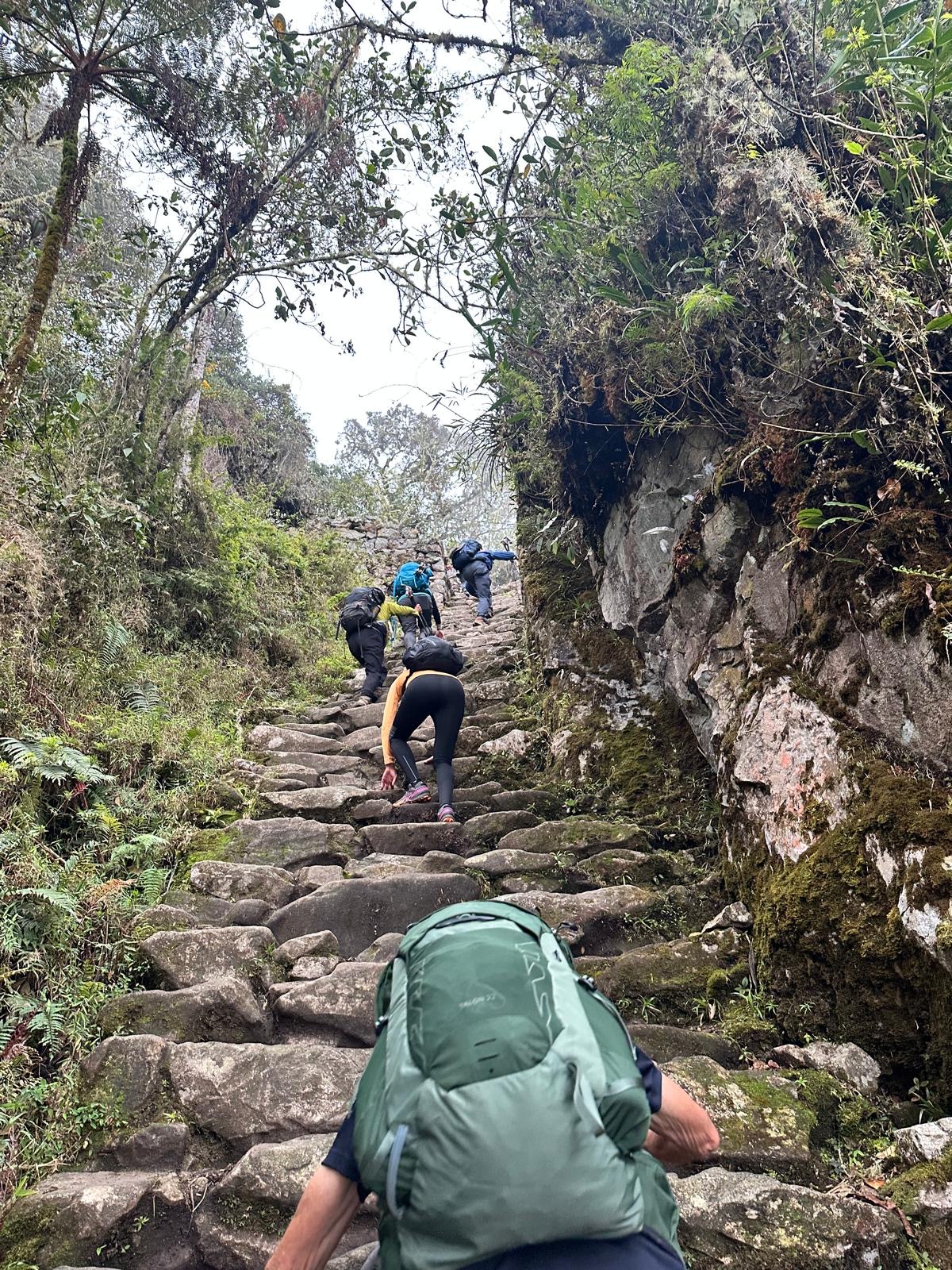
From Pacaymayo, the trail climbed steadily toward Phuyupatamarca, known as the “Town in the Clouds,” one of the most impressive sites on the Inca Trail. From here, the route descends on long stone stairways through cloud forest, passing terraces and smaller ruins along the way.
By mid afternoon, the group reached Wiñay Wayna, our final campsite on the trail. With time to rest and explore the beautifully preserved ruins nearby, this felt like a fitting and memorable lead-in to the final day and the approach to Machu Picchu.
Machu Picchu
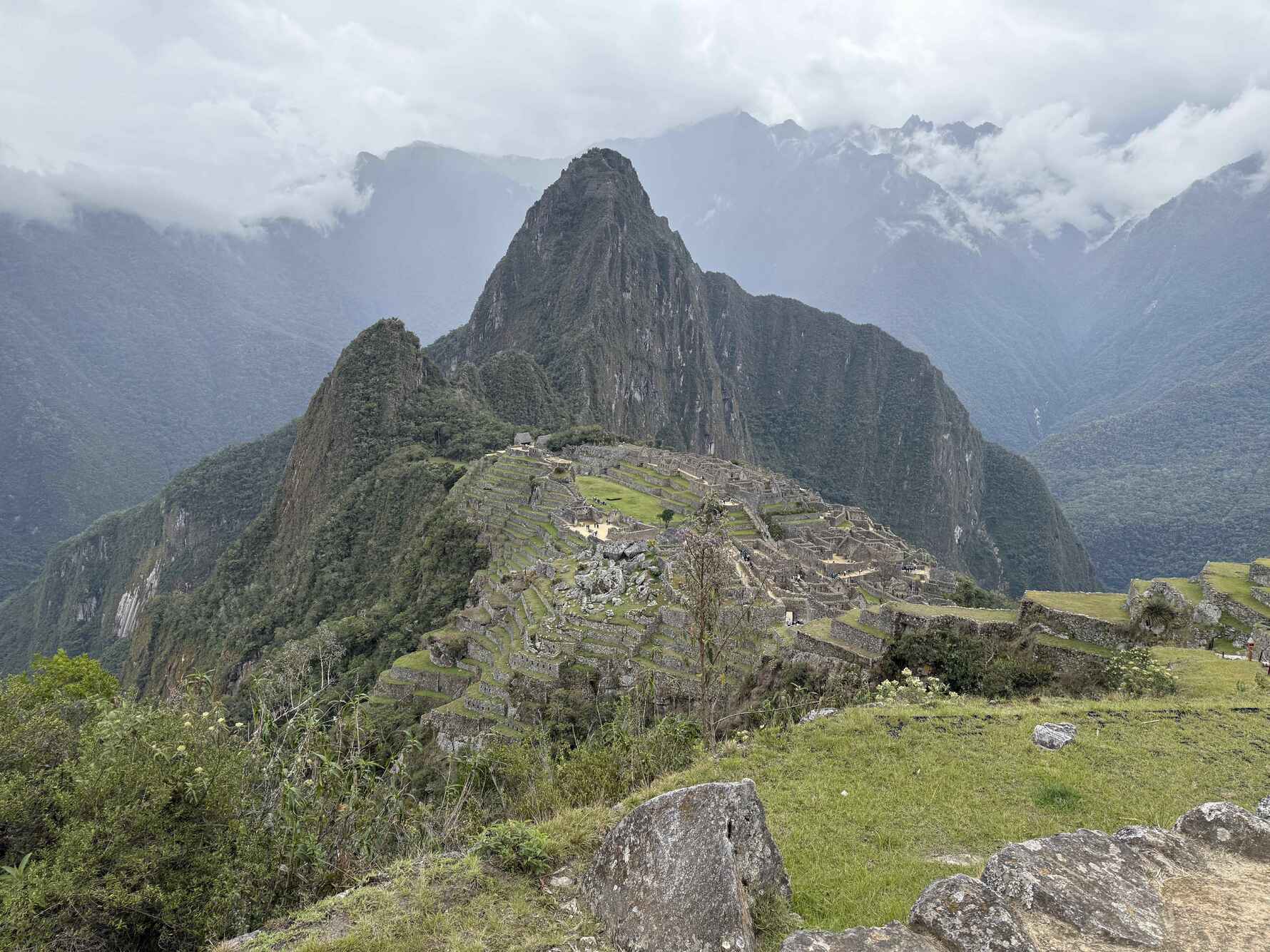
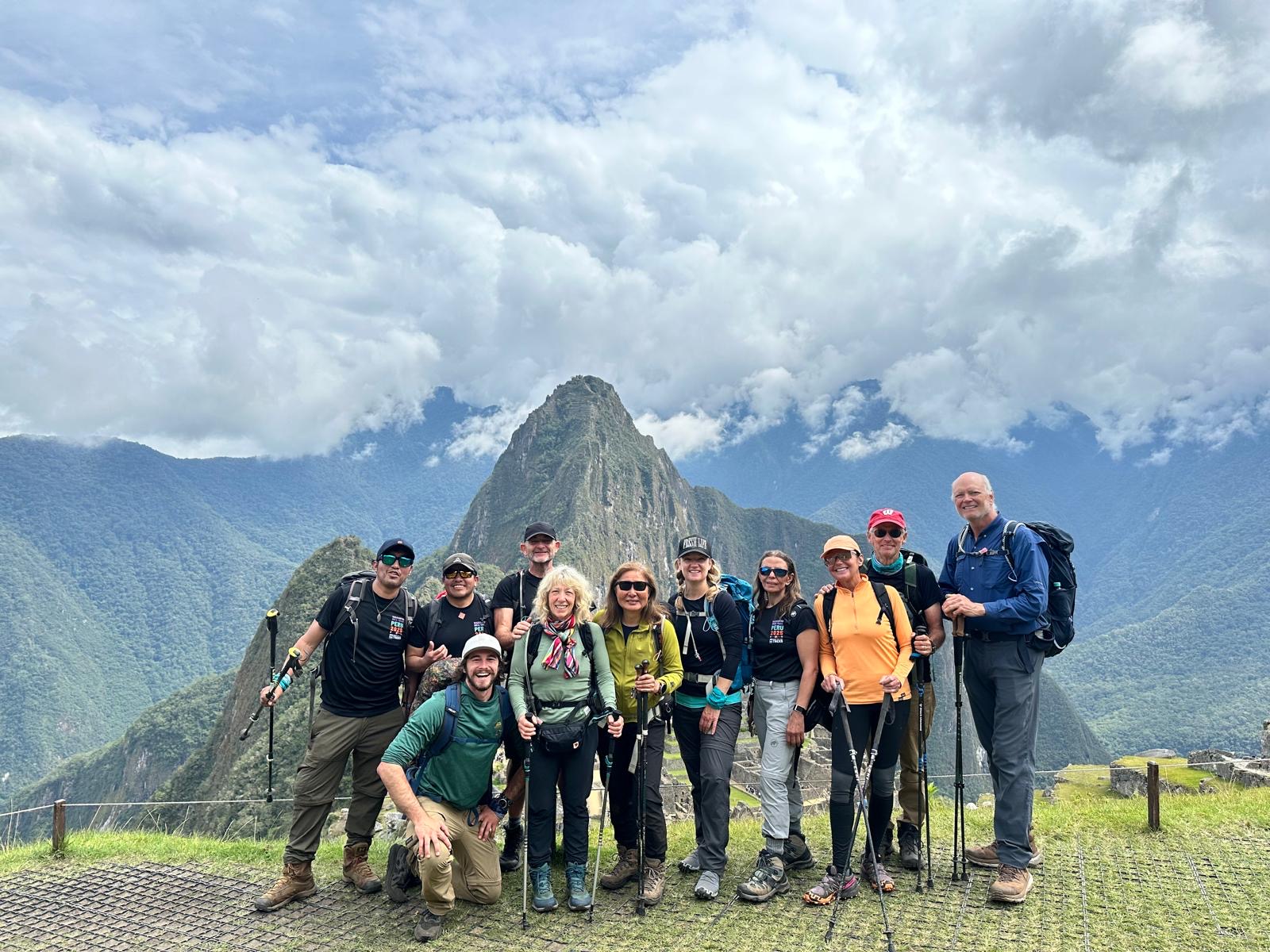
The final morning began early with the hike to Inti Punku, the Sun Gate. When the group arrived, low cloud still filled the valley, and on George’s advice they waited rather than rushing on. After more than an hour, the patience paid off as the clouds gradually lifted to reveal Machu Picchu below, a quietly powerful moment after the journey to reach it. From there, the group descended into the site for a guided tour, exploring this remarkable place and bringing the Inca Trail to a memorable close.
Meanwhile, Valerie and I worked to reorganise logistics, and were able to rejoin the Inca Trail at kilometre 152. From there, we climbed up past Wiñay Wayna, re-entering the trail and eventually heading for the Sun Gate and down into Machu Picchu. Later that day, we were reunited with the rest of the group in Machu Picchu town (Aguas Calientes), bringing everyone back together at last.
Rainbow Mountain & a Perfect Ending
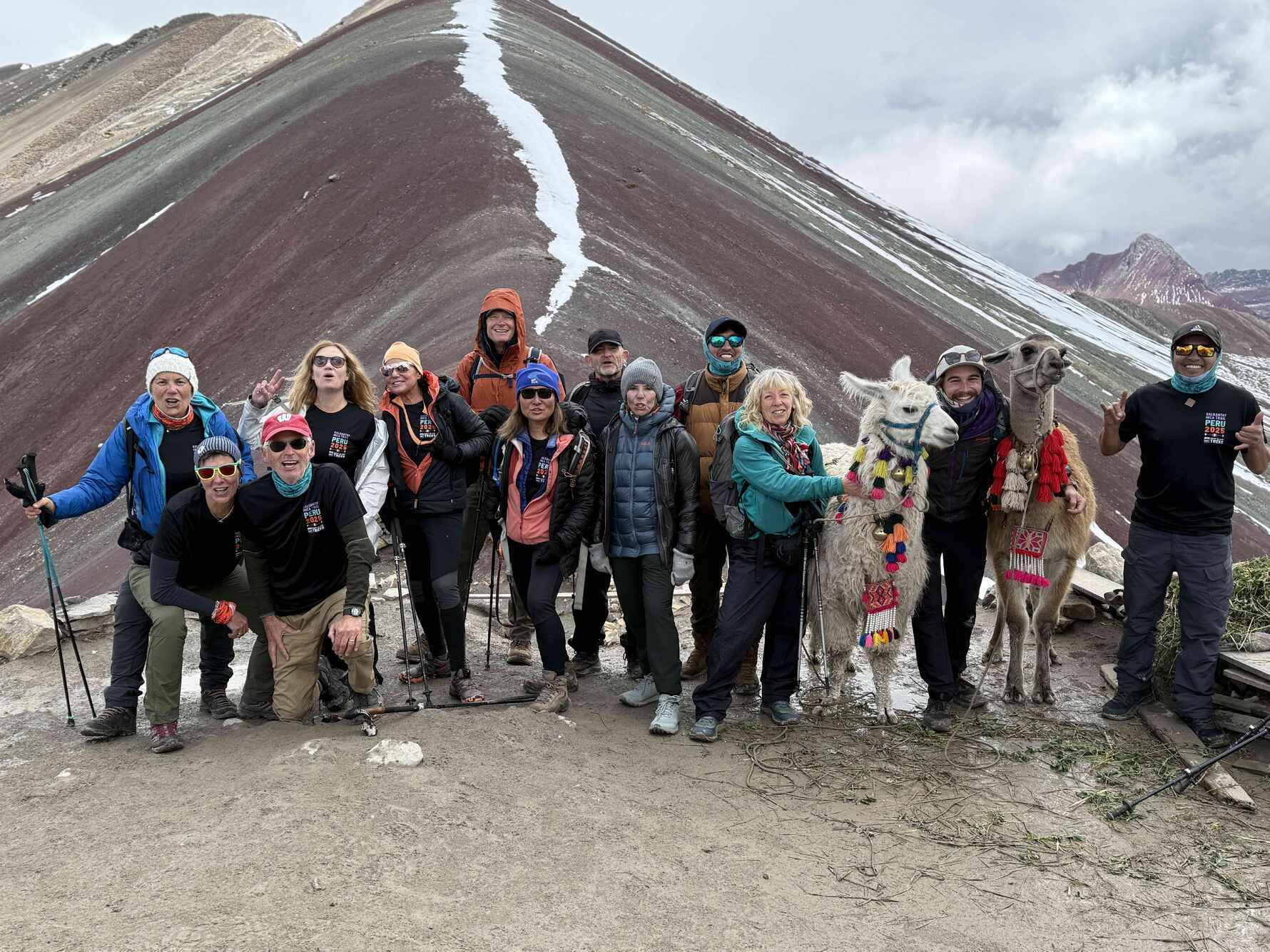
Our final trekking day took us to Rainbow Mountain, rising once again to over 5,200m. The day delivered everything we could have hoped for: sweeping views, the extraordinary colours that make Vinicunca so famous, and the added bonus of a touch of snow. It felt like a fitting finale, high, beautiful and in great company!.
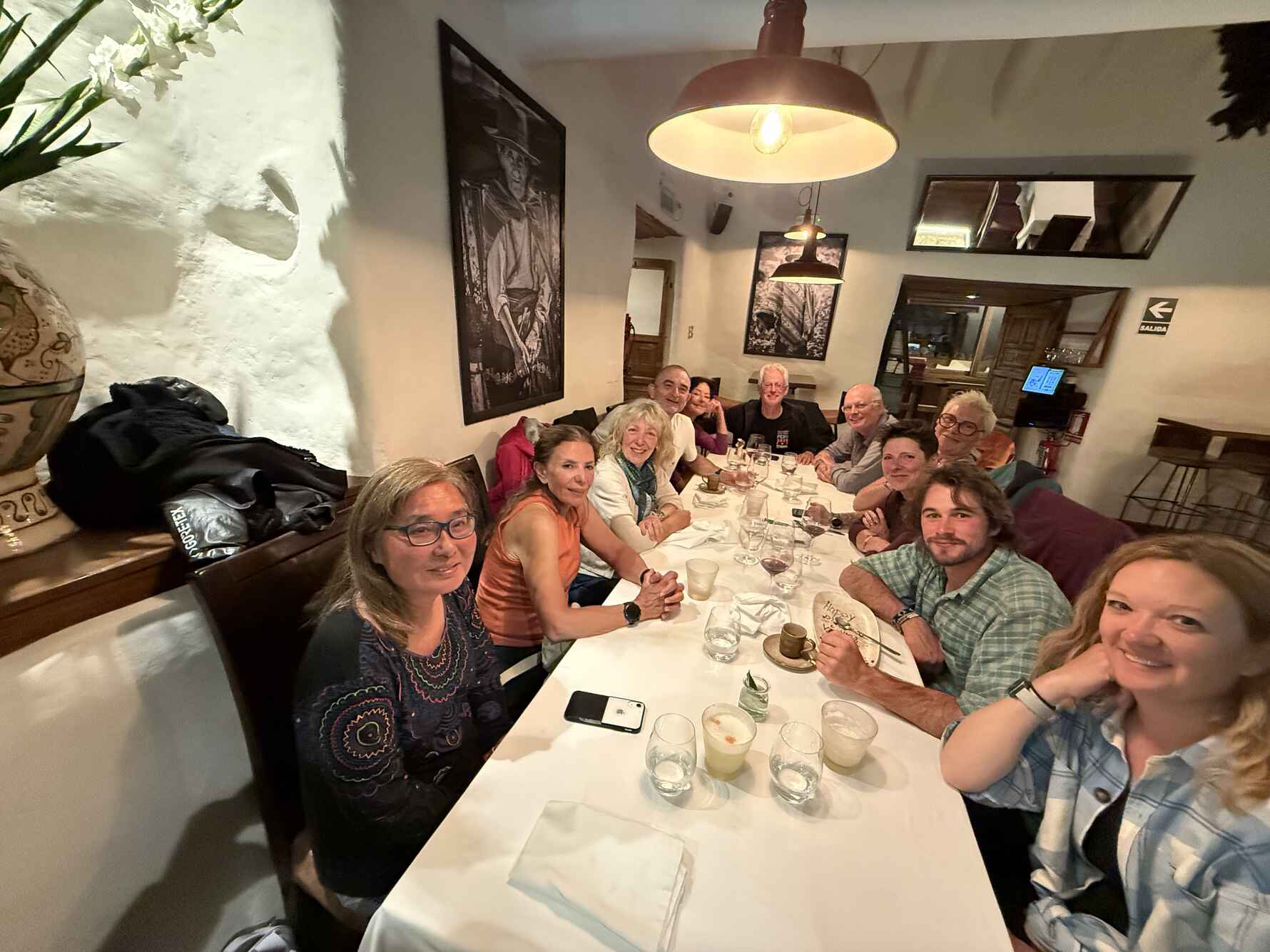
That evening back in Cusco, we celebrated Valerie’s birthday with a meal in a lovely restaurant, raising glasses to the journey we’d shared. Laughter flowed easily, stories were retold, and plans were already being made, some members of the group have since booked their next MBT adventure for 2026.
Final Thoughts
This was not a trip where everything went exactly to plan, and perhaps that’s what made it so memorable. The resilience, humour and mutual support shown by the group turned challenges into shared stories, and beautiful moments into lasting memories.
Thank you to an exceptional team of clients, George for his historical knowledge, to our local horsemen and porters who work so hard behind the scenes, and to Fin for stepping up when it mattered most. Peru gave us altitude, history, colour, challenge and connection, and we’ll be back.
About the Author