31/08/2026
Experiencing the Mont Blanc Tramway has been on my list of things to do for a while. I've lived in the Alps for 8 years now, and not once have I stepped onto these iconic trains.
Until one August afternoon, deciding on a more relaxed activity for the afternoon, my partner and I visited the recently renovated station of Nid d'Aigle on the Mont Blanc Tramway.
This stop is not new, trains have been terminating here since 1914. What is new is the platform. For over a century, passengers stepped off onto bare track some 300 metres before the refuge, with no level arrival point. That changed with a major engineering project launched in summer 2023 and finished in October 2025, officially inaugurated in June 2026.
The works extended the line by 280 metres, bringing the train right up below the Nid d'Aigle refuge itself, making the walk up to the refuge only a few minutes. The old terminus sat in a couloir exposed to avalanches and rockfall, so alongside the extension, engineers built a reinforced-concrete rockfall and avalanche gallery extending out from the existing Rognes tunnel. Gabion retaining walls were added to stabilise the slopes, and the whole site was landscaped under the guidance of France's Architects and Sites inspectors to keep the new structures in keeping with the protected Mont Blanc massif. The refuge itself was also connected to water and electricity networks, ahead of its own planned extension between 2027 and 2028.
It wasn't a small job: around twenty workers lived at the refuge itself for four to five days a week across each summer season, and virtually everything, materials, equipment, personnel had to be hauled up by the tramway itself, aside from one crane flown in by helicopter. The total cost came to €7.4 million, fully financed by the Haute-Savoie departmental council, which fittingly, also took over operation of the tramway from the Compagnie du Mont-Blanc in May 2026, running it directly through a newly created public authority.
The result is what we stepped onto that afternoon: a single-track, PMR-accessible platform right at the foot of the refuge, at 2,412 metres, replacing over a century of arriving on exposed, unlevelled ground.
The story of how the tramway got here at all is worth telling. The idea of a railway up Mont Blanc was first floated in 1835, but it took until 1904 for Haute-Savoie's General Council to approve a real plan, put forward by engineer Henri Duportal. Construction began in 1906, and the ambition was audacious: an open-air line climbing all the way to the summit of Mont Blanc itself, via the Aiguille du Goûter.
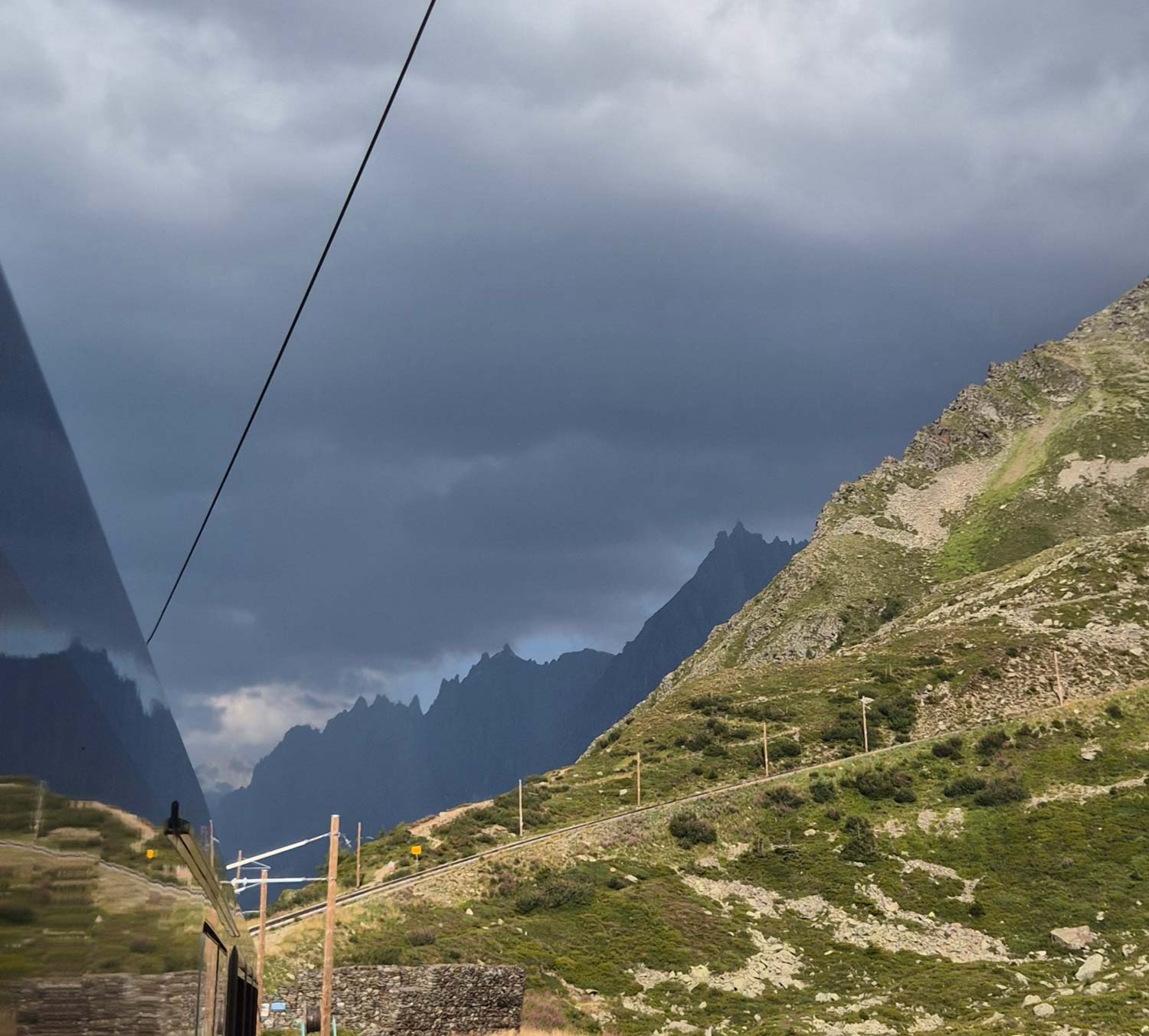
It never got there. Progress up the mountain was brutal - hundreds of workers, many of them Italian, laid track through snow, avalanches, and near-vertical terrain. By August 1914, the line had reached Nid d'Aigle, and it's stood as the terminus ever since. Weeks later, Europe went to war, and with it went any appetite (and any funding) for pushing a tourist railway further up a glacier. The summit was never reached, and Nid d'Aigle became, by default, "as far as the tramway goes" a title it still holds today.
For over 40 years, the tramway ran on steam. It wasn't until 1956 that the line was electrified, and three new electric railcars entered service in 1957: Marie, Jeanne, and Anne, named after the daughters of Pierre Nourry, the man behind the electrification project. Those three trains – wood-panelled, unmistakably of their era, carried passengers up this mountain for the next 65 years.
Which brings me to the detail that sent me down a research rabbit hole after our trip. On the way back down, we spotted a train stopped at one of the stations that looked distinctly older than the one we'd ridden up on : wood interior, older livery, clearly a different generation. At first I assumed it dated back to the tramway's original 1907 construction. It doesn't. It's almost certainly the 1957 Marie, one of the three original electric railcars (Marie, Jeanne, and Anne) that ran the line for 65 years, until they made their final passenger ascents in September 2021. When the fleet was modernised for the 2022 season with four new Stadler-built trains, inheriting the same names, Marie, Jeanne, Anne, plus a new fourth sibling, Marguerite. The old Marie wasn't scrapped like most of her generation. She was kept on as a maintenance and rescue vehicle for the line, which is very likely what we saw: not a scheduled passenger service, but the old railcar stationed along the route for line duty.
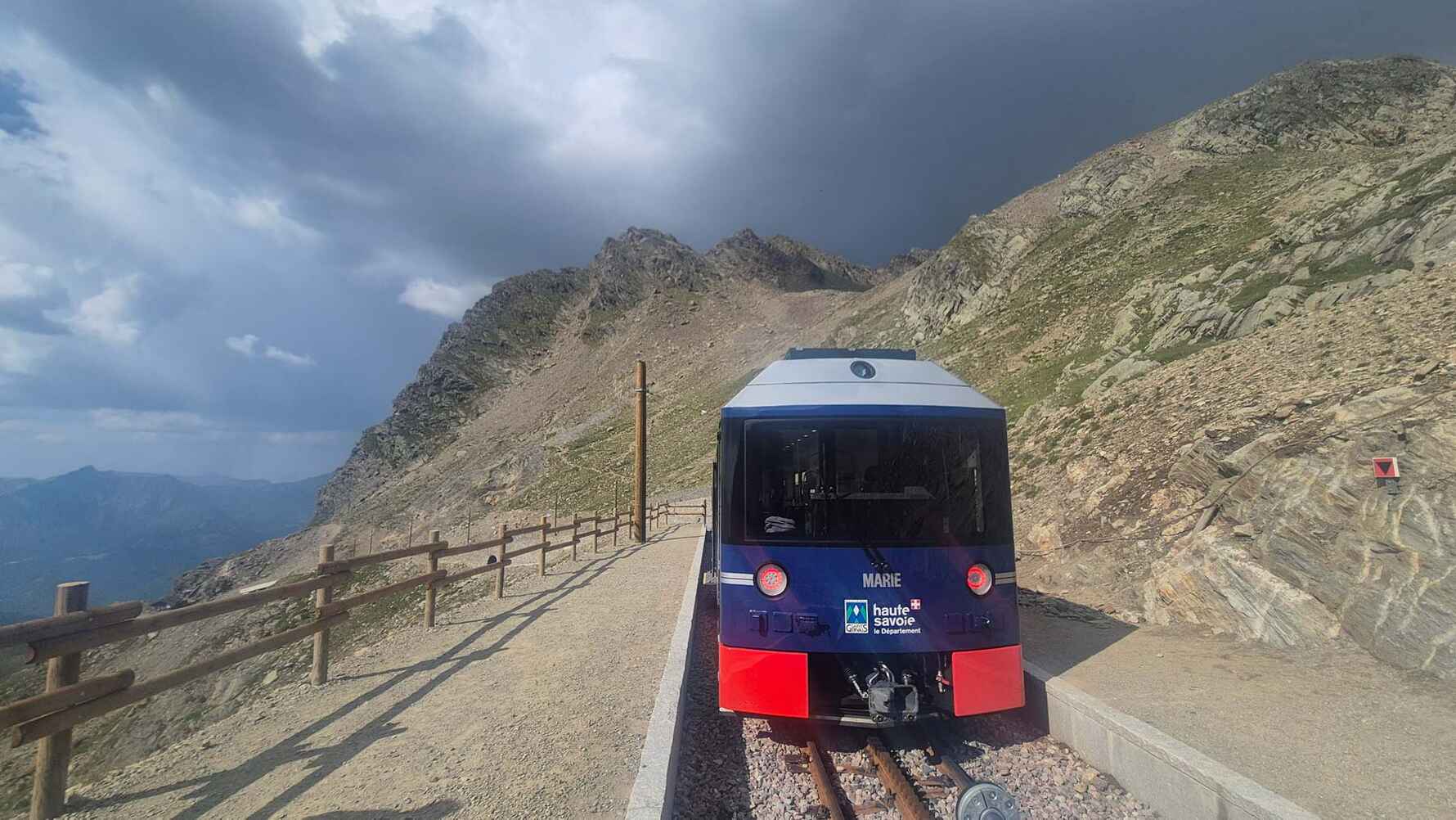
So the two Maries we saw side by side weren't old and new liveries of the same train, they were two completely different generations, 65 years apart, that just happen to share a name and a devoted mountain route.
I wish I could show you a photo of the old Marie. We were so taken with the views and the ride itself that neither of us thought to photograph it, a very "in the moment" mistake, and one I only realised once we were home and scrolling through our photos. What I can tell you from memory is that both trains actually use wood, but in very different ways. The new Marie's interior is laminated wood, shaped into smooth high-backed seating. I did not have a chance to peer into the old Marie, but my partner has ridden in the old trains pre-2021, and described them as similar to the vintage carriages still running today on the Montenvers train up to the Mer de Glace, just up the valley in Chamonix, wooden slatted low-backed seats shaped more ergonomically than the new ones and wood panelling lining the carriage.
It's a nice thought, standing at Nid d'Aigle: three generations of trains have carried people to this exact spot - steam in 1907, electric in 1957, and the sleek new trains of 2022, mostly retired, and each one, in some form, kept rather than scrapped. Even a couple of the original steam locomotives survive today, one on display at a museum, another restored and shown at Le Fayet's thermal park.
We came for a relaxed afternoon. We left with glacier views, a stiff mountain wind, and admittedly a small research project to figure out why there were two Maries.
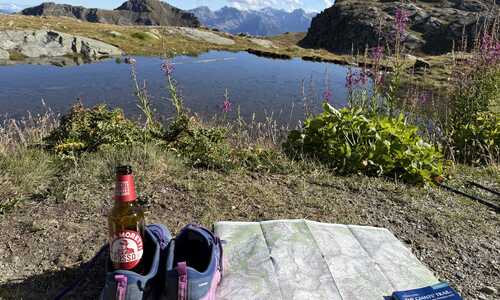
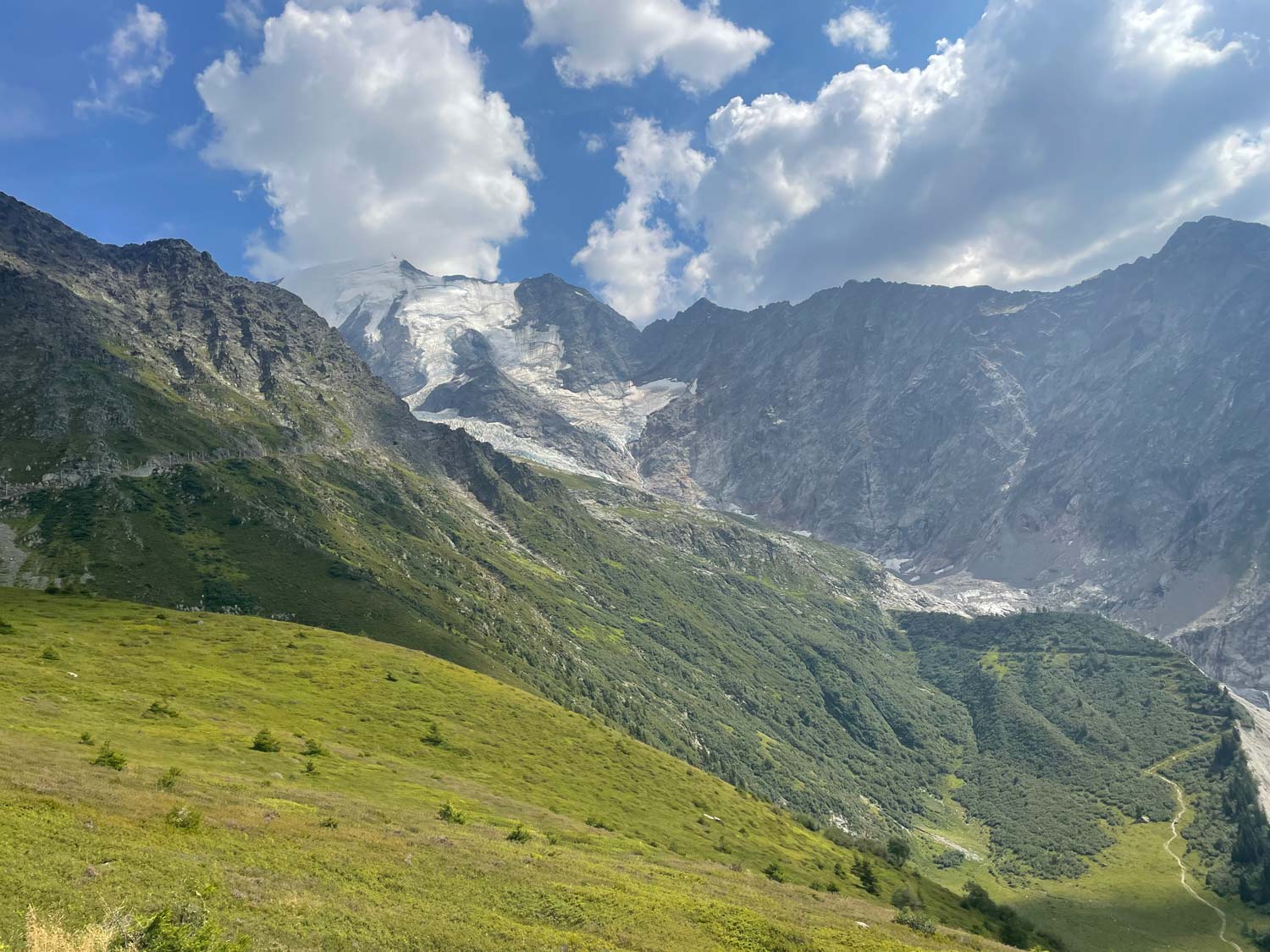
On our Tour du Mont Blanc, the trail passes near the Bellevue tramway stop and we can get a glimpse of it in the distance if the Bionnassay route is chosen.
If you are spending more time in Chamonix after or before your epic TMB trek, and want to do something leaning towards the touristy variety, you can book your ticket on the Tramway du Mont Blanc website.
About the Author