25/05/2026
In Wengen, Mürren and Gimmelwald, there are no cars — only cowbells, alpine air, and a quietness that reminds you what mountains are for.
Most people arrive in the Jungfrau region to look up. They crane their necks at the Eiger's black wall, squint toward the Jungfraujoch, ride cogwheel trains into the clouds. But some of the region's most extraordinary experiences are horizontal — a gentle walk between wooden chalets, a cup of coffee on a sun-drenched terrace, the unhurried ritual of a place where no engine has ever revved.
Three villages in the Bernese Oberland have made a deliberate choice: no cars. Not because the roads never reached them, but because the residents decided the roads shouldn't. Wengen, Mürren and Gimmelwald each wear this distinction differently — and together, they offer one of the most refreshing contrasts in all of Europe's alpine travel.
Wengen
1,274 m — Lauterbrunnen Valley
Reached by a short cogwheel train from Lauterbrunnen, Wengen is the most accessible of the three — and arguably the most complete. It has proper hotels, restaurants, ski schools and a functioning village life that stretches back generations. What it doesn't have is traffic noise.
Standing on Wengen's main street, the loudest thing you'll hear is the departure bell of the Wengernalpbahn, the little red train that connects the village to Kleine Scheidegg and Grindelwald above. In summer, the meadows that tumble below the village toward the valley are scattered with wildflowers. In winter, the Lauberhorn ski race — one of the oldest and most prestigious on the World Cup circuit — sends racers hurtling past the village edge at speeds that seem deeply at odds with its peaceful character.
Wengen is a place that feels like it has always existed — sturdy, unhurried, and quite content to let the rest of the world rush past far below.
For trekkers, Wengen sits at the gateway to some spectacular trails. The walk up to Männlichen, with its panoramic view of the Eiger, Mönch and Jungfrau trinity, is one of the finest easy hikes in the entire Alps. And for those who want to go higher, the Jungfraujoch railway departs from nearby Kleine Scheidegg — a 25-minute train ride away across open alpine meadows.
Getting there:
Take the train from Interlaken Ost to Lauterbrunnen, then the cogwheel Wengernalpbahn directly up to Wengen. The journey from Interlaken takes around 45 minutes. No reservations needed — trains run frequently throughout the day.
Mürren
1,638 m — Schilthorn massif
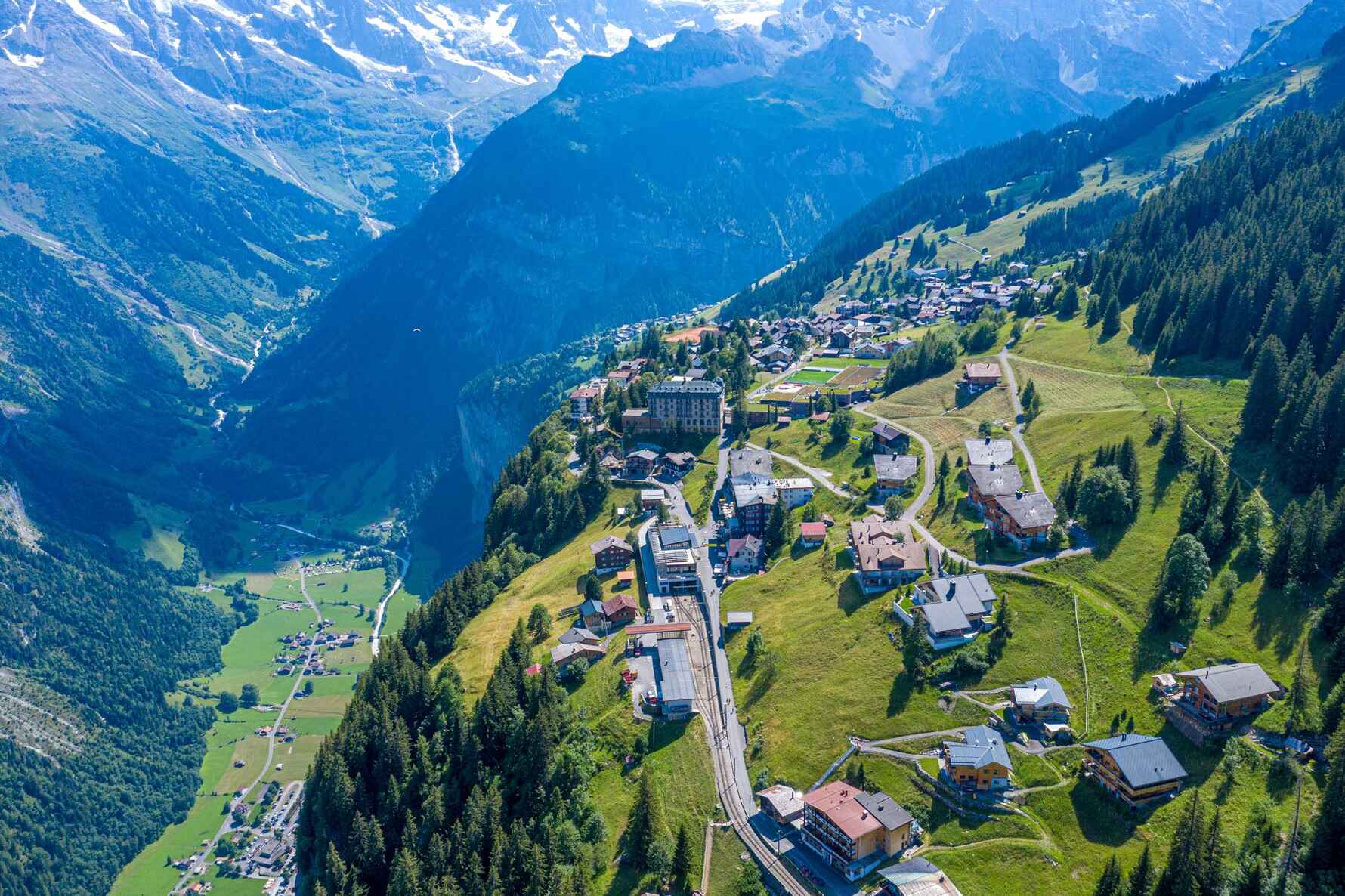
If Wengen is the accessible one, Mürren is the one that makes you work a little harder — and rewards you accordingly. Perched on a cliff-side terrace above the Lauterbrunnen Valley, it faces the Jungfrau panorama head-on. The view from Mürren is one of those rare perspectives that genuinely stops people mid-sentence.
To reach it, you take a gondola from the valley floor to Grütschalp, then a rattling little valley train along the cliff edge to the village. No roads connect it to the outside world. Delivery vehicles, building materials, even the groceries in the village shop — everything arrives by rail or cable.
Mürren has a distinct personality: quietly proud, a little eccentric, deeply loyal to its own traditions. It was here that Sir Arnold Lunn, a British skier, invented the modern slalom race in 1922. The village still hosts the Inferno Race — the world's longest and oldest amateur ski race — each January. Off-season, it's a haven for hikers. The Northface Trail, which circles beneath the great walls of the Eiger, Mönch and Jungfrau, begins just outside the village.
From Mürren's balcony terrace, the three peaks seem close enough to touch — and the valley floor, 800 metres below, feels like another world entirely.
Getting there:
From Lauterbrunnen, take the gondola to Grütschalp then the cliff railway to Mürren. Alternatively, a cable car runs from Stechelberg in the valley directly to Mürren via Gimmelwald. Both routes are equally spectacular.
Gimmelwald
1,367 m — between the valley and the sky
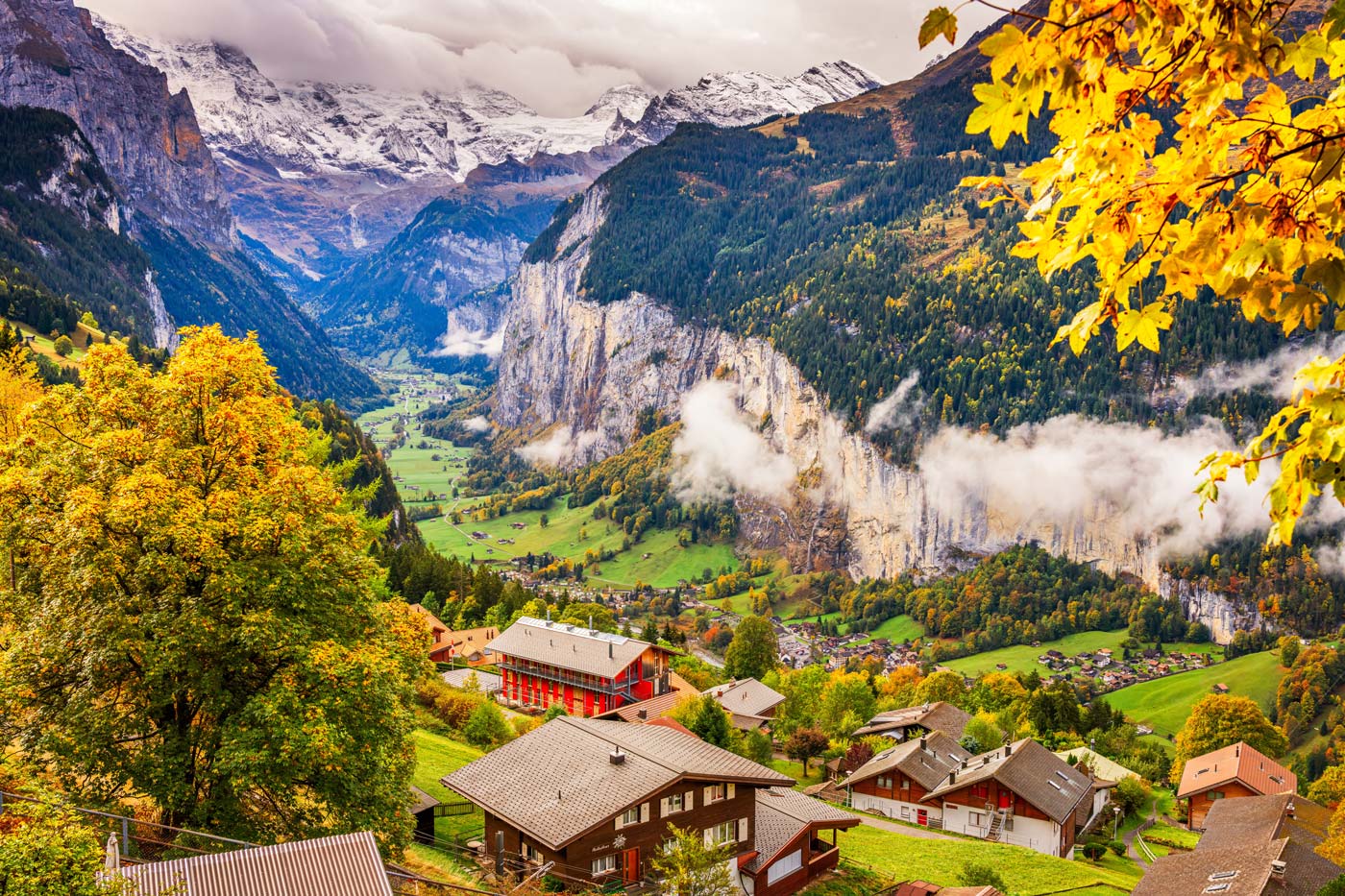
Gimmelwald is the smallest and most unassuming of the three — and for a certain kind of traveller, it is the most beloved. It has no ski resort, no large hotels, no tourist infrastructure to speak of. What it has is around 130 residents, a scattering of farmhouses, a guesthouse or two, and the sort of silence that you feel in your chest.
The village sits on the cable car line between Stechelberg and Mürren, which means many visitors pass straight through without stopping. Those who do stop often linger far longer than planned. Budget travellers have quietly known about Gimmelwald for decades — the guesthouses are simple, the prices relative to the Swiss context are gentle, and the setting is, by any reasonable measure, absurd in its beauty.
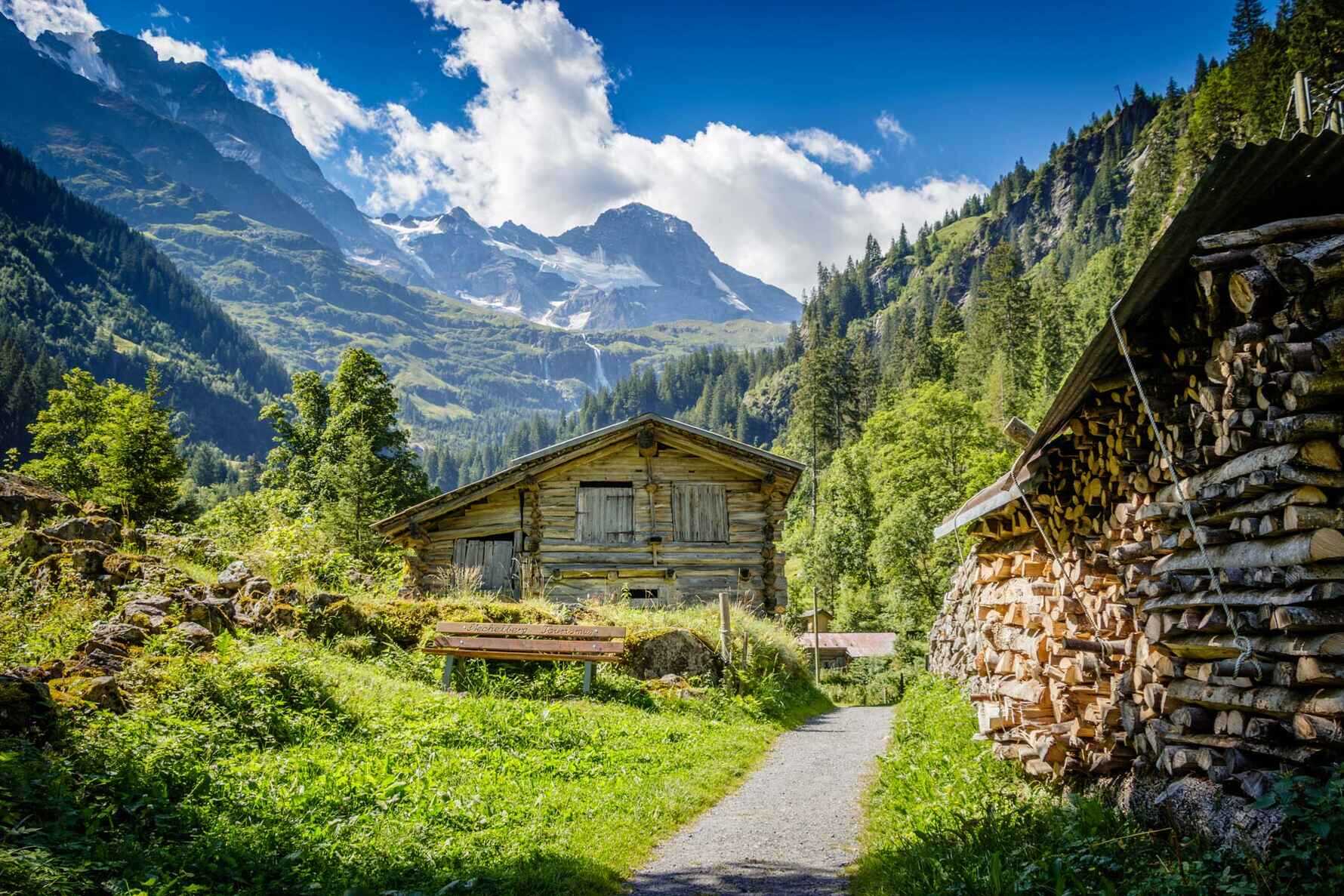
Walking out of Gimmelwald in any direction leads somewhere extraordinary. Down through the gorge to the valley floor past the thundering Trümmelbach Falls. Up through flower-strewn pastures to the ridge at Schilthorn. Along the cliff path east to Mürren in about 30 minutes. The village is less a destination than a base camp — a quiet, human-scaled anchor in one of the most dramatic landscapes on earth.
Getting there:
Take the cable car from Stechelberg at the end of the Lauterbrunnen Valley road — Gimmelwald is the first stop, one stage before Mürren. The cable car runs regularly and takes just a few minutes from the valley floor.
Which village suits you?
For comfort and convenience
Wengen — widest selection of accommodation, restaurants, and easy rail connections to the rest of the region.
For drama and views
Mürren — unbeatable panorama, great hiking trails, and a character unlike anywhere else in the Alps.
For solitude and soul
Gimmelwald — the smallest, quietest, and most authentic of the three. A place that rewards slow travel.
A note on the silence
There is something that happens when you arrive in a car-free village that is difficult to articulate until you've experienced it. The absence of engine noise doesn't just reduce sound — it shifts the entire register of a place. Footsteps on cobblestones become audible. Wind through the larch trees. The distant clank of a cowbell. Children's voices carrying across a meadow.
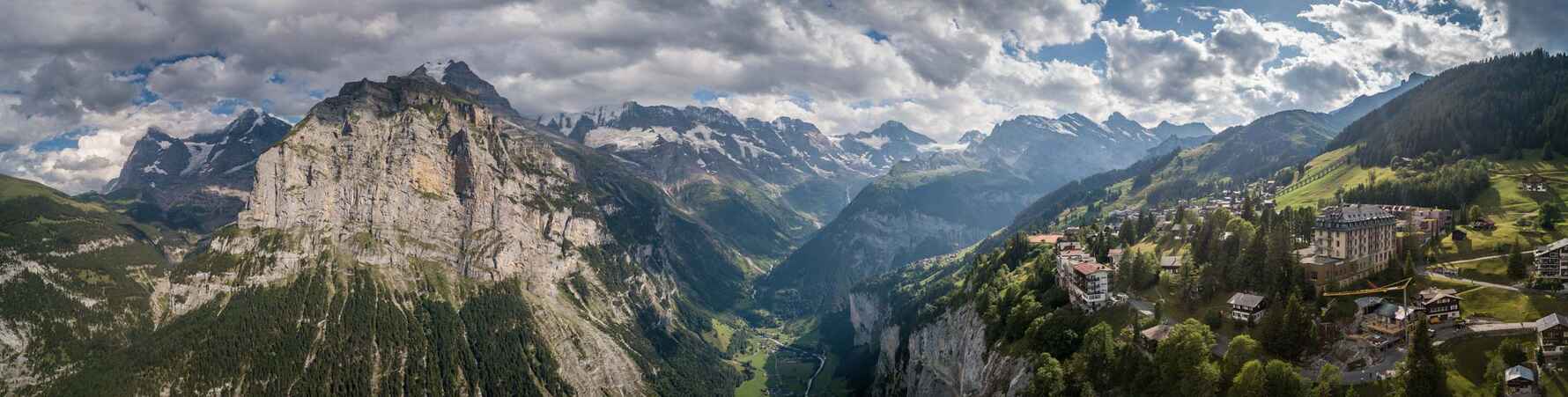
In Wengen, Mürren and Gimmelwald, the Alps are not a backdrop — they are the full picture. These villages don't compete with the landscape; they belong to it. And the best way to understand that is simply to arrive, set down your pack, and listen.
If you’d like to experience these peaceful villages and indulge in an 8-day guided trek, join us on the Tour of the Jungfrau or discover more on Hiking in Switzerland.
About the Author